-
E-mail
qingqingshi@email.acrel.cn
-
Phone
18706162823
-
Address
No. 5 ASEAN Road, ASEAN Industrial Park, Nanzha Town, Jiangyin City, Jiangsu Province
Product Categories
Jiangsu Ankerui Electric Appliance Manufacturing Co., Ltd
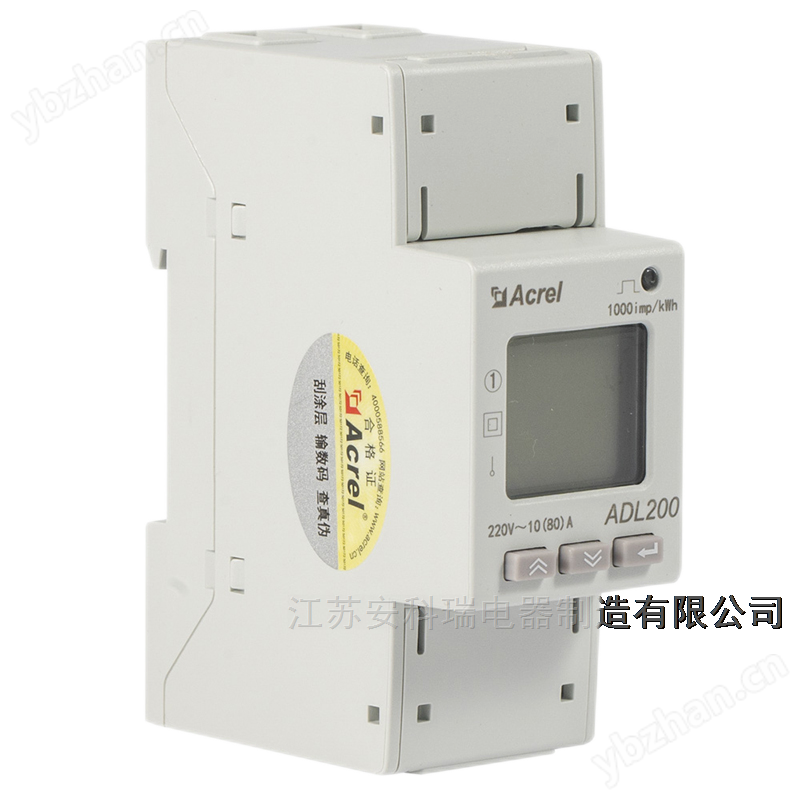


ADL smart meter balcony photovoltaic anti backflow meter
NegotiableUpdate on 11/19
- Model
- Nature of the Manufacturer
- Producers
- Product Category
- Place of Origin
Overview
ADL smart meter balcony photovoltaic anti backflow meter To cope with the risk of backflow, ADL200N-CT/D16-WF anti backflow meters are becoming the "smart center" of home photovoltaics:
Product Details
ADL smart meter balcony photovoltaic anti backflow meter
An electric meter is becoming the 'invisible guardian' of the household energy revolution.
Under the global energy transition wave, balcony photovoltaics are reshaping the household electricity ecology at an astonishing speed. Germany will add 220000 sets of balcony photovoltaic systems in the first half of 2024, with a 200% increase in installed capacity in the second quarter compared to the first quarter. Policy relaxation and soaring electricity prices have made micro photovoltaics a "must-have energy" for European households.
On the other hand, in China, when residents of Changqing District in Jinan were refused to install photovoltaics due to "full grid capacity", German tenants won "balcony autonomy" with new legislation - landlords were not allowed to prevent photovoltaic installations, and the government exempted value-added tax for systems below 30kW, with subsidies of up to 1450 euros (about 11000 yuan) per household

1、 Global balcony photovoltaic explosion: policy dividends activate trillion dollar market
Germany's Solarpaket I program, which officially came into effect in May 2024, can be regarded as an epic booster for balcony photovoltaics:
● Doubling power limit: The output limit of the inverter has been increased from 600W to 800W, and the installed capacity of a single household can reach 2kW, meeting 60% of the electricity demand of a two person household;
● Zero registration process: Cancel the mandatory requirement for two-way electricity meters, plug and play, and shorten the installation cycle from 30 days to 1 hour;
Economy: Berlin residents receive a subsidy of 50% of the equipment cost, and the cost of generating electricity on sunny days is only one-third of the grid price, compressing the payback period to 2-4 years.
Data insight: The average power of balcony photovoltaics in Germany has increased from 800W in 2023 to 900W in 2024, and the household storage matching rate has surged by 166%. It is expected that the installed capacity of household storage will exceed one million sets in 2024.
2、 China's dilemma: policy gaps and trillion dollar blue ocean under power grid bottlenecks
China's urban residential stock exceeds 300 million units, and if 10% of them install balcony photovoltaics, the market size will exceed one trillion yuan. However, the promotion in reality has encountered three obstacles:
2.1 Fragmentation of Policy System
The local power grid has suspended installation due to "insufficient consumption capacity" (such as the entire Changqing District in Jinan being designated as a red zone), but there is no plan to build energy storage facilities;
The subsidy policy lacks detailed rules, and the support effects such as the "Golden Sun Project" have not met expectations.
2.2 Technical bottleneck: Reverse flow risk becomes a headache for the power grid
When the power generation exceeds the household load, the reverse flow of electricity into the grid can cause voltage fluctuations, which can result in equipment damage or fines from the grid;
The domestic GB/T 29319-2012 requires photovoltaic systems to be equipped with reverse power protection devices, but traditional electricity meters have slow response times.
2.3 Difficulty in coordinating the interests of the main body
The enthusiasm of power grid companies for the integration of distributed photovoltaics into the grid is not high, often citing technical reasons as excuses. "- Zhu Li, Deputy Director of the Institute of Building Energy Efficiency at Tianjin University.
3、 Key to breaking the deadlock: the "Chinese solution" of anti backflow electricity meter+energy storage synergy
To cope with the risk of backflow, ADL200N-CT/D16-WF anti backflow meters are becoming the "smart center" of home photovoltaics:

product image

Scenario based solutions
● Home photovoltaic storage system: linked with 3kW photovoltaic+5kWh energy storage batteries, based on automatic scheduling of time of use electricity prices (valley charging/peak discharging), reducing electricity bills by another 18%;
Community microgrid: Multi household ADL meter networking to achieve energy sharing and revenue sharing, breaking the bottleneck of single household consumption;
Sensitive areas of the power grid: Set a reverse power threshold (such as 0kW) to ensure 100% "zero reverse transmission".
Conclusion
Balcony photovoltaics are not only the smallest unit of the energy revolution, but also carry the transformative gene of households transitioning from consumers to producers and consumers. When Germany's balcony components skyrocketed to 2000W in simplified registration, and China's ADL meters responded with 0.5 seconds to curb the risk of backflow, an energy democratization experiment involving millions of households has been unveiled.
Behind this palm sized electricity meter is the key for every household to regain energy autonomy - it measures not only the direction of current, but also the path towards a zero carbon future.
Similar Product Recommend