-
E-mail
zdnjsb@163.com
-
Phone
13905489280,13285488188,13853836621
-
Address
Xiazhang Town, Daiyue District, Tai'an City
Product Categories
Zhengda Brewing Equipment Factory, Daiyue District, Tai'an City

Baijiu making equipment
NegotiableUpdate on 05/11
- Model
- Nature of the Manufacturer
- Producers
- Product Category
- Place of Origin
Overview
Zhengda Brewing Equipment informs you of the brewing and cooking process: 1. Boil the pot
Product Details

Zhengda Brewing Equipment informs you of the brewing and cooking process
Cooking:
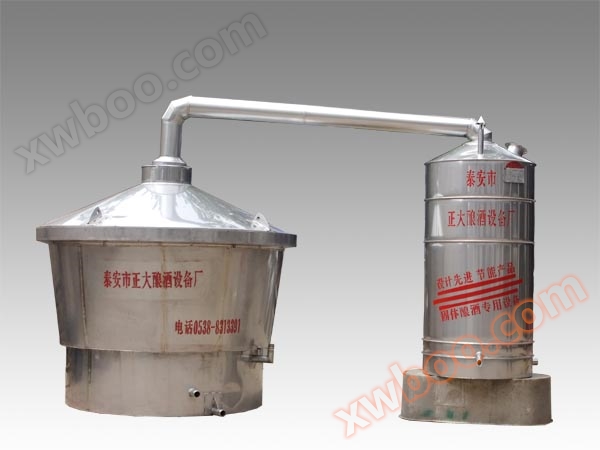
1. Put the pot. Add the fermented liquid material to the iron rake, cover it with a pressing cover, connect it to the cylinder, and fill the tank with water seal at the connection between the lower edge of the pressing cover and the wine pot, the connection between the gas machine and the pressing cover, the connection between the cylinder and the condenser, and the tank. Ignite the stove and start cooking. At this time, special attention should be paid to pulling the rake frequently, and pushing and pulling the rake from various angles, trying to bring the bottom of the pot to the rake as much as possible. The purpose of pulling a rake is to scrape the liquid material in the pot with a rake without depositing it on the bottom of the pot. When the liquid material is boiling and the pot is boiling, during the boiling process, the rake hole emits wine gas outside, and the cylinder is too hot to touch with hands. The wine outlet pipe of the condenser's lower chamber is initially dripping with wine, so the rake hole is plugged tightly to prevent the wine from escaping due to gas emission.
2. Testing alcohol. Any boiling process, whether from the wine pot, cylinder, or condenser, where gas is emitted, is considered as running wine. So the entire brewing equipment must not have any loopholes or cracks everywhere. Always maintain a tight seal in the groove. So initially, it is also known as' head wine ', which is commonly referred to as' flowing on top'. Here, the alcohol content of the wine is high, and as the alcohol content decreases, it gradually decreases. Using a thermometer (specific gravity meter) in conjunction with each other, read the temperature and alcohol content at a horizontal angle to the field of view. Then, based on the measured readings, mark the same exchange tube at the intersection of the temperature and alcohol content lines on the alcohol conversion table to obtain the actual alcohol content of the wine sample you measured. Adjust the alcohol output of the pot according to the alcohol content that your local customers like to drink. When high alcohol content is in high demand, produce high alcohol content; when low alcohol content is in high demand, produce low alcohol content. In other words, production is determined by sales. If you want high alcohol, pinch the tail early; if you want low alcohol, pinch the tail late. Flexibly control the brewing equipment according to your own wishes.
3. Take the tail wine. When the alcohol content of the wine flowing out of the wine tube is lower than the alcohol content you need, you can open the wine receiving bucket and use another bucket to receive the tail wine (usually a little bit). When the tail wine content is lower than 10 degrees, all the wine in the pot is cooked, and the tail wine is added to the liquid material of the second pot of wine and boiled together to produce high alcohol content. The one pot is then used in a cycle, and the tail wine is not wasted at all.
4. Release materials. Press the fire in the stove, turn on the feeding switch under the wine pot, discharge the liquid material (distiller's grains), pour the discharged hot material into the vat or pool and the chaff (coarse fodder), and mix it thoroughly with a shovel or spoon while it is hot. The coarse fodder here is quickly heated and softened by the hot distiller's grains, and can be directly fed to pigs, ducks, dogs and other poultry when its temperature drops. I like it very much because of the smell of wine.