-
E-mail
szpeng88@163.com
-
Phone
13714836101
-
Address
Building B, No. 3, 3rd Road, Yangyong Industrial Zone, Songgang Street, Bao'an District, Shenzhen
Product Categories
Shenzhen Ruitaier Technology Co., Ltd

Instructions for using the sand and dust test chamber
NegotiableUpdate on 02/02
- Model
- Nature of the Manufacturer
- Producers
- Product Category
- Place of Origin
Overview
Instructions for using the sand and dust test chamber
Product Details
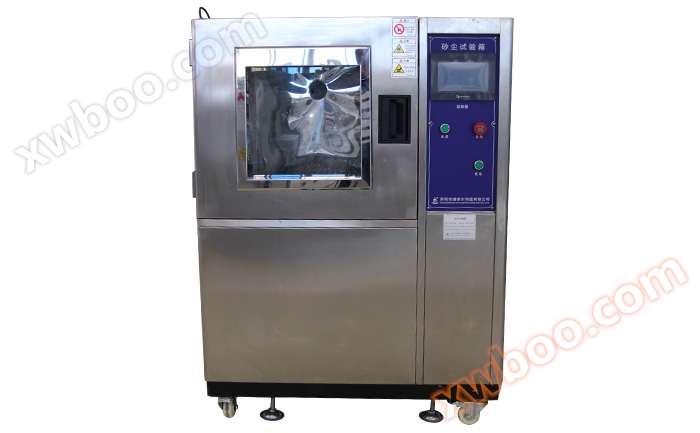
The sand and dust test chamber is an artificial simulation of a natural sand and dust environment. In addition to meeting the requirements of the national standard GB/T4942.2 for the protection of low-voltage electrical enclosures, it can also provide non dust like dust carrying and vertical circulating airflow. It has the function of observing and recycling dust, creating a more ideal and realistic sand and dust testing environment, providing an all-weather testing environment, and thus obtaining the dust prevention performance of the product in the short term.

1. The time of the dust blowing fan is automatically alternated;
2. The vibration and stop vibration time automatically alternate;
3. Equipped with vacuum actuators, Schneider actuators;
4. Control the dust blowing fan, dust vibration, and total test time separately;
5. The main controller of the equipment adopts imported PLC program to control the LCD screen, and displays the working time in full Chinese;
6. Non fuse protection switch, over temperature, overload, leakage, fully sheathed terminal block, with protection such as automatic shutdown.
【2】 Introduction to the advantages of sand and dust test chamber:
1. The bottom adopts high-quality fixed PU movable wheels;
2. There is a dust replacement device and a reliable pneumatic vibration device at the bottom;
3. The sand and dust testing equipment adopts a powerful dust blower motor to ensure the blowing and free falling of dust;
4. The automatic dust dehumidification system reduces the moisture content of dust and stabilizes the quality of dust;
5. The shell is made of cold-rolled steel plate with electrostatic spraying, and the inner liner is made of high-quality stainless steel plate, with an overall beautiful and generous appearance;
6. Mainly used for testing the IP5X and IP6X levels specified in the enclosure protection level standards;
7. There is a large observation window and manual wiper device in the middle of the door, which can easily see the test condition of the specimen clearly during the test process
.
【3】 Test reference standards:
1. GB 4208-2008/IEC60529-200 Degrees of Protection Provided by Enclosures (IP Code);
2. GJB150.12-2009 Equipment Laboratory Environmental Test Methods Part 12: Sand and Dust Test;
3. GB/T 2423.37-2006/IEC 60068-2-68 Part 2 Test Methods Test L: Sand and Dust Test;
4. JIS C5402-11-8-2002 Electronic Device Connectors Testing and measurement Part 11-8: Climate testing Experiment 11 hours of sand and dust.
【5】 Introduction to the structure of the sand and dust test chamber:
1. Dust blower: all plastic centrifugal fan;
2. Sliding doors with large glass observation windows;
3. Vibrator: Stop and vibrate as needed through the controller to ensure that the box wall does not accumulate dust and sand;
4. Heating system: A heater is installed in the circulating air duct to heat dust and prevent dust condensation;
5. Vacuum system: pressure gauge, air filtration, pressure regulating triple piece, connecting pipe, vacuum pump;
6. Box material: The inner liner of the box is made of imported SUS304B stainless steel plate, and the outer shell is made of cold-rolled steel plate with surface spray coating treatment;
7. The entire box adopts an integral structure, divided into three parts: upper, lower, and right. The upper part is the box, the lower part is the mechanical room, and the right side is the electrical control cabinet.
【5】 Instructions for using the control system:
1. Adjustable vacuum pressure indication;
2. The dust-proof fan automatically alternates in time;
3. The vibration and stop vibration time automatically alternate;
4. Equipped with vacuum actuators, Schneider actuators;
5. Using imported programmable controllers to effectively ensure that the test runs according to standards;
6. The programmable controller has four output points to simultaneously complete program execution at four different times;
7. Each output point of the programmable controller has two time periods for control (i.e. start time and stop time);
8. Non fuse protection switch, over temperature, overload, leakage, fully sheathed terminal block, with protection such as automatic shutdown;
9. The programmable controller can individually or collectively control the time of the dust-proof fan, dust vibration, and total test time.
【6】 Surrounding conditions for installation and use:
1. Relative humidity: ≤ 85% RH;
2. Air pressure: 86kPa~106kPa;
3. The grounding resistance of the protective grounding wire is less than 4 Ω;
4. Allowable frequency fluctuation range: (50 ± 0.5) Hz;
5. Temperature: 5 ℃~+28 ℃ (average temperature within 24 hours ≤ 28 ℃);
6. Power supply conditions: three-phase four wire+protective ground wire, voltage range: AC (380 ± 38) V;
7. Require users to configure corresponding capacity air or power switches for the equipment at the installation site, and this switch must be used for the equipment.
【7】 Work inspection items:
1. Check and ensure that there are no debris inside the sand and dust test box, especially under the mesh. Remove the mesh and the small door at the bottom of the funnel for ash discharge. Use compressed air to blow down from the inside of the box to remove as much debris as possible, and then close the small door for ash discharge;
2. Install the hole mesh from the box, run it empty first, check the equipment control part: turn on the power switch, set the controller parameters (see next page for specific settings); After clicking 'Run', gradually open various functions and check the operation status of the equipment; Shut down after confirming that all functions are normal;
3. Add dust into the box at a rate of 2kg/m3;
4. The sample is fixed on the sample rack according to regulations;
5. If the sample needs to be powered on, connect the power supply in advance;
6. Turn on the power switch and start the experiment. After the experiment is completed, take out the sample and remove the sieve. Take out the dust from the bottom outlet and dry it for storage. Close the door.
The sand and dust test box manufactured by Shenzhen Ruitaier adheres to the development concept of "safe and easy operation of testing", with an efficient end-to-end business model, point-to-point service system, and vertical management organizational structure, ensuring a diversified and experienced management team to make timely and effective decisions. Continuous innovation ability and excellent corporate culture are the core competitiveness of the company. The company will focus on building future oriented testing equipment based on its advantages, scientific innovation, and continuously create value for customers and society.
Similar Product Recommend