-
E-mail
ryu@ultrablue-sci.com
-
Phone
13331917708
-
Address
Room 302, Building 11, 999 Jiangyue Road, Minhang District, Shanghai
Product Categories
Shanghai Beilan Optoelectronics Technology Co., Ltd


Micro pulse aerosol lidar
NegotiableUpdate on 11/20
- Model
- Nature of the Manufacturer
- Producers
- Product Category
- Place of Origin
Overview
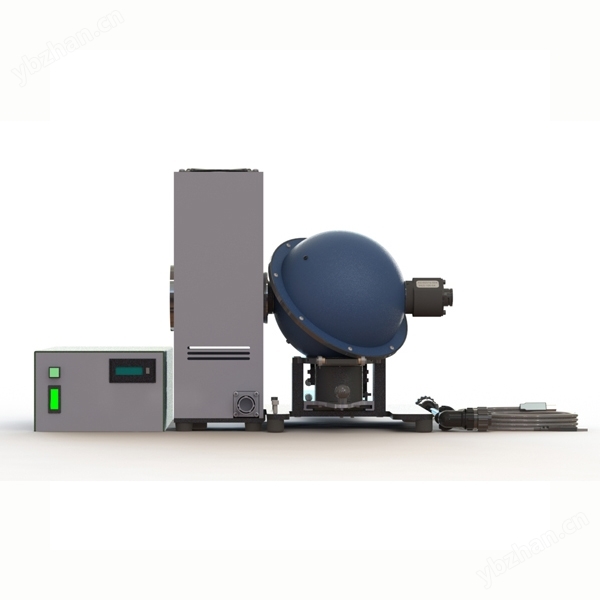
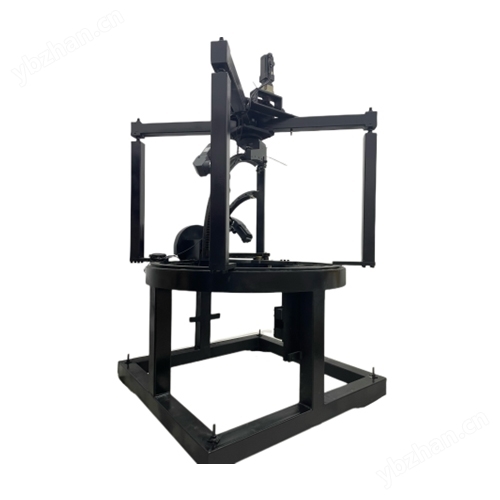
The micro pulse aerosol lidar system hardware mainly consists of a laser emission system, an optical receiving system, a 3D scanning system, a photoelectric conversion and data acquisition system, and an equipment power supply and communication system. The optical and electrical parts of the lidar are relatively independent to prevent mutual interference. The physical image of the LiDAR is shown below.
Product Details
Micro pulse aerosol lidar
The MPAL-GN2 scanning laser radar has a working wavelength of 532 nm. The system hardware mainly consists of a laser emission system, an optical receiving system, a 3D scanning system, an optoelectronic conversion and data acquisition system, and an equipment power supply and communication system. The optical and electrical parts of the laser radar are relatively independent to prevent mutual interference. The physical image of the LiDAR is shown below.


Scanning micro pulse lidar has the characteristics of compact structure, three-dimensional scanning, eye safety, and all-weather detection. It can continuously and accurately detect the three-dimensional spatiotemporal distribution information of atmospheric aerosols, clouds, and boundary layers. This type of LiDAR mainly consists of three parts: optical transceiver module, mechanical scanning control module, and data acquisition module. It uses a diode pumped Nd: YAG solid-state laser as the light source, with a working wavelength of 532 nm. It can emit pulsed laser with an energy of 60 μ J at a repetition rate of 7 kHz. The laser beam is compressed by a 10 fold beam expander with a divergence angle of * * 120 μ rad and then adjusted by mirrors (M1, M2) to enter the atmosphere. The backscattered light generated by the interaction with various components in the atmosphere is received by a 200 mm aperture Schmidt Cassegrain telescope. After passing through an adjustable aperture (PH) at the focal plane and a subsequent 1 nm narrowband interference filter (IF) to reduce background light interference, it is focused on the photosensitive surface of a photon counting photomultiplier tube through planar convex lenses (L1, L2, focal length f=30 mm). After photoelectric conversion, the electrical signal is sent to the Peripheral Component Interconnect (PCI) bus type photon counting card for quantization, accumulation, and recording.
The scanning control unit adopts a dual rotation axis design, and the radar output beam can continuously change in the azimuth angle of 0 ° * * 360 ° and the elevation angle of 0 ° * * 180 °, making this type of laser radar equipped with the conventional Time Height Indicator (THI) continuous observation mode, as well as the Range Height Indicator (RHI) and Plane Position Indicator (PPI) scanning modes, which can flexibly obtain the three-dimensional spatiotemporal distribution information of surrounding atmospheric aerosols and clouds in real time according to needs.
Micro pulse aerosol lidar
Table 1. Technical Parameters of Scanning Lidar
Laser type |
LD pumped solid-state laser |
wavelength |
532 nm |
Single pulse energy |
30 μ J instability ≤ 4% |
pulse width |
10 ns |
repetition frequency |
7 kHz |
divergence angle |
50 μrad |
Telescope aperture |
70 mm |
range resolution |
3.75 m \ \ 7.5 m \ \ 15 m \ \ 30 m (software adjustable) |
temporal resolution |
30s\\1 min\\5 min (Software adjustable) |
Horizontal detection distance |
≥ 10 km |
Vertical detection distance |
≥ 15 km |
Azimuth scanning range |
0 º - 360 º |
Azimuth scanning speed and error margin |
0.01 º - 12 º/s ±0.1 º |
Range of elevation angle scanning |
-45º - 90º |
Azimuth scanning speed and error margin |
0.01 º - 5 º/s ±0.1 º |
Working environment temperature |
-25℃ - 55℃ |
Operating Humidity |
10% - 95% |
power supply |
Single phase, AC220V ± 15%, 50Hz ± 5% |