-
E-mail
root@apsmyx.com
-
Phone
18001312670,17600971176
-
Address
Room 821, No. 102 Chaoyang North Road, Chaoyang District, Beijing (100123)
Product Categories
Beijing Meiya Xian Technology Co., Ltd
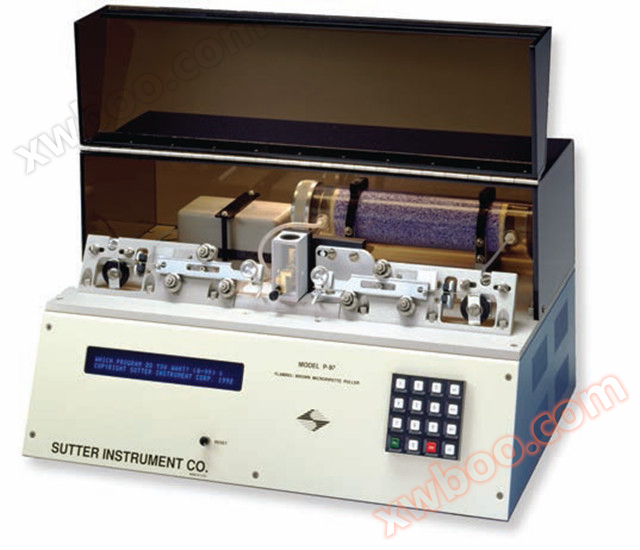
P-97 needle puller
NegotiableUpdate on 09/24
- Model
- Nature of the Manufacturer
- Producers
- Product Category
- Place of Origin
Overview
1: Functional principle: In biological experiments, electrodes are usually precisely inserted into cells. The electrodes are usually drawn from glass tubes, and microelectrode drawing instruments are commonly used tools to draw glass tubes into electrodes. The basic principle is to place the glass tube in a heating wire and control the temperature of the heating wire to burn the glass tube. While heating the glass tube, a certain tension is applied to both ends of the glass tube to pull it into various required electrodes for experimental purposes
Product Details
1: Functional principle
In biological experiments, electrodes are usually precisely inserted into cells. The electrodes are usually drawn from glass tubes and microelectrodesThe drawing machine is a commonly used tool for pulling glass tubes into electrodes. Its basic principle is to place the glass tube in a heating wire and then control it
The temperature of the heating wire is set to achieve the goal of burning the glass tube. While heating the glass tube, a certain amount of tension is applied at both ends of the tube,
Pull the glass tube into various required electrodes for experimental purposes. P-97 programmable horizontal microelectrode produced by Sutter Corporation in the United States
Instruments are commonly used for the drawing and fabrication of various glass, quartz, and other microelectrodes. As commonly used microelectrodes for glass, quartz, and other materials in experiments
Electrophysiology and cell injection experiments are widely used, and Sutter's P-97 programmable horizontal microelectrode puller from the United States has been developed
Confirmed as standard equipment for electrophysiological and cell injection laboratory.
2: Main functions and purposes:
Preparation of various glass electrodes, widely used as tools for drawing microelectrodes in electrophysiological and cell injection experiments
3: Main performance indicators
1. Humidity control room
2. Controllable air pressure
3. Can store up to 100 programs
4. Write protective lock and date seal
5. Each drawing produces two symmetrical electrodes
6. Example programs designed for intracellular recording and patch clamp electrodes can be modified and programmed for specific requirements
7. Ramp detection - capable of self checking heating settings when using new filaments or new glass
8. Provide constant current power supply for filament and drawn solenoid
9. Cycle cycle drawing for electrode design for membrane clamp
10. Vacuum fluorescence display
11. The built-in gas supply device has a humidity control and filtration system
12. Able to draw stable and reliable electrodes with tips less than 0.1 microns
13. Can control the time and pressure of air release
14. Internal memory inspection
15. The optimized speed detection circuit has the highest sensitivity and repeatability
16. Quality control: Electron microscopy detects electrode tip changes of less than 0.1 microns, typically around 0.06 microns


