-
E-mail
hnsanyou@163.com
-
Phone
13592411461
-
Address
500 meters south of Gongyi South Expressway exit in Henan Province
Product Categories
Gongyi Sanyou Machinery Manufacturing Factory

Peanut oil press production line
NegotiableUpdate on 10/02
- Model
- Nature of the Manufacturer
- Producers
- Product Category
- Place of Origin
Overview
Peanut oil press production line
Product Details
Peanut oil press production line
Figure 1:

Figure 2:

Figure 3:

Figure 4:

Figure 5:

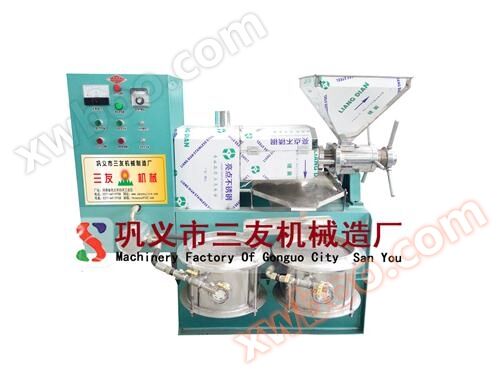
Peanut oil pressing set 1 (as shown in Figure 1): Peanut huller - new drum frying pan - feeding machine - new oil pressing machine - centrifugal oil filter
Peanut oil pressing set 2 (as shown in Figure 2): Conductive hot oil pan - new oil press - centrifugal oil filterPeanut oil pressing set 3 (as shown in Figure 3): New drum wok - New oil press - Centrifugal oil filter
Peanut oil pressing set 4 (as shown in Figure 4): drum electric frying pan - new oil press - centrifugal oil filter
Peanut oil pressing set 5 (as shown in Figure 5): closed frying pan - new oil press - centrifugal oil filter
Introduction to the advantages of the new peanut oil press:
The new spiral peanut oil press developed by Sanyou Machinery can be used for a variety of oil crops such as mustard seeds, cottonseeds, soybeans, peanut kernels, tung seeds, sunflower seeds, sesame, flax, suzi, camellia seeds, etc. The new peanut oil press machine integrates an automatic temperature control system, which can adjust the appropriate temperature for different raw materials, is easy to operate, and simplifies the complexity of stir frying. Except for feeding, there is basically no need for other operations, automatic temperature control, vacuum filtration, simple operation, small footprint, and high oil yield. San You Machinery has developed new technology that can increase the actual oil output rate by 10-30% through temperature control. The screw oil press is advanced in design, reliable in performance, simple in operation and convenient in maintenance. It is characterized by energy saving, high oil yield, labor saving, wide in use, good in oil quality and small in land occupation.
Process flow of pressing peanut oil:
Cleaning - peeling - frying seeds - pressing - filtering - finished peanut oil;
Operation Instructions:
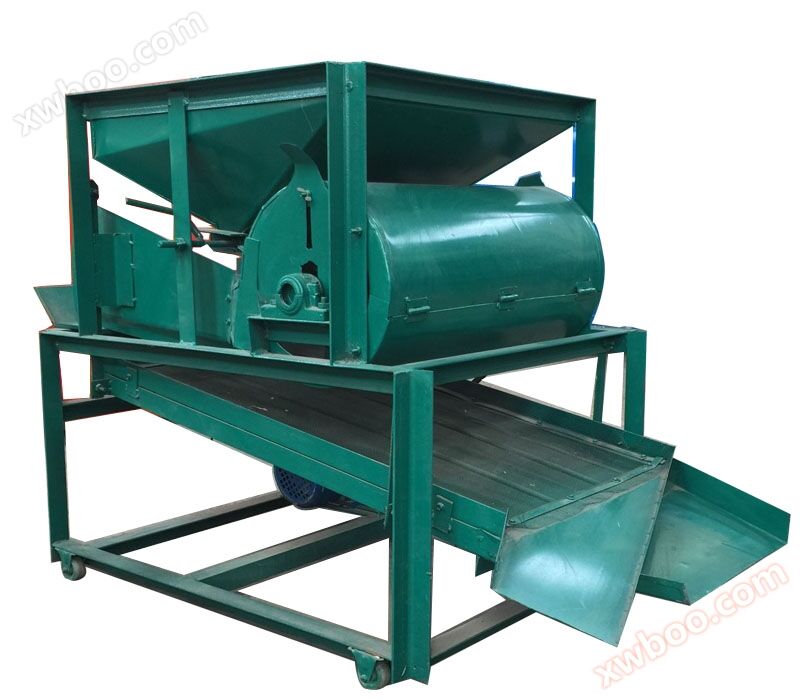
(1) Cleaning and drying of peanut fruits: Peanut fruits entering the oil factory are inevitably contaminated with some impurities. If the soil, stems, leaves, and other impurities carried in the flowers and fruits are not removed, they will not only affect the quality of oil and cake, but also adsorb some oil and reduce the oil yield. If there are impurities such as sand, gravel, metal, hemp rope, etc. in the peanut fruit, it will cause mechanical wear and tear, trigger production accidents, and affect the process effect. Therefore, in order to ensure smooth production, it is necessary to remove impurities as much as possible. For some peanut fruits with high moisture content, drying treatment is also necessary for easy peeling. There are many methods for cleaning, and different methods can be adopted according to the situation of impurities. If the impurities are light, such as grass, stems and leaves, the method of air selection can be used to blow away the impurities with airflow. If the impurity particles are small, they can be removed by selection. For some impurities that are similar in size and relative density to peanuts, if they belong to soil blocks, they can be rubbed and crushed in a mud machine, and then removed by screening method. If it belongs to iron impurities, electromagnetic or magnetic separation can be used. The impurity content after cleaning should be below.
(2) Peeling: The purpose of peeling peanuts before oil extraction is to reduce the adsorption of oil by the shell and improve the oil yield; Can increase the processing capacity of the oil press and reduce wear and tear on the oil press equipment; Beneficial for rolling billets and improving the quality of crude oil; It can improve the quality of cake and is beneficial for comprehensive utilization.
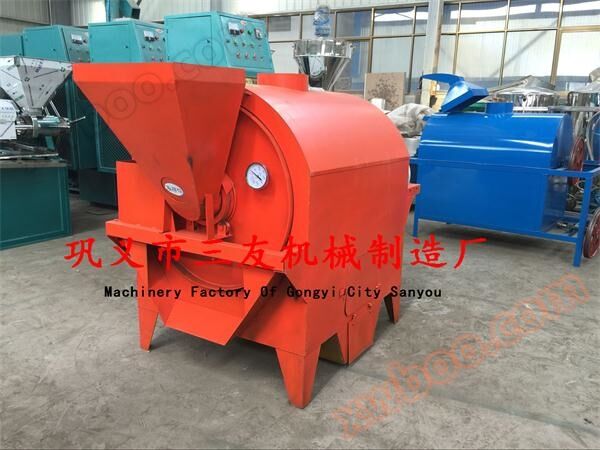
(3) Heat treatment (steaming and frying): Before frying the seeds, soak the peanut kernels in a wok. During the frying process, stir fry the kernels until they are 80% ripe. Pinch them by hand until the kernels and skins are separated. The kernels should be light yellow in color, at a temperature of around 130 ℃, with 1-2% moisture. The cake should be 0.7-1.2mm thick and have long, wrinkled shapes, with smooth oil extraction. The effectiveness of heat treatment has a direct impact on the smooth progress of the entire oil production process, the oil yield, and the quality of the oil and cake. In the cold pressing process, this heat treatment process is eliminated, but it needs to be pressed twice during pressing. In fact, pressing once is also a heating process, resulting in a lower oil yield and a much lighter fragrance.
(4) Squeezing: Adjust the temperature controller of the peanut oil press machine to the desired temperature of 120 ℃ -180 ℃ (depending on the oil type). Turn the heating switch to the main heating position to heat up the machine. At this time, the green light on the temperature controller will turn on and the red light will turn off. When the machine temperature reaches the set temperature, the red light will turn on and the green light will turn off. The temperature of the machine is automatically controlled and maintained at the set temperature. In winter, when the temperature is low, turn the heating switch to the full heating position of the main machine to increase the temperature of the oil pan and facilitate the retention of oil. There is a certain relationship between pressing time and oil extraction efficiency. It is generally believed that peanut oil presses take a long time to press and the oil flows out more slowly. However, the pressing time should not be too long, otherwise there will be more heat loss, which will affect the oil efficiency and production capacity. Therefore, while ensuring oil extraction efficiency, the pressing time should be minimized as much as possible. The residence time of the embryo in the squeezing chamber mainly depends on the rotational speed of the screw shaft, followed by the degree of newness of the squeezing coil and the thickness of the cake. For some high oil content oilseeds, the pressing time can be appropriately extended and the appropriate speed should be selected.