- Phone
-
Address
No. 43 Changfa West Road, Bantian, Longgang District, Shenzhen
Product Categories
Shenzhen Huachenkang Technology Co., Ltd
Platinum Thermistor, PT100 Temperature Sensor, Industrial Thermistor
NegotiableUpdate on 09/26
- Model
- Nature of the Manufacturer
- Producers
- Product Category
- Place of Origin
Overview
Thermistors are designed and manufactured based on the basic principle that the resistance value of platinum wire changes with temperature. They are divided into 10 ohms (division number Pt10) and 100 ohms (division number Pt100) according to the resistance value R (℃) at 0 ℃. The temperature measurement range is large and suitable for -200~850 ℃. The temperature sensing element of a 10 ohm platinum thermistor is wound with thicker platinum wire, and its temperature resistance performance is significantly better than that of a 100 ohm platinum thermistor, mainly used in the temperature range above 650 ℃. A 100 ohm platinum thermistor is mainly used in the temperature range below 650 ℃, although it can also be used in the temperature range above 650 ℃,
Product Details
Product Introduction
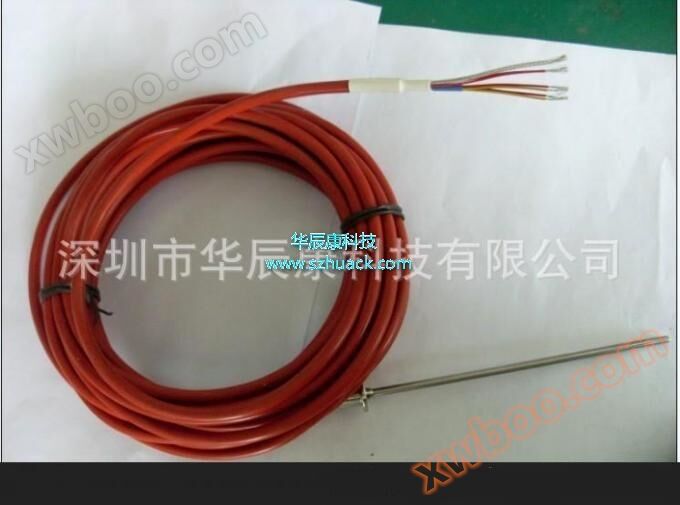
Thermistors are designed and manufactured based on the basic principle that the resistance value of platinum wire changes with temperature. They are divided into 10 ohms (division number Pt10) and 100 ohms (division number Pt100) according to the resistance value R (℃) at 0 ℃. The temperature measurement range is large and suitable for -200~850 ℃. The temperature sensing element of a 10 ohm platinum thermistor is wound with thicker platinum wire, and its temperature resistance performance is significantly better than that of a 100 ohm platinum thermistor, mainly used in the temperature range above 650 ℃. A 100 ohm platinum thermistor is mainly used in the temperature range below 650 ℃, although it can also be used in the temperature range above 650 ℃, but A-level errors are not allowed in the temperature range above 650 ℃.【 Platinum Thermistor, PT100 Temperature Sensor, Industrial Thermistor, Platinum Resistance Packaging Customization, High Precision Platinum Thermistor 】
The resolution of a 100 ohm platinum resistance thermometer is 10 times higher than that of a 10 ohm platinum resistance thermometer, and the requirements for secondary instruments are correspondingly one order of magnitude higher. Therefore, a 100 ohm platinum resistance thermometer should be selected as much as possible for temperature measurement in the temperature range below 650 ℃.【Platinum Thermistor, PT100 Temperature Sensor, Industrial Thermistor, Platinum Resistance Packaging Customization, High Precision Platinum Thermistor
The material of the temperature sensing element skeleton is also the main factor determining the temperature range of platinum thermistors. Common temperature sensing elements include ceramic elements, glass elements, and mica elements, which are made by winding platinum wires around the ceramic skeleton, glass skeleton, and mica skeleton respectively, and then processing them through complex processes. Due to the different properties of the skeleton materials themselves, ceramic components are suitable for temperature ranges below 850 ℃, while glass components are suitable for temperature ranges below 550 ℃. There are a large number of thick film and thin film platinum thermistor temperature sensing components on the market. Thick film platinum thermistor components are printed with platinum paste on glass or ceramic substrates, while thin film platinum thermistor components are sputtered with platinum paste on glass or ceramic substrates and then processed by photolithography. These temperature sensing components are only suitable for the temperature range of -70~500 ℃, but they are material saving, can be produced in large quantities by mechanization, have high efficiency, and are cheap.【Platinum Thermistor, PT100 Temperature Sensor, Industrial Thermistor, Platinum Resistance Packaging Customization, High Precision Platinum Thermistor
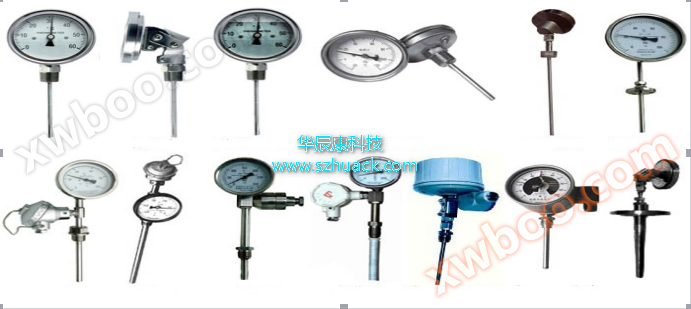
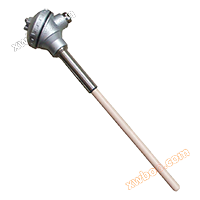
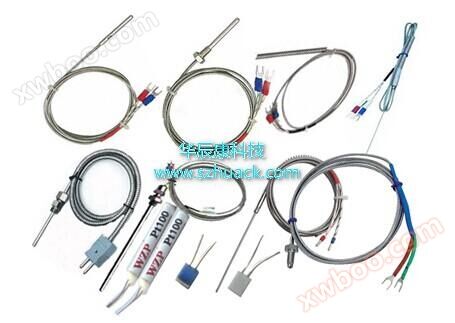
In terms of structure, platinum thermistors can also be divided into industrial platinum thermistors and armored platinum thermistors. Industrial platinum resistance thermometers, also known as assembled platinum resistance thermometers, are made by welding platinum resistance thermometers with leads and assembling them into a metal or ceramic tube with one end closed, and then installing a junction box; Armored platinum thermistor is a whole assembled with platinum thermistor elements, transition leads, and insulation powder in a stainless steel tube and then compacted by a mold. It has the advantages of being solid, earthquake resistant, winding, small wire diameter, and easy to use and install.【Platinum Thermistor, PT100 Temperature Sensor, Industrial Thermistor, Platinum Resistance Packaging Customization, High Precision Platinum Thermistor
reference table
-50 degrees 80.31 ohms【Platinum Thermistor, PT100 Temperature Sensor, Industrial Thermistor, Platinum Resistance Packaging Customization, High Precision Platinum Thermistor
-40 degrees 84.27 ohms【Platinum Thermistor, PT100 Temperature Sensor, Industrial Thermistor, Platinum Resistance Packaging Customization, High Precision Platinum Thermistor
-30 degrees, 88.22 ohms【Platinum Thermistor, PT100 Temperature Sensor, Industrial Thermistor, Platinum Resistance Packaging Customization, High Precision Platinum Thermistor
-20 degrees 92.16 ohms【Platinum Thermistor, PT100 Temperature Sensor, Industrial Thermistor, Platinum Resistance Packaging Customization, High Precision Platinum Thermistor
-10 degrees 96.09 ohms【Platinum Thermistor, PT100 Temperature Sensor, Industrial Thermistor, Platinum Resistance Packaging Customization, High Precision Platinum Thermistor
0 degrees 100.00 ohms【Platinum Thermistor, PT100 Temperature Sensor, Industrial Thermistor, Platinum Resistance Packaging Customization, High Precision Platinum Thermistor
10 degrees 103.90 ohms【Platinum Thermistor, PT100 Temperature Sensor, Industrial Thermistor, Platinum Resistance Packaging Customization, High Precision Platinum Thermistor
20 degrees 107.79 ohms【Platinum Thermistor, PT100 Temperature Sensor, Industrial Thermistor, Platinum Resistance Packaging Customization, High Precision Platinum Thermistor
30 degrees 111.67 ohms【Platinum Thermistor, PT100 Temperature Sensor, Industrial Thermistor, Platinum Resistance Packaging Customization, High Precision Platinum Thermistor
40 degrees 115.54 ohms【Platinum Thermistor, PT100 Temperature Sensor, Industrial Thermistor, Platinum Resistance Packaging Customization, High Precision Platinum Thermistor
50 degrees 119.40 ohms【Platinum Thermistor, PT100 Temperature Sensor, Industrial Thermistor, Platinum Resistance Packaging Customization, High Precision Platinum Thermistor
60 degrees 123.24 ohms【Platinum Thermistor, PT100 Temperature Sensor, Industrial Thermistor, Platinum Resistance Packaging Customization, High Precision Platinum Thermistor
70 degrees 127.08 ohms【Platinum Thermistor, PT100 Temperature Sensor, Industrial Thermistor, Platinum Resistance Packaging Customization, High Precision Platinum Thermistor
80 degrees 130.90 ohms【Platinum Thermistor, PT100 Temperature Sensor, Industrial Thermistor, Platinum Resistance Packaging Customization, High Precision Platinum Thermistor
90 degrees 134.71 ohms【Platinum Thermistor, PT100 Temperature Sensor, Industrial Thermistor, Platinum Resistance Packaging Customization, High Precision Platinum Thermistor
100 degrees 138.51 ohms【Platinum Thermistor, PT100 Temperature Sensor, Industrial Thermistor, Platinum Resistance Packaging Customization, High Precision Platinum Thermistor
110 degrees 142.29 ohms【Platinum Thermistor, PT100 Temperature Sensor, Industrial Thermistor, Platinum Resistance Packaging Customization, High Precision Platinum Thermistor
120 degrees 146.07 ohms【Platinum Thermistor, PT100 Temperature Sensor, Industrial Thermistor, Platinum Resistance Packaging Customization, High Precision Platinum Thermistor
130 degrees, 149.83 ohms【Platinum Thermistor, PT100 Temperature Sensor, Industrial Thermistor, Platinum Resistance Packaging Customization, High Precision Platinum Thermistor
140 degrees 153.58 ohms【Platinum Thermistor, PT100 Temperature Sensor, Industrial Thermistor, Platinum Resistance Packaging Customization, High Precision Platinum Thermistor
150 degrees, 157.33 ohms【Platinum Thermistor, PT100 Temperature Sensor, Industrial Thermistor, Platinum Resistance Packaging Customization, High Precision Platinum Thermistor
160 degrees 161.05 ohms【Platinum Thermistor, PT100 Temperature Sensor, Industrial Thermistor, Platinum Resistance Packaging Customization, High Precision Platinum Thermistor
170 degrees 164.77 ohms【Platinum Thermistor, PT100 Temperature Sensor, Industrial Thermistor, Platinum Resistance Packaging Customization, High Precision Platinum Thermistor
180 degrees 168.48 ohms【Platinum Thermistor, PT100 Temperature Sensor, Industrial Thermistor, Platinum Resistance Packaging Customization, High Precision Platinum Thermistor
190 degrees 172.17 ohms【Platinum Thermistor, PT100 Temperature Sensor, Industrial Thermistor, Platinum Resistance Packaging Customization, High Precision Platinum Thermistor
200 degrees 175.86 ohms【Platinum Thermistor, PT100 Temperature Sensor, Industrial Thermistor, Platinum Resistance Packaging Customization, High Precision Platinum Thermistor
The resistance value will increase regularly with the uniform temperature!
signal connection
Thermistor is a primary component that converts temperature changes into changes in resistance values. Typically, the resistance signal needs to be transmitted through leads to a computer control device or other primary instrument. Industrial thermal resistors are installed on the production site and there is a certain distance between them and the control room, so the leads of the thermal resistors will have a significant impact on the measurement results.【Platinum Thermistor, PT100 Temperature Sensor, Industrial Thermistor, Platinum Resistance Packaging Customization, High Precision Platinum Thermistor
There are three main ways to lead a thermal resistor
○ 1 Two wire system: The method of connecting a wire at each end of a thermal resistor to extract a resistance signal is called a two wire system: This lead method is simple, but due to the inevitable lead resistance r in connecting wires, the size of r is related to the material and length of the wire, so this lead method is only suitable for situations with low measurement accuracy【Platinum Thermistor, PT100 Temperature Sensor, Industrial Thermistor, Platinum Resistance Packaging Customization, High Precision Platinum Thermistor
○ 2 Three wire system: The method of connecting a lead at one end of the root of a thermal resistor and two leads at the other end is called the three wire system. This method is usually used in conjunction with an electric bridge to effectively eliminate the influence of lead resistance and is the most commonly used in industrial process control.
○ 3 Four wire system: The method of connecting two wires at each end of the root of the thermistor is called a four wire system, where two leads provide a constant current I to the thermistor, convert R into a voltage signal U, and then lead U to the secondary instrument through the other two leads. It can be seen that this lead method can completely eliminate the influence of lead resistance and is mainly used for high-precision temperature detection.【Platinum Thermistor, PT100 Temperature Sensor, Industrial Thermistor, Platinum Resistance Packaging Customization, High Precision Platinum Thermistor
The thermal resistor adopts a three wire connection method. The use of a three wire system is to eliminate measurement errors caused by the resistance of connecting wires. This is because the circuit for measuring thermal resistance is usually an unbalanced bridge. As a bridge arm resistor of the electric bridge, the thermal resistor's connecting wire (from the thermal resistor to the central control room) also becomes a part of the bridge arm resistor. This part of the resistor is unknown and varies with the ambient temperature, causing measurement errors. Adopting a three wire system, one wire is connected to the power terminal of the bridge, and the other two wires are respectively connected to the bridge arm where the thermal resistance is located and the adjacent bridge arm, thus eliminating measurement errors caused by the resistance of the wire line.【Platinum Thermistor, PT100 Temperature Sensor, Industrial Thermistor, Platinum Resistance Packaging Customization, High Precision Platinum Thermistor
Similar Product Recommend