-
Phone
13914915186
-
Address
B07, Jinfeng Town Science and Technology Entrepreneurship Park, Zhangjiagang
Product Categories
Suzhou Pintai Machinery Co., Ltd
Reflux filling for hot filling
NegotiableUpdate on 08/05
- Model
- Nature of the Manufacturer
- Producers
- Product Category
- Place of Origin
Overview
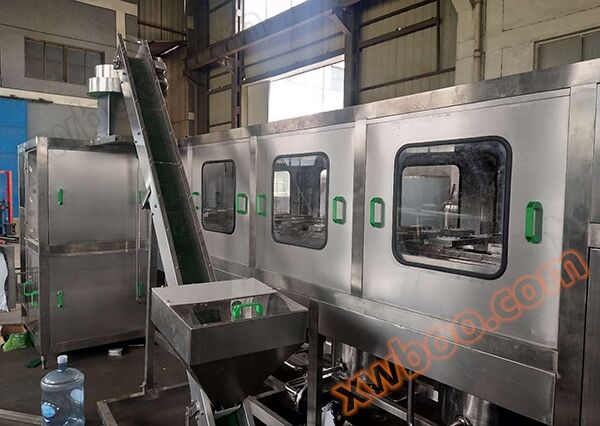
The beverage hot filling machine combines the functions of flushing, filling, and sealing into one machine, achieving automation throughout the entire process. It is suitable for filling juice drinks and blueberry juice drinks in high-temperature resistant polyester bottles
Product Details

The beverage hot filling machine combines the functions of flushing, filling, and sealing into one machine, achieving automation throughout the entire process. It is suitable for filling juice and blueberry juice drinks in high-temperature resistant polyester bottles. The filling temperature is generally around 82-85 degrees Celsius for liquids. This series of beverage filling machines is made of high-quality SUS304 material, and the main components are precision machined by CNC machine tools. The entire machine uses advanced photoelectric detection to check the operation status of each component, and has a high degree of automation and a simple human-machine interface operation display screen.
Main performance of beverage hot filling machine:
1. The bottle is fed with an air delivery device and a hanging card bottleneck method, which allows for fast bottle loading without causing deformation of the bottle.
2. The bottle mouth is rinsed using advanced bottleneck technology to avoid contact with the threaded mouth, making it more hygienic. All bottle transportation uses bottleneck technology, and changing the bottle shape does not require adjusting the height, only changing the protective plate related to the bottle body diameter.
3. The filling adopts valve lifting technology, and the filling valve adopts a new micro pressure filling principle for accurate quantification.
4. The screw cap adopts the instant catch and turn screw cap technology introduced from France, and the lid sorting device is installed at a low position and horizontally fed.
5. The host PLC and frequency converter are both from well-known brands such as Mitsubishi and Omron from Japan.
Main features of beverage hot filling machine:
(1) The machine has a compact structure, a complete control system, easy operation, and a high degree of automation;
(2) Changing the bottle shape only requires replacing the star wheel and arc-shaped guide plate of the cap part;
(3) All parts in contact with materials are made of high-quality stainless steel, with no dead corners in the process and easy to clean;
(4) Using high-speed filling valves, the liquid level is accurate and there is no liquid loss, ensuring the requirements of the filling process;
(5) The sealing head adopts a magnetic constant torque device to ensure the quality of the sealing and will not damage the bottle cap;
(6) Adopting an efficient lid system with complete self-control and protection devices;
(7) Equipped with comprehensive overload protection devices, it can effectively protect the safety of equipment and operators;
(8) The control system has functions such as production speed control, missing cap detection, automatic bottle stop, and output counting;
(9) The main electrical components are made of Japanese Mitsubishi MITSUBISHI, SCHNEIDER and other products, and the pneumatic components are made of Taiwanese AirTAC products;
(10) The blueberry juice beverage filling machine adopts advanced touch screen control, which can achieve human-machine dialogue operation.
Technical structure characteristics of beverage filling machine:
a. Bottle flushing section:
This machine is a rotary bottle washing machine, mainly used for washing new bottles of beverages, water and other products. Then send the bottle to the filling machine for product filling.
PET bottles are fed into the equipment by a bottle sorting star wheel, clamped by a clamp and flipping mechanism, and then turned downwards. After rinsing with sterile water and draining, they are automatically flipped upwards and transported to the filling machine by a bottle discharge star wheel. The main structure of the equipment, the parts in contact with the flushing medium, and the external protective cover are all made of high-quality stainless steel materials; Open gear transmission.
A brand new stainless steel clamp with a simple structure and easy adjustment; Less contact area with the bottle mouth, effectively avoiding secondary contamination of the bottle mouth
The bottle washing machine is equipped with a water collection tray to recycle the bottle washing water
When flushing bottles, the flushing volume per bottle is 105ml/s (at 0.25MPa)
b. Filling section:
The filling part realizes the filling of materials into the washed bottles sent by the bottle washing machine.
The filling machine is designed by our company, and the filling valve has independent intellectual property rights. It uses the principle of pressure filling and negative pressure reflux.
The filling valve adopts a pressure filling negative pressure reflux method, which is fast and sensitive to filling, and has high filling liquid level accuracy. There is no spring inside the valve, and the material does not come into contact with the spring, which is beneficial for cleaning the inside of the valve. To ensure the filling process and temperature, the filling valve keeps the material in a micro reflux state when there are no bottles or when the machine is stopped.
The filling cylinder adopts a full cylinder method to ensure stable pressure inside the cylinder.
The whole machine has a complete CIP cleaning interface.
Adopting a dual guide rod bottle lifting structure to ensure stable bottle lifting and alignment.
The main transmission adopts gear transmission and open combination transmission, which has high efficiency, low noise, long service life, easy maintenance, and sufficient lubrication. The main motor speed of the machine is controlled by a frequency converter, and this machine adopts stepless frequency conversion speed regulation.
The bottle guide system has a simple structure and can be quickly and conveniently changed according to the bottle type. The whole machine adopts a bottleneck structure for conveying.
The whole machine is automatically controlled by PLC, and faults such as bottle blockage and missing caps are displayed online.
The key components and electrical components of this machine are imported products.
c. Twisting the lid:
The capping part will be used to screw the caps sorted by the capping machine onto the bottles that have already been filled, and then transported to the subsequent process by the conveyor chain.
The capping machine drives the rotating disc to rotate through a reducer. Remove the lid from the hopper through the outlet under the action of centrifugal force. There is a positive and negative lid separation device at the exit. When the reverse lid passes by, it automatically falls into the return pipeline and is blown into the hopper by wind power. Only the front cover can smoothly enter the slide, and the amount of cover in the hopper is automatically detected by a photoelectric switch to control the cover conveying machine, ensuring that the lower cover achieves the desired effect. When the cover enters the slide, it can smoothly enter the feeding cover plate. To prevent accidents, an anti reverse cover dial is also installed on the slide to ensure that the cover entering the feeding cover plate is correct. A pair of photoelectric switches are also installed on the slide to immediately stop the host when no cover is detected. In order to effectively remove damaged covers without anti-theft rings and residual covers when cleaning the hopper, there is a movable outlet directly opposite the hopper outlet to meet this function.
The screw cap is a magnetic screw cap with overload protection function, and the screw cap torque is stable and reliable. There is no phenomenon of gnawing, high lid, crooked lid, or curled edge on the cover.
Production process of beverage hot filling machine:
1、 Raw material selection
Select fully ripe, fresh, flavorful, juicy, and pest free fresh fruits, and those with insufficient maturity should undergo post ripening.
2、 Raw material pretreatment
1. Cleaning. After selecting the raw materials, rinse them with clean water to remove impurities. After cleaning, rinse them in a 1% hydrochloric acid solution or detergent solution to remove residual pesticides. Rinse them in clean water and drain them.
2. Cut half to remove the nucleus. Use a cutting and excavating machine. 3. Soak for color protection. Add 0.1% of the raw materials after half cutting and half digging. Soak in a mixed solution of ascorbic acid and citric acid for color protection.
3、 Heating and pulping
The fruit chunks are heated at 90 ° C-95 ° C for 3-5 minutes to promote softening, and then beaten using a 0.5 mm diameter beater to remove the skin.
4、 Flavor adjustment
After the previous processing, the fruit pulp needs to be adjusted to enhance its flavor. Add ingredients such as sugar, citric acid, and L-ascorbic acid during adjustment. The ratio is 100 kilograms of peach pulp, 80 kilograms of 27% sugar solution, and 0.45 kilograms of citric acid
Kg, L-ascorbic acid 0.07-0.2 kg.
5、 Homogeneous degassing
Homogenization is the process of splitting the suspended fruit pulp particles into smaller particles and evenly dispersing them in the juice, increasing the stability of the juice and preventing stratification. The homogenization method is to pass the roughly filtered juice through a high-pressure homogenizer, allowing the pulp particles and colloidal substances in the juice to pass through small holes with a diameter of 0.002-0.003 millimeters under high pressure and become finer particles. In terms of production
Generally, a homogenizer with a capacity of 130-160 kg/cm2 is used.
Additionally, colloid mills can be used for homogenization. When the juice flows through the narrow slit with a gap of 0.05-0.075 millimeters in the colloid mill, the pulp particles in the juice collide and rub against each other due to strong centrifugal force, thus achieving homogenization.
Fruits enter gases such as oxygen, nitrogen, and carbon dioxide during juice extraction, among which nitrogen can cause vitamin C and pigments
Due to the oxidation of substances, degassing is necessary.
6、 Sterilization canning
Heat the juice to 95 ℃, maintain for 1 minute, and immediately fill the can while it is still hot.
7、 Sealed cooling
Tighten the bottle cap and invert the can for one minute. After sealing, quickly cool it in sections to around 38 ℃, and then store it in the warehouse. Qualified fruit tea products are pink or yellow brown in color, with a dark red color allowed. The liquid is uniformly cloudy and has fine particle precipitation after long-term standing. They have a peach juice flavor, no odor, and soluble solids of 10% -14%.
Parameter Detail Description
Main performance of beverage hot filling machine:
1. The bottle is fed with an air delivery device and a hanging card bottleneck method, which allows for fast bottle loading without causing deformation of the bottle.
2. The bottle mouth is rinsed using advanced bottleneck technology to avoid contact with the threaded mouth, making it more hygienic. All bottle transportation uses bottleneck technology, and changing the bottle shape does not require adjusting the height, only changing the protective plate related to the bottle body diameter.
3. The filling adopts valve lifting technology, and the filling valve adopts a new micro pressure filling principle for accurate quantification.
4. The screw cap adopts the instant catch and turn screw cap technology introduced from France, and the lid sorting device is installed at a low position and horizontally fed.
5. The host PLC and frequency converter are both from well-known brands such as Mitsubishi and Omron from Japan.
Main features of beverage hot filling machine:
(1) The machine has a compact structure, a complete control system, easy operation, and a high degree of automation;
(2) Changing the bottle shape only requires replacing the star wheel and arc-shaped guide plate of the cap part;
(3) All parts in contact with materials are made of high-quality stainless steel, with no dead corners in the process and easy to clean;
(4) Using high-speed filling valves, the liquid level is accurate and there is no liquid loss, ensuring the requirements of the filling process;
(5) The sealing head adopts a magnetic constant torque device to ensure the quality of the sealing and will not damage the bottle cap;
(6) Adopting an efficient lid system with complete self-control and protection devices;
(7) Equipped with comprehensive overload protection devices, it can effectively protect the safety of equipment and operators;
(8) The control system has functions such as production speed control, missing cap detection, automatic bottle stop, and output counting;
(9) The main electrical components are made of Japanese Mitsubishi MITSUBISHI, SCHNEIDER and other products, and the pneumatic components are made of Taiwanese AirTAC products;
(10) The blueberry juice beverage filling machine adopts advanced touch screen control, which can achieve human-machine dialogue operation.
Technical structure characteristics of beverage filling machine:
a. Bottle flushing section:
This machine is a rotary bottle washing machine, mainly used for washing new bottles of beverages, water and other products. Then send the bottle to the filling machine for product filling.
PET bottles are fed into the equipment by a bottle sorting star wheel, clamped by a clamp and flipping mechanism, and then turned downwards. After rinsing with sterile water and draining, they are automatically flipped upwards and transported to the filling machine by a bottle discharge star wheel. The main structure of the equipment, the parts in contact with the flushing medium, and the external protective cover are all made of high-quality stainless steel materials; Open gear transmission.
A brand new stainless steel clamp with a simple structure and easy adjustment; Less contact area with the bottle mouth, effectively avoiding secondary contamination of the bottle mouth
The bottle washing machine is equipped with a water collection tray to recycle the bottle washing water
When flushing bottles, the flushing volume per bottle is 105ml/s (at 0.25MPa)
b. Filling section:
The filling part realizes the filling of materials into the washed bottles sent by the bottle washing machine.
The filling machine is designed by our company, and the filling valve has independent intellectual property rights. It uses the principle of pressure filling and negative pressure reflux.
The filling valve adopts a pressure filling negative pressure reflux method, which is fast and sensitive to filling, and has high filling liquid level accuracy. There is no spring inside the valve, and the material does not come into contact with the spring, which is beneficial for cleaning the inside of the valve. To ensure the filling process and temperature, the filling valve keeps the material in a micro reflux state when there are no bottles or when the machine is stopped.
The filling cylinder adopts a full cylinder method to ensure stable pressure inside the cylinder.
The whole machine has a complete CIP cleaning interface.
Adopting a dual guide rod bottle lifting structure to ensure stable bottle lifting and alignment.
The main transmission adopts gear transmission and open combination transmission, which has high efficiency, low noise, long service life, easy maintenance, and sufficient lubrication. The main motor speed of the machine is controlled by a frequency converter, and this machine adopts stepless frequency conversion speed regulation.
The bottle guide system has a simple structure and can be quickly and conveniently changed according to the bottle type. The whole machine adopts a bottleneck structure for conveying.
The whole machine is automatically controlled by PLC, and faults such as bottle blockage and missing caps are displayed online.
The key components and electrical components of this machine are imported products.
c. Twisting the lid:
The capping part will be used to screw the caps sorted by the capping machine onto the bottles that have already been filled, and then transported to the subsequent process by the conveyor chain.
The capping machine drives the rotating disc to rotate through a reducer. Remove the lid from the hopper through the outlet under the action of centrifugal force. There is a positive and negative lid separation device at the exit. When the reverse lid passes by, it automatically falls into the return pipeline and is blown into the hopper by wind power. Only the front cover can smoothly enter the slide, and the amount of cover in the hopper is automatically detected by a photoelectric switch to control the cover conveying machine, ensuring that the lower cover achieves the desired effect. When the cover enters the slide, it can smoothly enter the feeding cover plate. To prevent accidents, an anti reverse cover dial is also installed on the slide to ensure that the cover entering the feeding cover plate is correct. A pair of photoelectric switches are also installed on the slide to immediately stop the host when no cover is detected. In order to effectively remove damaged covers without anti-theft rings and residual covers when cleaning the hopper, there is a movable outlet directly opposite the hopper outlet to meet this function.
The screw cap is a magnetic screw cap with overload protection function, and the screw cap torque is stable and reliable. There is no phenomenon of gnawing, high lid, crooked lid, or curled edge on the cover.
Production process of beverage hot filling machine:
1、 Raw material selection
Select fully ripe, fresh, flavorful, juicy, and pest free fresh fruits, and those with insufficient maturity should undergo post ripening.
2、 Raw material pretreatment
1. Cleaning. After selecting the raw materials, rinse them with clean water to remove impurities. After cleaning, rinse them in a 1% hydrochloric acid solution or detergent solution to remove residual pesticides. Rinse them in clean water and drain them.
2. Cut half to remove the nucleus. Use a cutting and excavating machine. 3. Soak for color protection. Add 0.1% of the raw materials after half cutting and half digging. Soak in a mixed solution of ascorbic acid and citric acid for color protection.
3、 Heating and pulping
The fruit chunks are heated at 90 ° C-95 ° C for 3-5 minutes to promote softening, and then beaten using a 0.5 mm diameter beater to remove the skin.
4、 Flavor adjustment
After the previous processing, the fruit pulp needs to be adjusted to enhance its flavor. Add ingredients such as sugar, citric acid, and L-ascorbic acid during adjustment. The ratio is 100 kilograms of peach pulp, 80 kilograms of 27% sugar solution, and 0.45 kilograms of citric acid
Kg, L-ascorbic acid 0.07-0.2 kg.
5、 Homogeneous degassing
Homogenization is the process of splitting the suspended fruit pulp particles into smaller particles and evenly dispersing them in the juice, increasing the stability of the juice and preventing stratification. The homogenization method is to pass the roughly filtered juice through a high-pressure homogenizer, allowing the pulp particles and colloidal substances in the juice to pass through small holes with a diameter of 0.002-0.003 millimeters under high pressure and become finer particles. In terms of production
Generally, a homogenizer with a capacity of 130-160 kg/cm2 is used.
Additionally, colloid mills can be used for homogenization. When the juice flows through the narrow slit with a gap of 0.05-0.075 millimeters in the colloid mill, the pulp particles in the juice collide and rub against each other due to strong centrifugal force, thus achieving homogenization.
Fruits enter gases such as oxygen, nitrogen, and carbon dioxide during juice extraction, among which nitrogen can cause vitamin C and pigments
Due to the oxidation of substances, degassing is necessary.
6、 Sterilization canning
Heat the juice to 95 ℃, maintain for 1 minute, and immediately fill the can while it is still hot.
7、 Sealed cooling
Tighten the bottle cap and invert the can for one minute. After sealing, quickly cool it in sections to around 38 ℃, and then store it in the warehouse. Qualified fruit tea products are pink or yellow brown in color, with a dark red color allowed. The liquid is uniformly cloudy and has fine particle precipitation after long-term standing. They have a peach juice flavor, no odor, and soluble solids of 10% -14%.
Parameter Detail Description
model | production | power | size | weight |
RCGF14-12-5 | 3000 to 4000 bottles/hour | 6 Kw | 2200X1600X2300MM | 3000 Kg |
RCGF18-18-6 | 5000 to 6000 bottles per hour | 6 Kw | 2300X1700X2300MM | 3800 Kg |
RCGF24-24-8 | 8000 to 12000 bottles/hour | 7 Kw | 2900X1900X2300MM | 5000 Kg |
RCGF32-32-10 | 12000 to 15000 bottles/hour | 9 Kw | 4300X3500X2300MM | 6000 Kg |
RCGF40-40-12 | 15000 to 18000 bottles/hour | 13 Kw | 4300X3900X2300MM | 8000 Kg |
RCGF50-50-12 | 18000 to 22000 bottles per hour | 16 Kw | 4600X4300X2300MM | 10000 Kg |
RCGF60-60-15 | 20000 to 25000 bottles per hour | 19 Kw | 5100X4600X2300MM | 12000 Kg |