-
E-mail
1787896462@qq.com
-
Phone
13928731976
-
Address
Room 412, Building 6, 599 Huiwang East Road, Jiading District, Shanghai
Product Categories
Shanghai Qingbo Experimental Equipment Co., Ltd

Rotorless Vulcanizer Computerized Precision Rotorless Rubber Vulcanization Curve Instrument
NegotiableUpdate on 03/06
- Model
- Nature of the Manufacturer
- Producers
- Product Category
- Place of Origin
Overview
Introduction and Overview of Rotorless Vulcanizer Rotorless Vulcanizer is an instrument used in the rubber processing industry to control the quality of rubber materials, quickly inspect and apply rubber basic research. It provides accurate data for optimizing rubber formula combinations and can accurately measure parameters such as scorch time, positive vulcanization time, vulcanization index, and maximum and minimum torque
Product Details
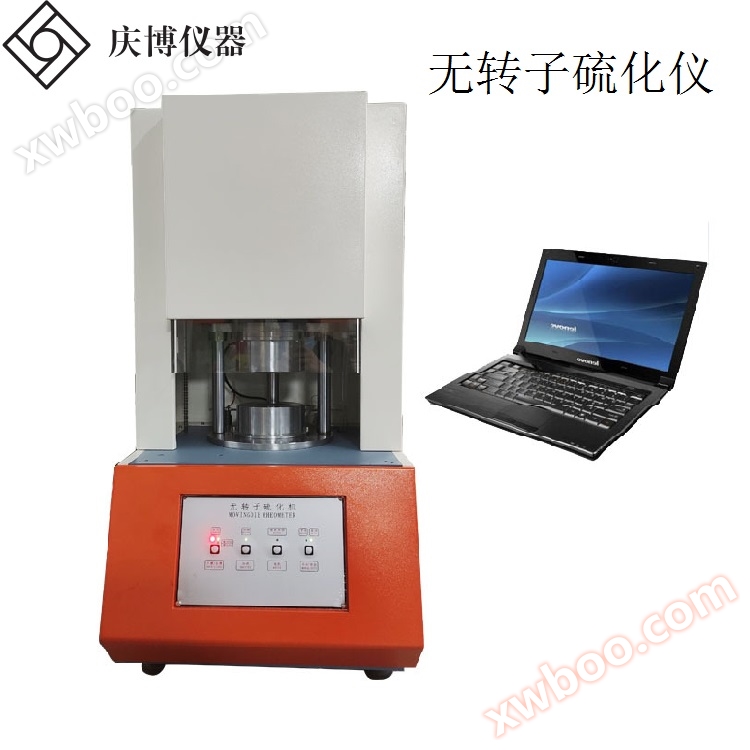
Rotorless vulcanizing apparatus


Introduction and Overview
Rotorless vulcanizing instrument is an instrument used in the rubber processing industry to control the quality of rubber materials, quickly inspect and apply rubber basic research. It provides accurate data for optimizing rubber formula combinations and can accurately measure parameters such as scorching time, positive vulcanization time, vulcanization index, and maximum and minimum torque.
The vulcanizing instrument consists of a host, computer, temperature measurement, temperature control, data acquisition and processing, sensors, and electrical interlocking. The measurement and temperature control circuit consists of a measurement and control module, a platinum resistor, and a heater, which can automatically track changes in the power grid and environmental temperature, automatically correct PID parameters, and achieve fast and accurate temperature control. The data acquisition system and electromechanical linkage complete the automatic detection of torque signals during the rubber vulcanization process, and automatically display temperature values and set values in real time. After vulcanization, the vulcanization curve and process parameters are automatically processed, calculated, and printed. Display vulcanization time and vulcanization torque. The computer displays the vulcanization process in real-time, and the changes in "temperature" and "time torque" can be clearly seen from above.
Local features
This testing instrument has the following characteristics:
a. High temperature control accuracy and wide range. (±0.1℃)
b. Clock programming function. (Set and modify time)
c. Advanced switching power supply with wide voltage regulation range.
d. Import integrated circuits and control components.
e. Fully displayed in Chinese.
f. Meets the requirements of GB/T16584 (testing rubber vulcanization characteristics using a rotorless vulcanizing apparatus) and ISO6502.
The powerful microprocessor uses high-quality imported chips. On the one hand, computers and microprocessors can obtain signals from torque sensors and record them on a graph. At the same time, the computer and measurement module interface exchange data and control the temperature of the mold cavity.
The rotorless vulcanizer was designed with a series of interlocking functions, including closing the plastic glass door. If the door is not closed, the mold cannot be closed. The mold can only be closed when the door is securely closed. Only then can work be carried out.
In summary, compared to other models, this model of vulcanizer has more stable performance, higher accuracy, lower cost, better quality, and complete functions. It is an instrument for testing the properties of rubber.
Technical indicators and specifications
The standard for this vulcanizing instrument is: ASTMD5289-95 ISO6502-1999 (E) GB/T16584-1996
Temperature measurement range: Room temperature -200 ℃
Temperature measurement accuracy: ≤± 0.1 ℃ at 100-200 ℃
Temperature control stability: ≤ ± 0.1 ℃ at 100-200 ℃
Setting range: 0-200 ℃; Set minimum unit: 0.1 ℃
Temperature display range: 0-200 ℃; Display resolution: 0.1 ℃
Set time range: 0-200 minutes; Set minimum unit: 1 minute
Automatic range switching: automatically increases based on actual torque
Power supply: 50HZ,~220V ± 10%, 50 ± 1Hz, must be well grounded
Compressed air: 0.32Mpa controlled by pneumatic regulating valve
Swing frequency: 100 times/minute (approximately 1.7HZ)
Environmental temperature: normal temperature -40 ℃, relative humidity less than 80%, no corrosive gases in the air
Mass: ≈ 250kg
Power: 2KW
Dimensions: 680 × 630 × 1100 (mm)
Construction and Principle
structure
The rotorless vulcanizing instrument is an intelligent device that combines mechanical and electrical principles. It consists of the following parts:
a. Mechanical part: composed of housing, upper and lower molds, vibrator, force sensor, and gearbox;
b. Air compressor control system: composed of three parts: the cylinder for opening and closing the mold, the solenoid valve, and the air compressor;
c. Electronic control system: composed of temperature measurement and control system and door control device;
d. Testing and control system: mainly composed of microprocessor, computer control system, data acquisition device, AC converter, data processor, motor control, mold opening and closing control, and report printer. The printer used is an HP printer, and the paper used is A4 paper.
Design Principle
The mold cavity is composed of upper and lower molds. The rubber sample is placed in an almost sealed mold cavity and maintained at a certain temperature and pressure. One of the mold cavities vibrates at a frequency of 1.7Hz with an amplitude of ± 0.5o or ± 1o. The oscillation of the mold cavity causes the sample to produce shear strain, and at the same time, the sample generates a reaction force (moment) to the mold cavity in the opposite direction, the magnitude of which depends on the stiffness (shear modulus) of the rubber material.
As vulcanization begins, the stiffness of the rubber sample increases, and the reaction force (torque) measured by the force measuring mechanism gradually rises to a stable or maximum value and is gradually displayed on the screen. At the same time, a corresponding relationship curve between torque and time is seen, usually referred to as the "vulcanization curve". The shape of the curve and the test temperature are related to the characteristics of the rubber material. After the experiment is completed, the data and curves will be automatically stored in the database. If printing is required, simply click "Print".
The shape of the vulcanization curve depends on the temperature being tested and the characteristics of the rubber sample. In addition to curves, computer-controlled printers will print out corresponding technical parameters.
Technical requirements for data processing
The drawing format, curve, and parameters are shown in the following figure:

The data on the printed report represents the following content:
ML: Minimum torque
MH: Maximum torque
TS1(Early vulcanization time, scorch time): ML ± 0.1Nm, which is in MLThe time corresponding to adding 0.1N · m torque on the basis of, calculated in minutes.
TS2(Early vulcanization time, scorch time): ML ± 0.2Nm, which is in MLThe time corresponding to adding 0.2N · m torque on the basis of, calculated in minutes.
T10(Initial vulcanization time): ML+(MH-ML)The time corresponding to the torque reaching this value of 10% is calculated in minutes.
T50(Accurately assessable vulcanization time): ML+(MH-ML)The time corresponding to the moment when the torque reaches 50%, calculated in minutes.
T90(Commonly used optimal vulcanization time): ML+(MH-ML)The time corresponding to the moment when the torque reaches 90%, calculated in minutes.
VC (vulcanization rate index): VC=100/(T90-TS1)
Shanghai Qingbo Experimental Equipment Co., Ltd. Main Products:
1、 Environmental detection equipment: constant temperature and humidity test chamber, damp heat test chamber, programmable constant temperature and humidity test chamber, high and low temperature alternating damp heat test chamber, temperature and humidity regulating test chamber, single point constant temperature and humidity test machine, walk-in constant temperature and humidity room, high and low temperature test chamber, high temperature aging room, various precision ovens, cold and hot shock test chamber, brine spray test chamber, salt fog test machine, sulfur dioxide test chamber, rain test chamber, sand dust test chamber, yellowing resistance test chamber, sunlight test chamber, ultraviolet light aging test chamber, xenon lamp aging test chamber, ozone aging test chamber, mold test chamber and other environmental test chambers, UV furnace, etc.
2、 Material mechanics testing equipment: tensile testing machine, microcomputer controlled universal material testing machine, drop testing machine, ball impact testing machine, mechanical vibration table, high-frequency vibration testing table, low-frequency vibration testing table, electromagnetic vibration testing table, simulated automobile transportation vibration table, wire bending testing machine, mobile phone flip life testing machine, mobile phone slide life testing machine, button life testing machine, friction decolorization testing machine, alcohol friction resistance testing machine, TABER wear resistance testing machine, DIN wear resistance testing machine, RCA paper tape wear resistance testing machine, insertion and extraction life testing machine, fully automatic insertion and extraction force testing machine, load displacement curve testing machine, shaft life testing machine, wire tension testing machine, elongation testing machine, etc.
3、 Luggage testing equipment: rupture strength testing machine, cardboard box compression testing machine, cardboard box compression testing machine, ring compression strength testing machine, edge compression strength testing machine, peel strength testing machine, cantilever beam impact testing machine, simply supported beam impact testing machine, drop ball impact testing machine, drop hammer impact testing machine, zipper reciprocating testing machine, button tension testing machine, leather scratch resistance testing machine, leather softness testing machine, horizontal and vertical fire resistance testing machine, etc.
4、 Measurement equipment and other laboratory equipment: X-ray fluorescence spectrometer, ROHS Detector, element analyzer, manual Rockwell hardness tester, electric Rockwell hardness tester, digital Rockwell hardness tester, portable Rockwell hardness tester, surface Rockwell hardness tester, digital surface Rockwell hardness tester, Vickers hardness tester, micro Vickers hardness tester, low load Vickers hardness tester, digital micro Vickers hardness tester, Brinell hardness tester, Blowe hardness tester, Vickers hardness tester, Richter hardness tester, Babbitt hardness tester, Shore hardness tester, metallographic sample cutting machine, metallographic sample pre grinding machine, metallographic sample polishing machine, metallographic sample embedding machine, metallographic microscope, visual microscope, projector, image measuring instrument, coordinate measuring instrument, plastic melting index meter, rotorless vulcanizing instrument, needle testing machine Color difference meter, portable color difference meter, spectrophotometer, color matching light box, standard light source box, hundred grid knife, pencil hardness tester, Tape retention testing machine, tape initial adhesion testing machine, push-pull force meter, ink decolorization testing machine, etc.
Similar Product Recommend