-
E-mail
yafei.wei@pgeneral.com.cn
-
Phone
13681197768
-
Address
No. 3 Pingsan Road, Pinggu District, Beijing
Product Categories
Beijing Puxi General Instrument Co., Ltd
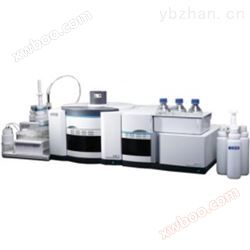
SA3/5/7 series atomic fluorescence morphology analyzer
NegotiableUpdate on 09/19
- Model
- Nature of the Manufacturer
- Producers
- Product Category
- Place of Origin
Overview
The SA3/5/7 series atomic fluorescence morphology analyzer is an atomic fluorescence morphology analyzer launched by Puxi, equipped with the PF7 series atomic fluorescence detector. By using gas source sequential flow injection technology, dual beam optical structure, and information-based sample management system, the morphology separation module adopts morphology analysis hydride generator, quartz digestion device, pneumatic flow system and other technologies, with integrated process control, which can achieve simultaneous collection of multi-element morphology analysis, complete the processing and quantitative calculation of chromatographic spectra.
Product Details
SA3/5/7 series atomic fluorescence morphology analyzerIt is an atomic fluorescence morphology analyzer launched by Puxi, equipped with PF7 series atomic fluorescence detectors. By using gas source sequential flow injection technology, dual beam optical structure, and information-based sample management system, the morphology separation module adopts morphology analysis hydride generator, quartz digestion device, pneumatic flow system and other technologies, with integrated process control, which can achieve simultaneous collection of multi-element morphology analysis, complete the processing and quantitative calculation of chromatographic spectra. The equipment is divided into SA710 isometric morphology analyzer and SA720 gradient morphology analyzer, which can meet the needs of the industry.
SA3/5/7 series atomic fluorescence morphology analyzerFeatures:
√ Maintenance free
1. The pneumatic flow system without wear parts completely eliminates the maintenance troubles of peristaltic pumps.
√ No debugging required
1. The detector has a built-in morphological analysis interface, and the analysis mode software can be switched without manual debugging and installation.
√ More stable
1. The coexistence of detectors and morphological analysis in two sets of hydride reaction systems is more in line with the working characteristics of morphological analysis.
2. The vapor-liquid separator, used for cooling and water removal, as well as stirring and mixing, can greatly enhance sensitivity.
3. The gas source flow path system has a constant pressure and constant flow, stable liquid flow, and low baseline long-term noise.
4. Quartz plate digestion tank has a large light receiving area in the flow path and high ultraviolet utilization efficiency.
√ Environmental Protection
Double row waste outlet design, with waste liquid flowing out through different pipelines, achieving separation and storage of organic and inorganic waste liquids.
Application scope:
Food hygiene inspection, environmental sample testing, geological and metallurgical sample testing, water sample testing, agriculture and its product testing, clinical testing, education and scientific research
1. Detectable forms of arsenic
◇ Qualitatively and quantitatively detectable:
Shen acid salt [As (V)], sub Shen acid salt [As (III)], methyl Shen acid [MMA (V)], dimethyl Shen acid [DMA (V)], arsenic betaine (AsB), arsenic choline (AsC), organic arsenic preparations in feed (Asanic acid p-ASA and Roxarsone)
◇ Qualitative and semi quantitative detection:
Monomethylsalicylic acid [MMA (III)], dimethylsalicylic acid [DMA (III)], and thio compounds of dimethylsalicylic acid
Qualitative detection: AsS (arsenic sugar)
2. Detectable forms of selenium
◇ Qualitatively and quantitatively detectable:
Selenate [Se (IV)], Selenate [Se (VI)], Selenocysteine (SeCys), Selenomethylselenocysteine (SeMeCys), and Selenomethionine (SeMet)
3. Detectable forms of mercury
◇ Qualitatively and quantitatively detectable:
Inorganic mercury (Hg2+), methylmercury (MetHg), ethylmercury (EtHg), phenylmercury (PhHg)
4. Detectable forms of antimony
◇ Qualitatively and quantitatively detectable:
Antimony salts [Sb (V)], trivalent antimony [Sb (III)]
technical indicators
| Test Elements | As Sb Bi Pb Sn Te Se | Zn | Ge | Cd Hg |
| Detection limit (DL) ng/mL | <0.01 | <1.0 | <0.05 | <0.001 |
| Repeatability (RSD) | <0.4% | |||
| linear range | More than three orders of magnitude | |||
| Interference between roads | <0.5% | |||
| Test time | 30s/3 data sessions | |||
Similar Product Recommend