-
E-mail
289239104@qq.com
-
Phone
13761118616
-
Address
Shanghai Minhang District Duhang Construction Municipal Engineering Co., Ltd., No. 3259 Shendu Road, Minhang District, Shanghai
Product Categories
Shanghai Rongjida Instrument Technology Co., Ltd
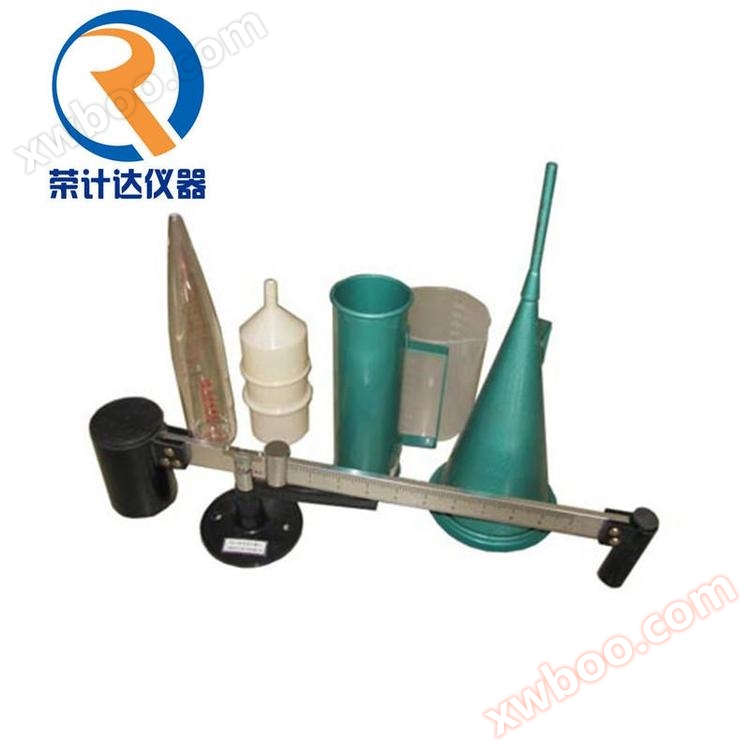


Shanghai Rongjida N3 Mud Specific Gravity Meter Mud Three Piece Set
NegotiableUpdate on 03/12
- Model
- Nature of the Manufacturer
- Producers
- Product Category
- Place of Origin
Overview
1、 Introduction: Used for measuring the weight of mud in wellsites or laboratories, in g/cm3
Product Details
1Introduction:
Used for measuring the weight of mud in wellsites or laboratories, in g/cm3. This type of mud specific gravity meter is an unequal arm balance, with its lever blade resting on a seat that can be fixedly installed on the workbench. The left side of the lever is a graduated float device, and moving the float can directly read the weight of the mud on the scale. The balance of leverage can be determined by the horizontal bubble indicator at the top of the leverage. This instrument is suitable for measuring the sand content of mud in wellsites or laboratories. It is determined by the change in volume of mud filtered through a sieve, expressed as a percentage.

IImaincharacteristic:
The outflow tube is a copper tube with a diameter of 5 millimeters and a length of 100 millimeters. 700 cubic centimeters of clean water is injected into the viscometer, and the time required to flow out 500 cubic centimeters is 15 seconds. The capacity of one end of the measuring cup with a partition is 500 cubic centimeters, and the capacity of the other end is 200 cubic centimeters.
IIITechnical indicators:
★ Measurement range: 0.96-3g/cm3;
★ Measurement accuracy: 0.01g/cm3;
★ Mud cup capacity: 140cm3;
★ Instrument size: 500 × 100 × 100mm.
★ Orifice diameter of outflow pipe: φ 5mm, length 100mm
★ Water value: 15 ± 0.5S
★ Sandwich measuring cup: one end has a capacity of 500ml, the other end has a capacity of 200ml
4instructions:
Before measuring viscosity, first clean the viscometer with water, then stir the mud in the mud mixer used for testing for 1 minute. Use a measuring cup to inject 500 and 200 milliliters (700 milliliters) of mud into the viscometer through a sieve, and block the outlet with your fingers to prevent it from flowing out.
When measuring, place a 500ml measuring cup under the outflow port. When releasing the finger blocking the outlet, start the stop gauge at the same time. When the mud flow reaches the edge of the 500ml measuring cup, press the stop gauge and record the time when the mud flows out,It is the viscosity of this mud. If the mud has not been fully stirred in the mixer according to the above method before measuring the viscosity, the mud should be poured back into the viscometer from the measuring cup, and the measurement should be repeated until the outflow time no longer decreases.
Hanging the viscometer on the wall for testing is more convenient, so only one person is neededIt can be operated, and after measurement, the viscometer, sieve, and measuring cup must be rinsed clean with water.
The viscosity meter should measure its outflow time using clean water at that time, which is called the "water value" of the viscosity meter. If the water level is greater than 15 seconds, it indicates that the outflow pipe has not been thoroughly flushed. You can use a soft bristled brush, cloth strip, etc. to flush the pipe. If it is less than 5 seconds,It can't be used anymore, the normal water level is 15 ± 0.5 seconds.
5Structure:
It is a funnel-shaped container with an outflow pipe at the end. The instrument is equipped with a handle with two keyholes, which keep the instrument vertical when hung on a nail on the wall. There is a cylindrical measuring cup divided into two parts, which can be used on both sides. One side has a capacity of 500 milliliters and the other side has a capacity of about 1000 milliliters. Its diameter is the same as the upper opening of the viscometer, so the sieve can be placed on top of both. The sieve is used for filtering mud, with 16 holes per hour.
Similar Product Recommend