-
E-mail
992869178@qq com
-
Phone
18732806660
-
Address
Contact address: Jing County, Hengshui City, Hebei Province
Product Categories
Hebei Hengyu Oil Cylinder Factory

Shockproof hydraulic cylinder
NegotiableUpdate on 01/20
- Model
- Nature of the Manufacturer
- Producers
- Product Category
- Place of Origin
Overview
What is the quality of the shockproof hydraulic cylinder, how to release pressure, and how to calculate the thrust of the shockproof hydraulic cylinder? Our company is a professional manufacturer of shock resistant hydraulic cylinders, and also processes single cylinder piston hydraulic cylinders, continuous casting machine cylinders, hydraulic support cylinders, single circuit hydraulic cylinders, and barrier machine cylinders. In response to the problems encountered by everyone in daily life, our company will provide answers in this article
Product Details
防震液压缸
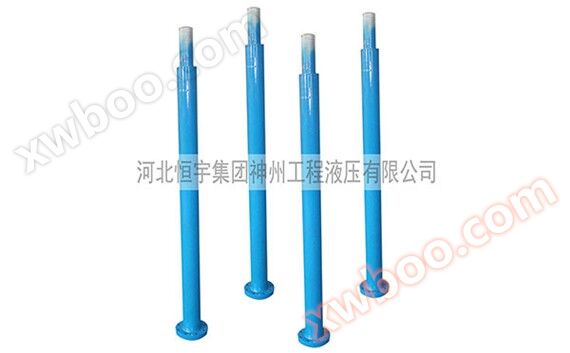
How is the quality of the shock resistant hydraulic cylinder, how is the pressure released, and how is the thrust of the shock resistant hydraulic cylinder calculated? Our company is a professional manufacturer of shock resistant hydraulic cylinders, and also processes single cylinder piston hydraulic cylinders, continuous casting machine oil cylinders, hydraulic support oil cylinders, single circuit hydraulic cylinders, and barrier machine oil cylinders. In response to the problems encountered by everyone in daily life, our company will provide answers in this article.
Article Introduction:
- Basic Introduction
- Terminology Comparison
- Manufacturer Introduction
- reference price
- Maintenance and related issues
Basic introduction of shock resistant hydraulic cylinder

Shockproof hydraulic cylinder: Once defects are found in the seals and guide support rings of the hydraulic cylinder during use, the seals with the same structural form and suitable material should be replaced according to the structural form of the repaired hydraulic cylinder seals. This can minimize the oil film thickness between the seals and the sealing surfaces and reduce the leakage of the seals. During the installation of oil cylinders, components such as pistons and cylinder heads have large mass, size, and inertia. Even with the assistance of lifting equipment for installation, due to the small required clearance, they will be forcefully inserted no matter what. Therefore, when the end of the piston or the cylinder head boss collides with the inner surface of the cylinder wall, it is easy to cause scratches. The solution to this problem is to use a specialized assembly guide tool during installation for small products with large quantities and batch sizes; For heavy, coarse, and large hydraulic cylinders, only meticulous and cautious operation can be avoided as much as possible. If a hydraulic cylinder experiences oil leakage or other malfunctions and needs to be disassembled, hydraulic pressure should be applied to move the position of the piston to any end position of the cylinder. During disassembly, improper tapping and sudden dropping should be avoided as much as possible. The surface flatness of the piston rod of the oil cylinder has not been fully treated after chrome plating: after chrome plating the surface of the piston rod, the method of polishing after plating should be changed to polishing after plating. Although this requires an increase in the thickness of the coating before grinding (usually by about 0.02 in the diameter direction), it can effectively remove chrome defects and test the adhesion of the coating. In addition, due to the micro unevenness of the grinding surface, the grooves can store lubricating oil, which not only improves wear resistance but also extends service life. Repair method for small-scale wear of oil cylinder: 1. Use an oxygen acetylene flame to bake the scratched area (control the temperature and avoid surface annealing), and bake out the oil that has been seeping into the metal surface for years until there are no sparks splashing around; 2. Use an angle grinder to surface treat the scratched area, polish to a depth of at least 1 millimeter, and create grooves along the guide rail, preferably dovetail grooves. Deepen the drilling at both ends of the scratch to change the stress situation; 3. Clean the surface with degreased cotton dipped in acetone or anhydrous ethanol.
Comparison of terms for shock resistant hydraulic cylinders
Comparison of terms related to shock resistant hydraulic cylinders in Chinese and English
- Pilot controlled check valve
- Vertical Lift Check Valves 立式止回阀
- Priority control override control
- Reservoir fluid capacity
- Check valve: Check valve
- Argon argon gas
- 轴向柱塞泵 axial piston pump
- Lining T-Cock Valves 衬里三通旋塞阀
Introduction to manufacturers of shock resistant hydraulic cylinders
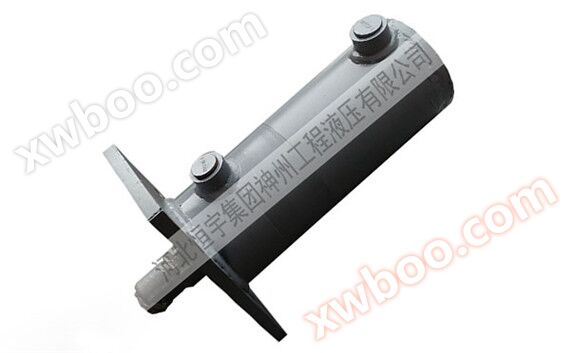
Our company specializes in customizing shock resistant hydraulic cylinders, as well as designing wingspan car hydraulic cylinders, one-way tipping bucket hydraulic cylinders, coal mining engineering hydraulic cylinders, acceleration hydraulic cylinders, and shield tunneling articulated hydraulic cylinders. After years of hard work, our company has established long-term cooperative relationships with customers in industries such as electronic display device factories, asphalt factories, shoe polish factories, wooden tube factories, welding electrode processing factories, and coal washing factories.
Reference price for shockproof hydraulic cylinder

The cost of shock-absorbing hydraulic cylinders is determined by factors such as stroke range, operating speed, synchronization requirements, and usage environment. Different technical requirements result in different prices, with common brands of shock-absorbing hydraulic cylinders costing between 1200/yuan and 70000/yuan.
Maintenance and related issues of shockproof hydraulic cylinder
- Please advise on the locking force of the oil cylinder
Personal understanding: 1 The locking force of a hydraulic cylinder refers to the external force that the cylinder can withstand when both outlets are closed. If no overflow valve is installed, this force is the product of the piston area of the hydraulic cylinder and the maximum working pressure of the hydraulic cylinder. Beyond this force, there is a chance for the hydraulic cylinder to be damaged. The maximum thrust of the hydraulic cylinder should be considered together with the output pressure of the oil pump. If the hydraulic cylinder can be used for 250 bar and the maximum working pressure of the hydraulic system is 200 bar, the maximum thrust of this hydraulic cylinder will be less than the locking force of the hydraulic cylinder. View original post>> - How to control the hydraulic cylinder circuit with a one-way solenoid valve
If your oil cylinder is single acting, you can use a one-way solenoid valve. For example, some hydraulic cylinders on lifting platforms use a one-way (two position three-way) support valve, which means that the oil cylinder extends by being pushed out by oil pressure and retracts by its own weight, - Can the hydraulic oil in the hydraulic cylinder return to the oil tank
Sure, there is a way, for example, first remove the hydraulic cylinder from the machine, and then connect the two pipes on the hydraulic cylinder, so that the piston rod of the hydraulic cylinder is completely retracted into the cylinder barrel. At this point, the piston has a bottom and there is almost no oil in the rear chamber. Then unscrew the joint on which end of the front chamber is close to the hydraulic station and put it in an empty bucket. Finally, insert the air pipe into the oil port of the rear chamber, open the air source, and the piston rod will run out, which will drain the hydraulic oil at that end of the piston rod. This method requires an air source on site. You can come up with your own way, using cows or cars to pull it, it's okay, haha. - Regarding the issue of hydraulic cylinder wall thickness
Hydraulic cylinder wall thickness calculation formula: t=PD/200St=pipe wall thickness (minimum thickness) mmP=maximum pressure kg/cm2? D=inner diameter of pipe mm? S=δ/5 safety factor δ=minimum tensile strength. In this case, the oil cylinder material is set to 45 #, and the tensile strength is 58kg/cm2t=(640X40)/(200X11.6) t=11mm. The calculation formula for piston output (i.e. thrust) is F1=PD2X (3.14/4) F1=640X42X0.785=8038kg. Note: Square numbers will not be marked, and all 2 appearing in the text are square codes


