-
E-mail
yafei.wei@pgeneral.com.cn
-
Phone
13681197768
-
Address
No. 3 Pingsan Road, Pinggu District, Beijing
Product Categories
Beijing Puxi General Instrument Co., Ltd

TU-18 series UV visible spectrophotometer
NegotiableUpdate on 09/19
- Model
- Nature of the Manufacturer
- Producers
- Product Category
- Place of Origin
Overview
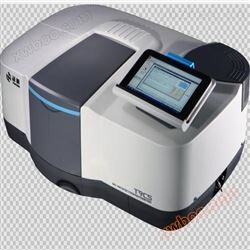
The TU-18 series UV visible spectrophotometer adopts a 320 * 240, 5-inch large screen LCD display, which can directly display various spectra such as standard curves, wavelength scanning, dynamic scanning, etc. The Chinese operation interface makes your use simpler and more convenient.
Product Details
Instrument Introduction:
As a professional manufacturer of analytical instruments, Beijing Puxi General Instrument Co., Ltd. has years of experience in designing and manufacturing ultraviolet spectrophotometers, which is more fully reflected in the TU-1810 series.
Excellent technical indicators and stable and reliable working characteristics, friendly and intuitive display interface, as well as smooth human-machine dialogue operation, have successfully achieved the strict requirements of high-precision and high reliability measurement, which can meet the needs of various application analysis work and is a good helper for analysts.
TU-18 series UV visible spectrophotometerTo meet the needs of different application fields, the instrument has different configurations and functions.
Among them, S represents variable slit, PC represents connectivity with PC, A represents dual-mode, D represents dual beam
Model configuration description
TU-1810 Dual Beam Proportional Monitoring Optical System, 2nm Fixed Spectral Bandwidth, Liquid Crystal Display
TU-1810S dual beam proportional monitoring optical system, 4-speed variable spectral bandwidth, LCD display
TU-1810PC dual beam proportional monitoring optical system, 2nm fixed spectral bandwidth, Chinese UVwin5.0 software
TU-1810SPC dual beam proportional monitoring optical system, 4-speed variable spectral bandwidth, Chinese UVwin5.0 software
TU-1810APC dual beam proportional monitoring optical system, 2nm fixed spectral bandwidth, LCD display, equipped with Chinese UVwin5.0 software
TU-1810ASPC dual beam proportional monitoring optical system, 4-speed variable spectral bandwidth, LCD display, equipped with Chinese UVwin5.0 software
TU-1810D dual beam optical system, 2nm fixed spectral bandwidth, liquid crystal display
TU-1810DS dual beam optical system, 4-speed variable spectral bandwidth, LCD display
TU-1810DPC dual beam optical system, 2nm fixed spectral bandwidth, Chinese UVwin5.0 software
TU-1810DSPC dual beam optical system, 4-speed variable spectral bandwidth, Chinese UVwin5.0 software
TU-1810DAPC dual beam optical system, 2nm fixed spectral bandwidth, LCD display, equipped with Chinese UVwin5.0 software
TU-1810DASPC dual beam optical system, 4-speed variable spectral bandwidth, LCD display, equipped with Chinese UVwin5.0 software
Key Features:
1. More accurate analysis: The use of holographic gratings has achieved low stray light, making instrument analysis more accurate;
2. More stable performance: Dual beam proportional monitoring/Dual beam optical system ensures good stability;
3. Faster measurement speed: Fast scanning speed reaches over 1000nm per minute;
4. More powerful functions: The photometer host not only independently completes various functions such as photometric measurement, quantitative measurement, spectral scanning, DNA/protein measurement, and data printing, but also adds functions such as expert database, three-dimensional spectrum analysis, GLP laboratory standards, etc., suitable for various industries such as rapid pesticide residue detection, environmental protection, inspection and quarantine;
5. Easy to operate and user-friendly design: high degree of automation, ordinary sample measurement only requires two buttons;
6. More convenient maintenance: adopting a humanized mechanical structure and modular electrical design concept, the electrical system maintenance is more convenient; Socket type tungsten lamp and deuterium lamp design mechanism, eliminating the need for optical debugging steps during lamp replacement;
7. Scalability and flexibility: Multiple accessories to choose from, with a wider range of instrument measurements;
8. More advanced duck technology: The automatic eight cell rack can be used for multiple sample measurements and can be used for measuring 6 samples of drug dissolution rate, etc; Rapid pesticide residue detection can measure up to 7 samples simultaneously, greatly improving the speed of instrument detection.
TU-18 series UV visible spectrophotometerProduct advantages
1. The use of holographic gratings has achieved low stray light, making instrument analysis more accurate;
2. The dual beam ratio monitoring/dual beam optical system ensures good stability;
3. Fast scanning speed of over 1000nm per minute;
4. The photometer host not only independently completes various functions such as photometric measurement, quantitative measurement, spectral scanning, DNA/protein measurement, and data printing, but also adds functions such as expert database, three-dimensional spectrum analysis, GLP laboratory standards, etc. It is suitable for various industries such as rapid pesticide residue detection, environmental protection, inspection and quarantine;
5. High degree of automation, ordinary sample measurement only requires two buttons;
6. Adopting a humanized mechanical structure and modular electrical design concept, the maintenance of the electrical system is more convenient; Socket type tungsten lamp and deuterium lamp design mechanism, eliminating the need for optical debugging steps during lamp replacement;
7. Multiple accessories are available for selection, providing a wider range of instrument measurements;
8. The automatic eight cell rack can be used for multiple sample measurements, including measuring 6 samples of drug dissolution rate; Rapid pesticide residue detection can simultaneously measure up to 7 samples, greatly improving the speed of instrument detection.
Technical Specifications:
1. Wavelength range: 190nm to 1100nm
2. Wavelength accuracy: ± 0.3nm (automatically calibrated upon startup)
3. Wavelength repeatability: 0.2nm (dual beam proportional monitoring optical system)
≤ 0.1nm (dual beam optical system)
4. Spectral bandwidth: 2nm (fixed slit)
0.5nm, 1.0nm, 2.0nm, 5.0nm (variable slit)
5. Stray light:<0.3% T (220nm, NaI; 340nm, NaNO2) (dual beam proportional monitoring optical system)
<0.2% T (220nm, NaI; 340nm, NaNO2) (dual beam optical system)
6. Luminescence method: transmittance, absorbance, energy
7. Luminous range: -0.3 to 3.0 Abs
8. Luminous accuracy: ± 0.002Abs (0-0.5Abs); ±0.004Abs(0.5~1.0Abs);
±0.3%T(0~100%T)
9. Luminous repeatability: 0.001Abs (0-0.5Abs); 0.002Abs(0.5~1.0Abs);
0.15%T(0~100%T)
10. Baseline flatness: ± 0.002Abs (190nm~1100nm) (dual beam proportional monitoring optical system)
± 0.0015Abs (190nm~1100nm) (dual beam proportional monitoring optical system)
11. Baseline drift: 0.001Abs/h (500nm, 0Abs preheated for 2 hours) (dual beam proportional monitoring optical system)
0.0007Abs/h (500nm, 0Abs preheated for 2 hours) (dual beam optical system)
12. Luminous noise: ± 0.001Abs (500nm, 0Abs2nm spectral bandwidth)
Similar Product Recommend