-
E-mail
003@jiancezaixian.com
- Phone
-
Address
Wenhua International, No. 3 Huaxia Middle Road, Xishan District, Wuxi City, Jiangsu Province
Product Categories
Jiangsu Yinshi Laboratory Technology Co., Ltd
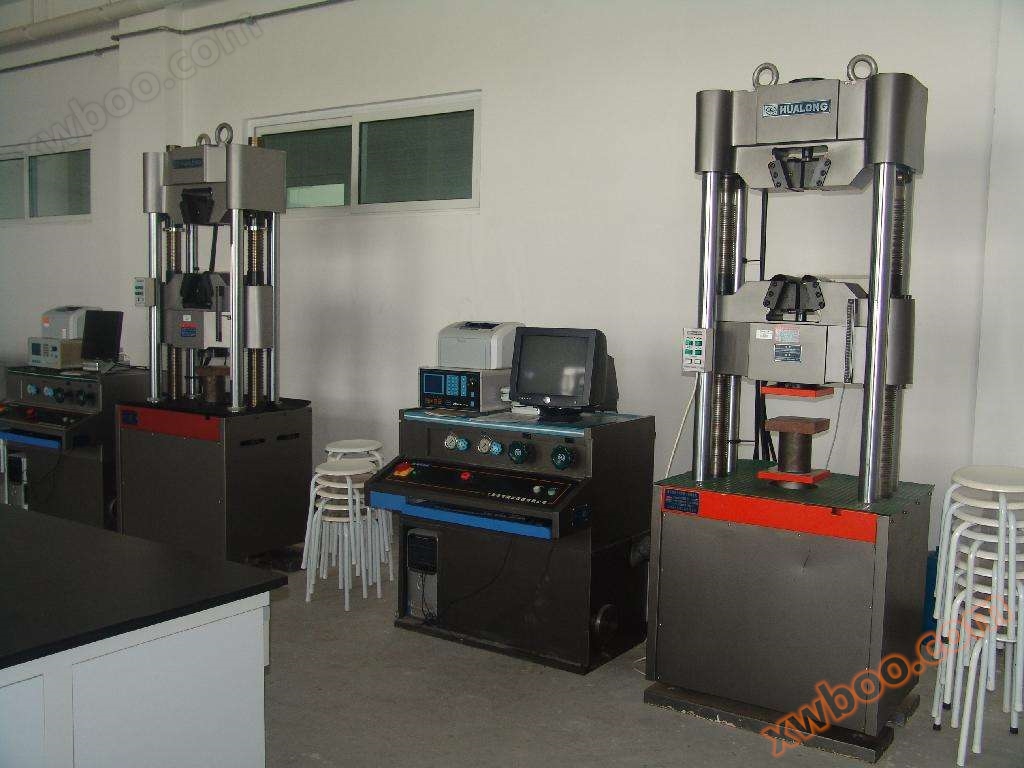
tensile test
NegotiableUpdate on 11/06
- Model
- Nature of the Manufacturer
- Producers
- Product Category
- Place of Origin
Overview
Tensile performance is one of the most important and fundamental mechanical properties of polymers
Product Details
Tensile performance is one of the most important and fundamental mechanical properties of polymers. The quality of tensile performance can be verified through tensile testing. The data provided through tensile testing can evaluate the tensile properties of polymer materials, providing reference for product quality assessment, product acceptance, and the design and development of new materials.
tensile testIt refers to the constant speed stretching along the longitudinal axis of the specimen under specified test conditions until the specimen fractures or the stress (load) or strain (elongation) reaches a predetermined value, and the load and elongation borne by the specimen during this process are measured. Among them, sample preparation and appearance inspection are carried out according toGB1039Regulations are in place. Measure the stress of the specimen during the tensile deformation process-Strain curve, graph1For typical stress-Strain curve. stress-The strain curve is generally divided into two parts: the elastic deformation zone and the plastic deformation zone. In the elastic deformation region, the material undergoes fully recoverable elastic deformation, and the stress and strain are linearly related, in accordance with Hooke's law. In the plastic deformation zone, deformation is irreversible plastic deformation, and the increase in stress and strain is no longer proportional. From stress-On the strain curve, various tensile performance indicators of the material can be obtained, including tensile strength, fracture strength, elongation at break, tensile fracture stress, tensile yield stress, tensile modulus of elasticity, Poisson's ratio, etc. Among them, tensile strength, also known as tensile strength, reflects the ability of a material to resist tensile failure.

Different polymer materials and measurement conditions exhibit different stresses-Adaptive behavior. According to stress-The shape of the strain curve can be roughly classified into five types:
(1)Soft and weak. Low tensile strength, small elastic modulus and small elongation, such as swollen gel.
(2)Hard and brittle. High tensile strength and elastic modulus, low elongation at break, such as polystyrene.
(3)Hard and strong. High tensile strength and elastic modulus, with appropriate elongation, such as rigid polyvinyl chloride.
(4)Soft and resilient. High elongation at break and tensile strength, but low modulus of elasticity, such as natural rubber, butadiene rubber, etc.
(5)Hard and tough. High elastic modulus, tensile strength, and elongation at break, such as polyethylene terephthalate, nylon, etc.
Tensile testing standards
GB/T 26749-2011 carbon fiber Determination of tensile properties of impregnated yarn
GB/T 31290-2014 carbon fiber Determination of tensile properties of single filaments
GB/T 3362-2005 Test method for tensile properties of carbon fiber multifilament
GB/T 4944-2005 Test method for interlaminar tensile strength of glass fiber reinforced plastic laminates
GB/T 1040-2006 plastic Determination of tensile properties
GB/T 1447-2005 Test method for tensile properties of fiber-reinforced plastics
GB/T 3354-2014 Test method for tensile properties of oriented fiber-reinforced polymer matrix composites
GB/T10654-2001Determination of tensile strength and elongation at break of polymer porous elastic materials
GB/T 30311-2013 Test method for tensile properties of impregnated aramid yarns, ropes, and curtains
GB/T 32108-2015 Test method for tensile properties of impregnated ropes, yarns, and curtains
GB/T 6006.2-2013 Test method for glass fiber felt 第2Part: Determination of tensile fracture strength
GB/T 14337-2008 chemical fiber Test method for tensile properties of short fibers
DB44/T 1720-2015 Test method for tensile properties of carbon fiber reinforced plastics
GB/T 14344-2008 chemical fiber Test method for tensile properties of filament
GB/T 20671.7-2006 Classification system and testing methods for non-metallic gasket materials 第7part:Test method for tensile strength of non-metallic gasket materials
GB/T 328.9-2007 Test method for building waterproofing membrane 第9Part: Tensile properties of polymer waterproofing membrane
Testing service process


