-
E-mail
shenyanbo@kanomax.com.cn
-
Phone
18840065038
-
Address
No. 56-39 Huanghe North Street, Huanggu District, Shenyang City
Shenyang Jiaye Scientific Instrument Co., Ltd
Kanomax Thermal Anemometer 6006 Wind Speed Test in Simulated Smoke Box of Fire Alarm
Date: 2025-11-27Read: 87
The reliable triggering of fire alarms is the primary line of defense for building fire prevention and control, and the wind speed control in simulated smoke box testing is directly related to the accuracy and timeliness of alarm response. When a fire occurs, the speed and concentration distribution of smoke diffusion are significantly affected by the ambient airflow. Simulating a smoke box can accurately control the wind speed to restore the smoke propagation state in different scenarios, providing a testing environment that is close to reality for alarm sensitivity calibration and trigger threshold setting.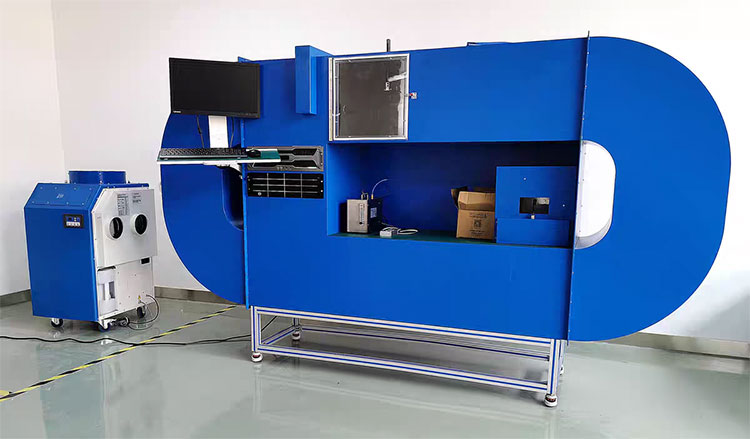
This testing process is not only a core means of verifying whether the performance of alarm products meets safety standards, but also a key prerequisite for ensuring the effectiveness of early fire alarms and buying valuable time for personnel evacuation and emergency response. Its technical value and safety significance run through the entire process of building fire safety.
The KANOMAX thermal anemometer 6006, with its professional measurement capabilities, has become a key equipment for controlling the accuracy of wind speed data, providing reliable data support for the performance calibration and quality control of fire alarms.
1、 Testing requirements
In the simulated smoke box test of fire alarm, the setting of wind speed range is not arbitrarily chosen, but closely revolves around the two core goals of "restoring the airflow environment in real fire scenarios" and "accurately verifying the sensitivity of the alarm", while also complying with the technical requirements of domestic and foreign fire safety standards (such as GB4717-2005 "Fire Alarm Controller", EN54-7 "Point Type Smoke Fire Detector", etc.).
1. Wind speed testing instruments should havebetterThe ability to measure low wind speeds is typically very low, ranging from 0.1 m/s to 2.0 m/s, when simulating fire flues. This range is the typical speed of natural and initial spread of smoke.
2. Wind speed testing instruments should have high precision and resolution, and the sensitivity testing of fire alarms (especially smoke and fire detectors) requires accurate wind speed environment. Any small fluctuation in wind speed may affect the flow path and concentration of smoke, resulting in inaccurate and non reproducible test results.
3. The wind speed testing instrument should have a fast response time. During the testing process, it may be necessary to adjust the fan power or change the damper opening, and the wind speed will change accordingly.
Thermal anemometer is based on the principle of heat conduction, with high accuracy, fast response time, and extreme sensitivity to low wind speeds, capable of measuring wind speeds up to 0.01m/s. This enables testers to adjust equipment in real-time and quickly to achieve the target wind speed, greatly improving testing efficiency.
2、 Testing instruments
KANOMAX thermal anemometer 6006, testing wind speed of 0.01-20m/s, wind temperature of -20~70 ℃, resolution of 0.01m/s, accuracy of ± 5% of the reading value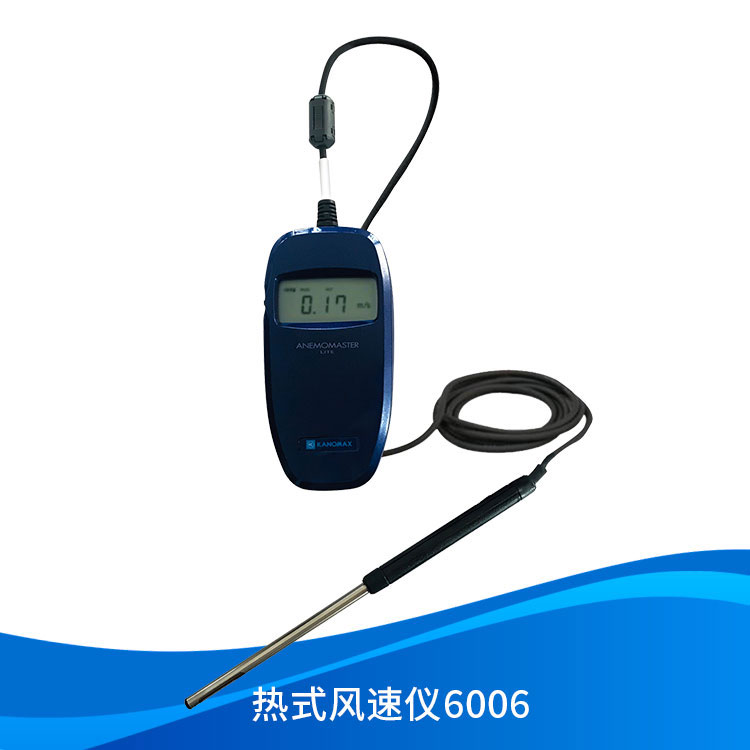
3、 Test steps
1. Selection principle
Arrange points around the alarm systemPlace points around the alarm probe within a 30cm radius to capture the actual perceived wind speed of the alarm, avoiding data disconnection from the actual environment of the alarm caused by only placing points at the edge of the smoke box;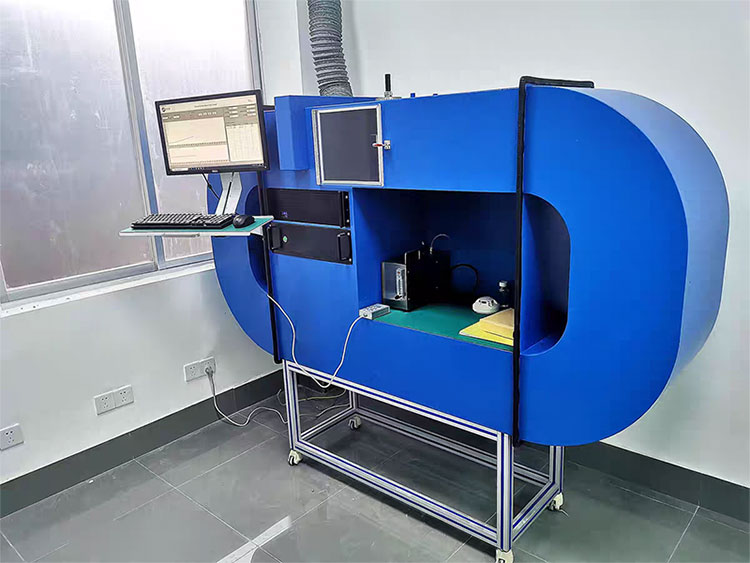
Covering the critical path of airflowSet up points upstream, midstream, and downstream of the airflow in the smoke box to monitor changes in wind speed during propagation, with particular attention to the attenuation of wind speed after passing through the alarm;
Avoid abnormal interference areasNot directly close to the outlet of the smoke generator (high smoke concentration may affect the measurement of the anemometer), the corners of the smoke box (prone to forming airflow dead corners, low and unstable wind speed), and the fan outlet (high wind speed, not the actual environment where the alarm is located), the wind speed data at these locations are not representative.
2. Taking the conventional scenario (0.1~1.5m/s) as an example
Wind speed setting and preheating
Set the target wind speed for the smoke box according to the testing requirements, activate the smoke box wind speed control system, close the smoke box door, and allow the wind speed to run steadily for 30 minutes, ensuring that the wind speed inside the smoke box reaches the set value without fluctuations (the anemometer displays wind speed fluctuations of ≤± 0.05m/s within 10 minutes at the center measuring point of the smoke box).
Smoke injection and data collection
Start the smoke generator and inject smoke into the smoke box at the set rate. At the same time, turn on the anemometer and alarm data recorder: the anemometer needs to continuously collect wind speed data from each testing point, and the collection interval is set according to the accuracy requirements (10 seconds/time for routine testing and 5 seconds/time for high-precision testing); The alarm data recorder needs to synchronously record the triggering time and alarm signal strength;
The duration of a single test should cover the entire process of "smoke diffusion alarm triggering alarm duration", usually not less than 10 minutes. If the alarm is not triggered within the set time, the "not triggered" result should be recorded, and the wind speed and smoke concentration should be checked for stability and compliance.
3. Data processing and judgment
After the test is completed, organize the wind speed data: calculate the average wind speed, maximum wind speed, and minimum wind speed of each test point, and obtain the wind speed deviation (the difference between the maximum/minimum wind speed and the average wind speed). If the deviation is ≤ ± 0.2m/s, the uniformity of the smoke box wind speed is judged to be qualified;
Analyze the response data of the alarm: Calculate the average triggering time of the alarm at different wind speeds. If the triggering time is ≤ 30 seconds at normal wind speeds (0.1~1.5m/s) (the specific standard is adjusted according to the type of alarm), and the triggering is stable without "false alarms" or "missed alarms", it is judged that the wind speed adaptability of the alarm is qualified; On the contrary, it is necessary to investigate the sensitivity of the alarm or the control of the smoke box wind speed.