-
E-mail
sales@chotest.com
-
Phone
18928463988
-
Address
No. 1001, Xili Xueyuan Avenue, Nanshan District, Shenzhen, China
Shenzhen Zhongtu Instrument Co., Ltd
In depth disassembly of nanoscale coordinate measuring machines: technical principles+comprehensive industry implementation strategy
Date: 2025-12-02Read: 111
When the 7nm chip process becomes mainstream and the tolerance requirement for aircraft engine blade surfaces approaches 0.001mm, the high-precision nanometer level coordinate measuring machine (CMM) developed by Shenzhen Zhongtu Instrument Co., Ltd. has been upgraded from a simple quality inspection equipment to a core support that determines process stability and product yield. As a domestic enterprise with core technology in geometric precision instruments, Zhongtu Instrument has built precise measurement capabilities from nanometer to hundred meters with nearly 20 years of research and development accumulation.
1、 Nano level concept
Nano CMM (Nano CMM) is a metrology platform designed for micro nano scale industrial inspection. It can achieve three-dimensional positioning and size measurement at the level of 1 nm. In the industry's general evaluation standards, nanometer level coordinate measuring machines mainly meet two core indicators: first, the indication error is less than or equal to 0.5 μ m, and second, the repeated measurement accuracy is ≤ 0.3 μ m. Some models can achieve a vertical resolution of 0.1nm.
2、 Key technologies
The implementation of nanometer level precision is a system engineering that integrates mechanical accuracy, environmental compensation, and data processing with non-contact probes as the core. Among them, the maturity of non-contact probe technology directly solves the three major pain points of traditional contact measurement: scratching fragile workpieces (such as photoresist wafers), low measurement efficiency (single point measurement time>1s), and inability to adapt to complex surfaces (such as aircraft engine blades).
1. Nano level precision motion platform
Addressing the pain points of thermal drift and vibration in traditional linear guides, resulting in errors of up to µ m. By using ceramic guide rails, air bearings, and dual closed-loop piezoelectric drive, the reliability of microstructure measurement is ensured, achieving<30 nm repeatability positioning error and reducing rework rate.
2. Non contact probe balance accuracy and efficiency
Resolve the pain points of measuring soft materials, micropores, and optical surfaces that are easily scratched by contact probes. It can achieve non-destructive testing, rapid point cloud acquisition and measurement, thereby improving the efficiency of the production line.
3. High precision error compensation algorithm
Addressing the pain points of measurement deviation caused by mechanical errors and changes in temperature and humidity. Real time environmental monitoring and multi-point calibration model can maintain nanoscale reliability even outside of constant temperature and humidity laboratories, making it very suitable for on-site testing scenarios.
3、 Application Cases
1. Quality control of optical components: In the optical lens production line, non-contact contour scanning is performed using nanometer three coordinate, and the measurement error is kept within 0.2 µ m, achieving a detection time reduction of<5%.
2. MEMS and Micro Electro Mechanical Systems: Through 5-axis synchronous scanning, a full-scale three-dimensional evaluation of the aspect ratio 12:1 structure of the micro gear is completed.
3. Measurement of complex free-form surfaces of aerospace blades and dense arrays of blade disks: CMM is used in the detection of aerospace blades, with high-precision scanning probes and intelligent coordinated motion of turntables, combined with specialized analysis software PowerBlade to comprehensively evaluate parameters.


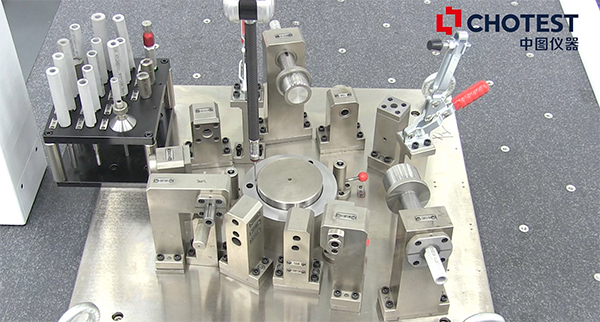
4. Quick calibration of automotive inspection tools: In the measurement of key dimensions and positional tolerances of automotive inspection tools, MarsClassic 8156 CMM is used to configure probe extension rods and replace them for global dimension measurement. The measurement cycle is reduced from 30 minutes to 8 minutes, and the calibration error of the inspection tools is less than or equal to 10 µ m.

5、 Industry Insights and Prospects
The development of nanoscale coordinate measurement technology is shifting from accuracy to scenario based solutions. In the future, with the emergence of new precision manufacturing scenarios such as 3nm and below semiconductor processes and hydrogen fuel cell plates, measurement technology will evolve towards dynamic measurement and fusion measurement. Through precise technical indicators, product models, and industry case studies, enterprises can improve product reliability while achieving increased production efficiency.