-
E-mail
cubic-ry56@gasanalyzer.com.cn
-
Phone
18627990650
-
Address
No. 6 Fenghuangyuan Middle Road, Fenghuangyuan Industrial Park, Donghu New Technology Development Zone, Wuhan City, Hubei Province
Sifang Optoelectronics (Wuhan) Instrument Co., Ltd
Independent research and technological innovation of trace oxygen analyzers in the semiconductor industry
Date: 2025-11-13Read: 89
1、 The Importance and Difficulties of Oxygen Monitoring in Semiconductor Manufacturing
In the semiconductor manufacturing process, oxygen pollution can cause unnecessary oxidation reactions, leading to defects in integrated circuits and silicon wafers, thereby damaging the integrity of thin film structures and seriously affecting the uniformity and reliability of products. Therefore, semiconductor manufacturers must strictly monitor the oxygen content in process gases and equipment chambers, even trace amounts of oxygen (as low as ppm) may significantly damage component performance.
At present, oxygen monitoring in semiconductor process gases mainly faces the following technical difficulties:
Accurate detection of ultra-low concentration oxygen below 10 ppm is required;
Continuous oxygen concentration monitoring under vacuum environment needs to be supported;
It is necessary to ensure the safe and stable operation of the equipment in a reducing atmosphere.
Among numerous gas detection technologies, zirconia sensor analysis technology has become an ideal choice for oxygen concentration monitoring in the semiconductor industry due to its fast response speed, high measurement accuracy, wide range, strong stability, and long service life.
On the other hand, achieving localization of such instruments has become an urgent national strategic need. At present, trace oxygen analysis equipment still mainly relies on imports from Europe, America, and Japan. According to the requirements of the 2025 Government Work Report, breaking through key core technologies and promoting domestic substitution are of great significance for ensuring the security of the industrial chain.
2、 Solution and Innovative Practice of Sifang Instrument
Sifang Instrument has long been dedicated to the research and promotion of zirconia sensors and gas analyzers. To meet the increasing demand for low concentration oxygen detection in the semiconductor and electronics industries, the company has successfully developed the Gasboard-3050 series low concentration oxygen analyzer. This series of products has a resolution of 0.1 ppm and a range covering 0-10 ppm to 100% O ₂. It is equipped with field validated zirconia sensors, which have excellent reproducibility and high-speed response characteristics.
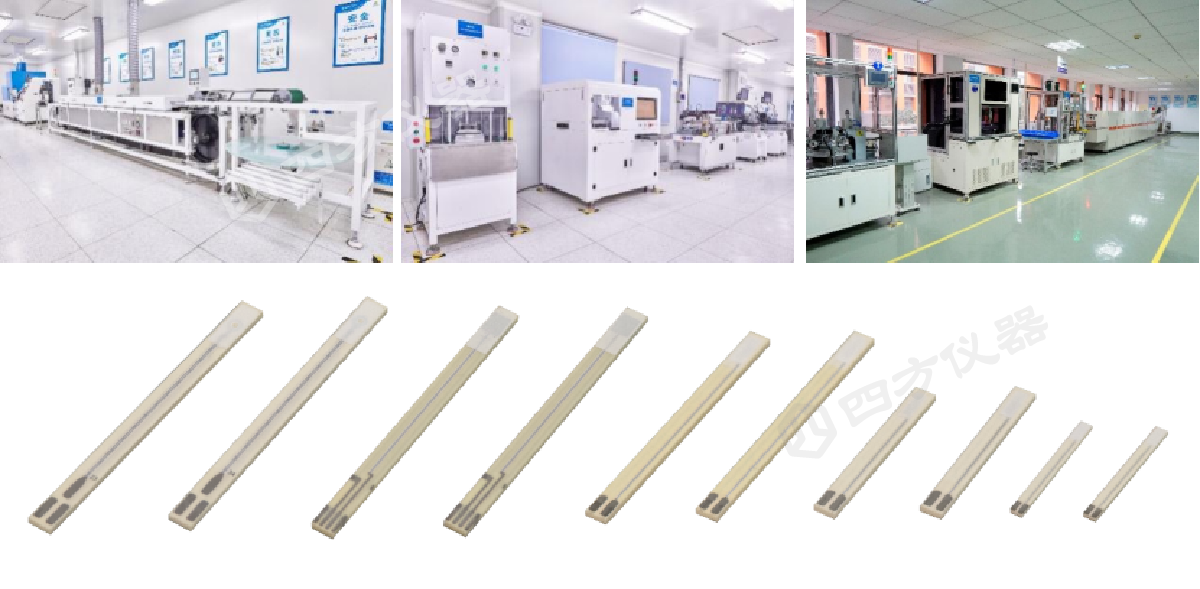
Figure 1 Four party photoelectric zirconia sensor production line and different types of zirconia sensor chip products
2.1 Working principle of zirconia oxygen sensor
Zirconia is an excellent solid electrolyte material. The traditional zirconia oxygen sensor consists of a porous high-temperature ceramic electrolyte tube, with both the inner and outer walls coated with a porous platinum layer, serving as the cathode and anode, respectively. The sensor is equipped with a high-performance ceramic heater and thermocouple probe, which together maintain a controllable high temperature environment (usually 650 ℃).

Figure 2 Schematic diagram of zirconia oxygen sensor
When the temperature reaches the working point, the oxygen ions inside the zirconia become highly active and can quickly migrate to balance the oxygen partial pressure difference on both sides. If the oxygen partial pressures on both sides are different, a potential difference will be generated between the electrodes, which conforms to the Nernst equation:

Among them, E is the electromotive force (V), R is the gas constant, T is the absolute temperature (K), F is the Faraday constant, and P ₁ and P ₂ are the oxygen partial pressures on both sides, respectively.
2.2 Gasboard-3052 Trace Oxygen Analyzer
This model adopts a remote in-situ sensor design, which is particularly suitable for scenarios that require continuous monitoring of oxygen concentration, such as semiconductor equipment, glove boxes, nitrogen pipelines, vacuum chambers, and other low oxygen/anaerobic environments. Sensors can be directly installed in vacuum chambers through vacuum joints and are widely used in industrial applications such as semiconductor manufacturing, OLED production, 3D printing, etc. that use inert gases. Its zirconia sensor has a long lifespan and high stability, and can be replaced without replacement for many years under appropriate maintenance conditions.
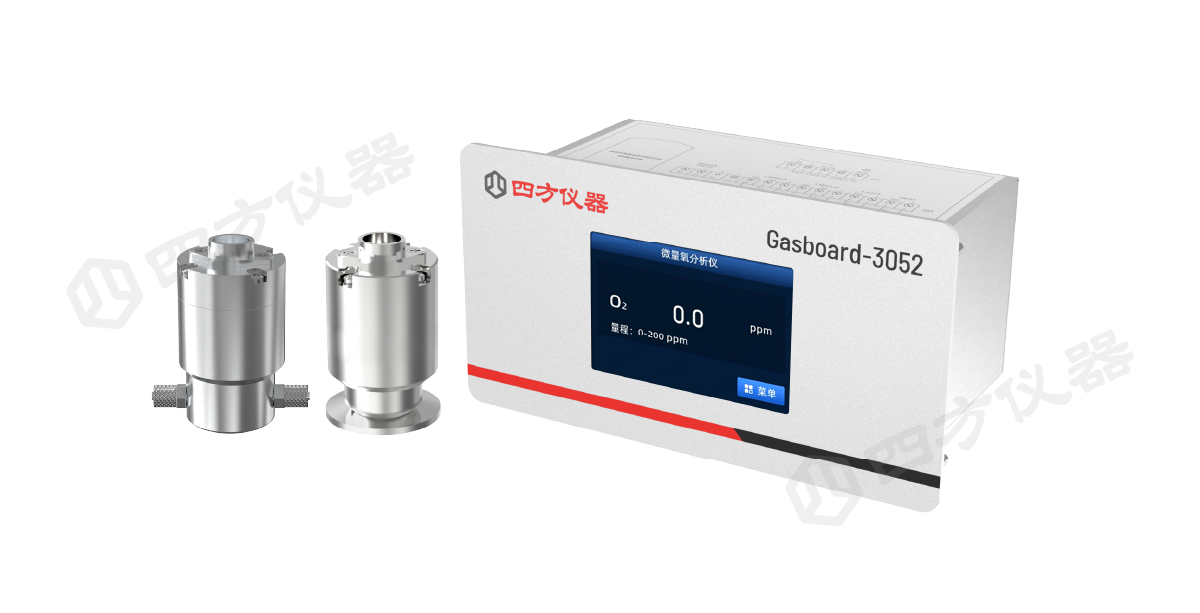
Figure 3 Gasboard-3052 Trace Oxygen Analyzer
Main features of the product:
• Range: 0.1 ppm~1000 ppm, covering most semiconductor vacuum chamber monitoring needs;
• Flange interface, plug and play;
Long term low-temperature zirconia sensor;
• Support operation in a vacuum environment;
Leakage rate<1 × 10 ⁻⁹ mbar · L/s.
2.3 Gasboard-3053 Oxygen Analyzer
This model is designed with integrated extraction, which integrates a wide range zirconia sensor, pre-processing unit, and sampling pump. It is suitable for various application scenarios other than vacuum chambers, such as reflow soldering furnaces in SMT processes.

Figure 4 Gasboard-3053 Oxygen Analyzer
Main features of the product:
Wide range: 0.1 ppm~100%, suitable for situations with large concentration fluctuations;
Adaptive pressure changes: Equipped with a built-in pressure sensor, it can compensate for small changes in gas pressure to ensure stable readings;
Suitable for reducing atmospheres: When the sample contains combustibles, platinum catalyst ensures that the gas reaches equilibrium before contacting the electrode, thereby accurately measuring the total oxygen content.
3. Typical application scenarios
The Gasboard-3050 series from Sifang Instrument can meet the majority of oxygen concentration monitoring needs in the semiconductor and related fields. Typical applications include but are not limited to:
