04,24,2026 152 views
Introduction
As global climate regulations tighten and consumers demand eco-friendly home appliances, energy consumption has become the primary battleground for refrigerator manufacturers. To enter lucrative international markets like the European Union, the United States, and Southeast Asia, manufacturers must provide precise, verifiable data on energy consumption.
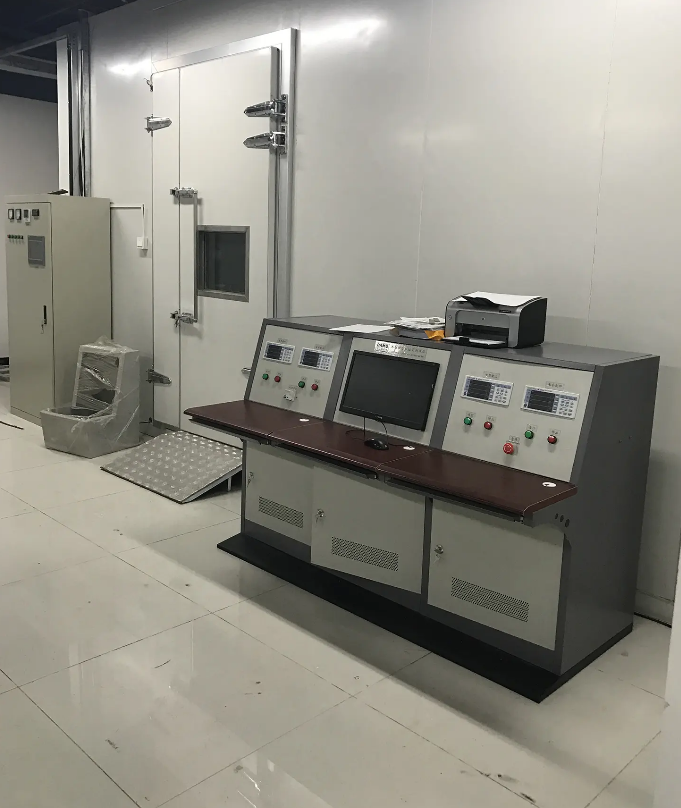
Building a state-of-the-artRefrigerator Energy Efficiency Laboratoryis the ultimate solution for brands aiming to guarantee compliance, accelerate research and development, and secure international certifications. However, engineering such a laboratory requires strict adherence to complex environmental controls, precise instrumentation, and evolving international testing standards. This technical guide explores the vital engineering requirements needed to construct a world-class testing facility.
Why a Dedicated Refrigerator Energy Efficiency Laboratory is Essential?
Energy efficiency testing for refrigeration appliances is uniquely challenging compared to other household electronics. Refrigerators rely on complex thermodynamic cycles that are highly sensitive to ambient environmental conditions. A minor fluctuation in room temperature or airflow can drastically alter the test results, leading to non-compliance or false data.
A dedicated laboratory creates a perfectly isolated, hyper-controlled environment. This allows senior engineers to simulate real-world usage, calculate annual energy consumption, evaluate pull-down periods, and optimize compressor efficiency with absolute repeatability.
Core Technical Requirements for Environmental Control Chambers
The heart of any testing facility is the environmental chamber. To achieve accurate data that meets global auditing criteria, the laboratory design must master three critical variables: temperature, humidity, and airflow.
Ultra-Precise Temperature Stability
International testing standards demand exceptional temperature uniformity within the testing room. The ambient temperature must typically be maintained at specific setpoints—such as 16°C, 25°C, or 32°C—with a maximum permissible deviation of less than $\\pm 0.5^\\circ\\text{C}$ over extended periods. Achieving this requires advanced multi-stage PID controllers and continuous air circulation patterns that eliminate thermal stratification (hot and cold air pockets) around the test units.
Strict Air Velocity Management
Air movement drastically influences the heat transfer rate from the refrigerator's condenser to the surrounding environment. If the air moves too fast, it artificially cools the refrigerator, skewing the energy data. Therefore, the air velocity inside the chamber must be strictly controlled, often required to remain below 0.25 meters per second. This necessitates custom-engineered perforated ceilings or floors that distribute conditioned air gently and evenly throughout the space.
Controlled Relative Humidity
While temperature is paramount, humidity control prevents frost formation on the evaporator coils during long-term testing cycles. Laboratories must maintain relative humidity within a precise range—typically between 45% and 75%—depending on the specific test protocol being executed.

Aligning the Laboratory with Critical International Standards
A professional testing laboratory must be engineered to satisfy multiple global testing frameworks simultaneously. This flexibility allows manufacturers to certify products for various destination markets within a single facility.
IEC 62552 (Parts 1, 2, and 3)
This is the foundational global standard for household refrigerating appliances. It dictates the measurement methods for characteristics and test consumption. A compliant laboratory must support the complex test sequences outlined in this standard, including steady-state power consumption tests and defrost/recovery processing evaluations.
AHAM HRF-1 and Energy Star (North America)
For brands targeting the North American market, the laboratory must accommodate the Association of Home Appliance Manufacturers (AHAM) standards. These tests place heavy emphasis on structural volume calculations and automated data logging intervals to qualify for Energy Star ratings.
SASO and Regional Standards (Middle East & Southeast Asia)
Emerging markets frequently adapt IEC standards but introduce unique ambient temperature requirements (often higher testing baselines like 32°C or 43°C to simulate tropical climates). The laboratory's cooling and heating plants must possess enough thermal capacity to reach and maintain these high-stress testing environments.
Essential Instrumentation for Advanced Data Acquisition
To transform a controlled room into a functional laboratory, high-precision measurement infrastructure must be seamlessly integrated.
● High-Resolution Temperature Sensors: Laboratories utilize calibrated Type T or Type K thermocouples, or Pt100 RTDs, arranged at specific geometric points inside the refrigerator compartments (fresh food, freezer, and chill compartments) to monitor internal air temperature profiles.
● Precision Electrical Power Analyzers: To capture minute power consumption variations, analyzers must feature high accuracy (at least 0.1% or better) and be capable of integrating power over long test periods, measuring true RMS current, voltage, power factor, and total harmonic distortion.
● Automated Data Acquisition (DAQ) Systems: Modern facilities rely on centralized software that continuously logs hundreds of data points simultaneously over 24-to-72-hour test cycles, automatically generating compliant test reports and flagging any environmental deviations.
Conclusion: Elevating Compliance and Innovation
Investing in a robust Refrigerator Energy Efficiency Laboratory is a strategic move that pays dividends in product reliability and global market access. By mastering environmental controls, selecting high-precision instruments, and designing for international standard flexibility, appliance manufacturers can confidently validate their green credentials and lead the market in energy-efficient innovation.