-
Phone
13585452000
-
Address
Xuejia Industrial Park, Xinbei District, Changzhou City, Jiangsu Province
Product Categories
Changzhou Tianhuan Purification Equipment Co., Ltd
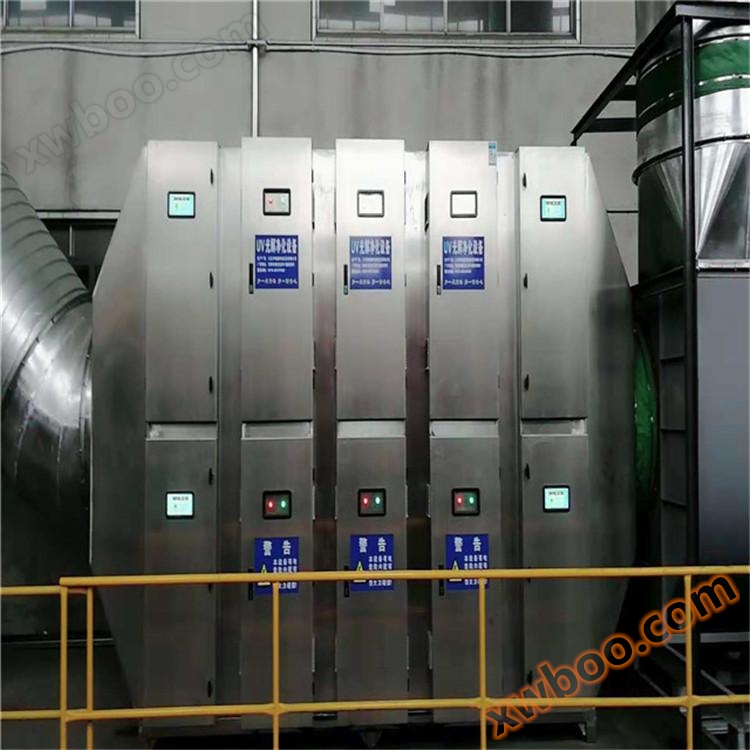
Bengbu Spray Painting Room Waste Gas Treatment - Source Manufacturer - Undertaking VOC Treatment Project for Spray Painting Workshop
NegotiableUpdate on 10/04
- Model
- Nature of the Manufacturer
- Producers
- Product Category
- Place of Origin
Overview
Product Parameters: Brand: Tianhuan Air Volume: 300-10000m3/h, Customization: Attribute: Spray Painting Exhaust Gas Treatment Equipment, Concentration: Any Concentration, Material: PP Stainless Steel, Carbon Steel, Fiberglass Steel, Temperature: 100 ° C, Self made, Self produced, Self sold, Applicable Industry: Spray Painting Industry, External Dimensions: Non standard Customization. Product Introduction: With the rapid development of China's industry,
Product Details
Product Specifications
| brand | Tianhuan | air volume | 300-100000m3/h |
|---|---|---|---|
| Customized or not | yes | attribute | Spray painting exhaust gas treatment equipment |
| concentration | Any concentration | material | PP stainless steel, carbon steel, fiberglass |
| temperature | 100 | Is it self-made | self-produced and self-marketed |
| Applicable Industries | Spray painting industry | Overall dimensions | Non-standard customization |
Product Introduction
With the rapid development of our country's industry, the requirements for product quality and appearance are constantly increasing. Spray lines or spray booths have become essential equipment for every processing enterprise. However, these processing methods generate a lot of organic waste gas, and the sources of organic waste gas pollution are widely distributed. To avoid its pollution of the atmospheric environment, in addition to reducing the use of organic solvents, exhaust purification is currently a feasible treatment method; The commonly used methods for treating paint mist exhaust gas include adsorption, absorption, incineration, condensation, and biological methods. When choosing these purification methods, we should prioritize low-cost, energy-efficient, and non secondary pollution methods based on specific circumstances.
Any processing method has a certain effect, but any single processing method is either too expensive in energy consumption or inadequate in processing, and cannot achieve the desired energy-saving and qualified processing effect.
So which method is more suitable for exhaust gas treatment in paint spraying rooms?
The harm caused by spray painting is very significant, especially the exhaust gas from active spray painting lines and baking paint lines, which have the characteristics of high air volume and low concentration. The smell of spray paint contains benzene, toluene, xylene, and other VOCs, which have a significant impact on the surrounding environment. The harm caused by spray painting is very significant, especially the exhaust gas from active spray painting lines and baking paint lines, which have the characteristics of high air volume and low concentration. The smell of spray paint contains benzene, toluene, xylene, and other VOCs, which have a significant impact on the surrounding environment.
Generally speaking, the exhaust gas emitted during the painting process in a paint booth contains three main harmful substances:
1. Oil paint: water droplets with paint particles; Water based paint: dissolved particles of paint water droplets;
2. Paint particles sprayed independently in the air into the exhaust gas;
3. The raw material odor of the paint itself in a vaporized state, the odor emitted by the diluent (ambient temperature paint curing agent), and the odor released during the reaction and curing process. With the increasing strictness of environmental protection, using any equipment alone can no longer meet environmental requirements. It is necessary to adopt secondary or tertiary dust removal and exhaust gas purification.
1、 Water spray+adsorption method
During the spraying process of spray painting exhaust gas, liquid paint forms atomized dust particles and evaporated organic hazardous substances such as triphenyl under air pressure. The concentration is high and the particle size is small. If not pretreated, it will quickly block the micropores of activated carbon, causing it to fail. After being cleaned by a water curtain cabinet, the spray paint exhaust gas has a good cleaning and degradation effect on the paint mist. The exhaust gas enters the water spray exhaust gas treatment tower, and after further cleaning and treatment by the wet cyclone plate exhaust gas tower, it enters the activated carbon adsorption tower through a pressurized induced draft fan. The organic gas is adsorbed by the activated carbon in the bed. The activated carbon tower is suitable for high flow and low concentration organic exhaust gas. The activated carbon adopts granular activated carbon with a specific surface area (adsorption area) of up to 500-1500m2/g, which has high external activated carbon and adsorption ability. The low concentration organic gas emitted is adsorbed on its active surface and purified. The gas is discharged from the external exhaust duct at high altitude and meets the required standards.
2、 Water spray+photocatalysis+activated carbon adsorption
After being cleaned by a water curtain cabinet, the spray paint exhaust gas has a good cleaning and degradation effect on the paint mist. The exhaust gas enters the water spray exhaust gas treatment tower, and after further cleaning and treatment by the wet cyclone plate exhaust gas tower, it enters the photocatalytic equipment through a pressurized induced draft fan. Under high-energy ultraviolet irradiation, it undergoes various reactions such as chemical bond opening and breaking of volatile organic compounds (photochemical reactions), and degrades into CO2 and H2O Low molecular weight compounds are used to irradiate oxygen in the air with high-energy ultraviolet light to generate ozone. Ozone absorbs ultraviolet light to generate oxygen free radicals and oxygen. Oxygen free radicals react with water vapor in the air to generate hydroxyl radicals, a stronger oxidant. After complete oxidation with organic waste gases such as alcohols, aldehydes, and carboxylic acids into inorganic substances such as water and carbon dioxide, it enters an activated carbon adsorber for adsorption. After exhaust gas purification, it is finally discharged into the atmosphere through pipelines for qualified discharge. To achieve a good purification effect, the exhaust gas needs to have a 3-5 second pipeline reaction time after being decomposed by photocatalytic equipment.
3、 Filtration+catalytic incineration method
The exhaust gas first passes through the filtering layer in the dust filter to remove dust particles. The purified gas is then passed into an activated carbon adsorption tower with honeycomb shaped activated carbon (one for backup and one for use), where it fully contacts with the honeycomb shaped activated carbon. The strong adsorption of organic matter by activated carbon is used to purify the gas, and the treated gas can be discharged in a qualified manner. The device has stable performance and can achieve the expected function. After a period of operation, the adsorption bed will reach full adsorption, and the desorption catalytic incineration self equilibrium process will start for 1 hour before actively circulating. At this moment, the desorption regeneration system is opened to desorb and regenerate activated carbon (without replacing activated carbon). The desorbed gas is incinerated by the catalytic incineration equipment to generate carbon dioxide, water, and some heat and other gases. The entire adsorption catalytic incineration process is actively controlled by PLC. After full adsorption of activated carbon, it can be regenerated by desorption with hot air. After regeneration, activated carbon is put back into use. By controlling the flow rate of the desorption process, the concentration of organic waste gas can be concentrated 10-15 times. The desorption gas flows through the incinerator equipment of the catalytic bed and is heated to around 300 ℃. It ignites under the action of the catalyst, and the purification power of the catalytic incineration process can reach over 97%. After incineration, CO2 and H2O are generated and a lot of heat is released. A part of this heat is used to heat the high concentration waste gas desorbed through the heat exchanger in the catalytic incineration bed, and the other part is used to heat the air outside the heating chamber as activated carbon desorption gas.
The first step is to use activated carbon or zeolite to adsorb the waste gas, so that the organic waste gas with high air volume and low concentration can be converted into high concentration organic waste gas under the adsorption of activated carbon. When the saturation of the adsorption medium reaches 70-80%, we can open the desorption process, that is, the catalytic incineration equipment, and start working now.
The catalytic incineration purification equipment is equipped with a heating chamber and a precious metal catalyst (the function of the catalyst is to lower the incineration boiling point of the exhaust gas, so that the exhaust gas that originally required 700-800 degrees to evaporate can be decomposed between 250-380 degrees). Activate the heating equipment and allow the hot gas in the furnace to enter the activated carbon box through the desorption pipeline for internal circulation. When the hot gas source reaches the boiling point of organic matter, the organic matter evaporates from the activated carbon and enters the catalytic chamber through the desorption pipeline for catalytic decomposition into water and carbon dioxide, which are then discharged; Release heat during discharge, and use the released heat to enter the activated carbon adsorption box for desorption and release of exhaust gas; When the temperature inside the furnace is satisfactory for the incineration temperature of the exhaust gas, the catalytic incineration equipment will stop heating the electric heating tube based on the evaporation ignition point of the exhaust gas itself, allowing the organic exhaust gas to maintain oxidation and self ignition in the catalytic incineration chamber, and the exhaust gas will be regenerated and circulated to achieve the goal of saving energy consumption and reducing operating costs; Until the organic waste gas is completely separated from the inside of the activated carbon and decomposed in the catalytic chamber. Activated carbon has been regenerated, and organic waste gas has also been decomposed and treated.


Similar Product Recommend


