-
E-mail
china_zhikuan@163.com
- Phone
-
Address
213, 2nd Floor, Building 5, No.16 Junying Street, Shunyi District, Beijing
Product Categories
Beijing Zhikuan Information Technology Co., Ltd

Confidential Asset Management System
NegotiableUpdate on 11/21
- Model
- Nature of the Manufacturer
- Producers
- Product Category
- Place of Origin
Overview
The management and monitoring of important confidential documents and assets in the classified asset management system is an important part of the management work of various units. However, traditional management methods have many drawbacks and shortcomings, which cannot achieve real-time and effective control of classified assets and personnel. This provides opportunities for some criminals to steal classified assets, causing the leakage of classified assets and posing a huge threat to national security
Product Details
Confidential Asset Management System
☞ Confidential asset management system
The management and monitoring of important confidential documents and assets is an important part of the management work of various units. However, traditional management methods have many drawbacks and shortcomings, which cannot achieve real-time and effective control of confidential assets and personnel. This provides opportunities for some criminals to steal confidential assets, causing the leakage of confidential assets and posing a huge threat to national security. Haotian Technology has launched a classified asset management system based on IoT technology to address this situation.
| Construction Objectives |
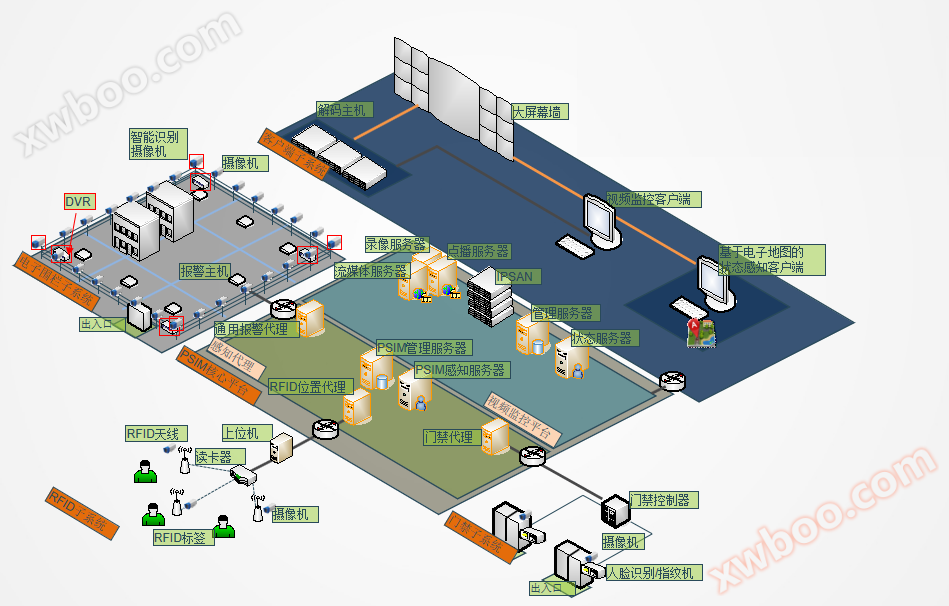
The classified asset management system consists of three parts: the classified carrier storage subsystem, the access control recognition subsystem, and the monitoring management software.
By using RFID to achieve regional management of classified assets, different security levels can be divided through the system to achieve the classification of security zone levels for classified assets;
● Improve the efficiency and accuracy of inventory of classified assets through RFID technology;
Through this system, manage the borrowing, return, and handover of confidential assets;
Through RFID technology, manage access permissions for classified assets, and only authorized assets can be taken out; When unauthorized assets are illegally taken out, an alarm prompt will be given through the system;
● Implement visual tracking and management of classified assets during use;
● It can track and query the trajectory of confidential assets in the internal circulation process;
At present, the main management objects include laptops, printers, cameras, camcorders, portable hard drives, voice recorders, mobile conference systems, etc.
| Construction principles |
■ progressiveness adopts advanced and mature information technology, which not only ensures that the system can meet the current functional requirements, but also provides conditions for future functional requirements;
Scalability minimizes system modifications when requirements change or increase;
The software and hardware involved in the standardization system should meet the requirements of openness and standardization, and software development should comply with military standards, industry standards, and specifications.
The construction of a security system considers the security of the system, provides backup functions, enables recovery in case of system failures, manages user roles, and ensures information security.
| Construction standards |
GJB 7377.1-2011 Military Radio Frequency Identification Air Interface
ISO/IEC 18000-6C Radio Frequency Identification Standard-6C Part
GJB 179A -1996 Technical Sampling Inspection Procedure
GJB 150A-2009 Environmental Test Methods for Military Equipment Laboratories
| System Design |
system architecture

Logical structure design

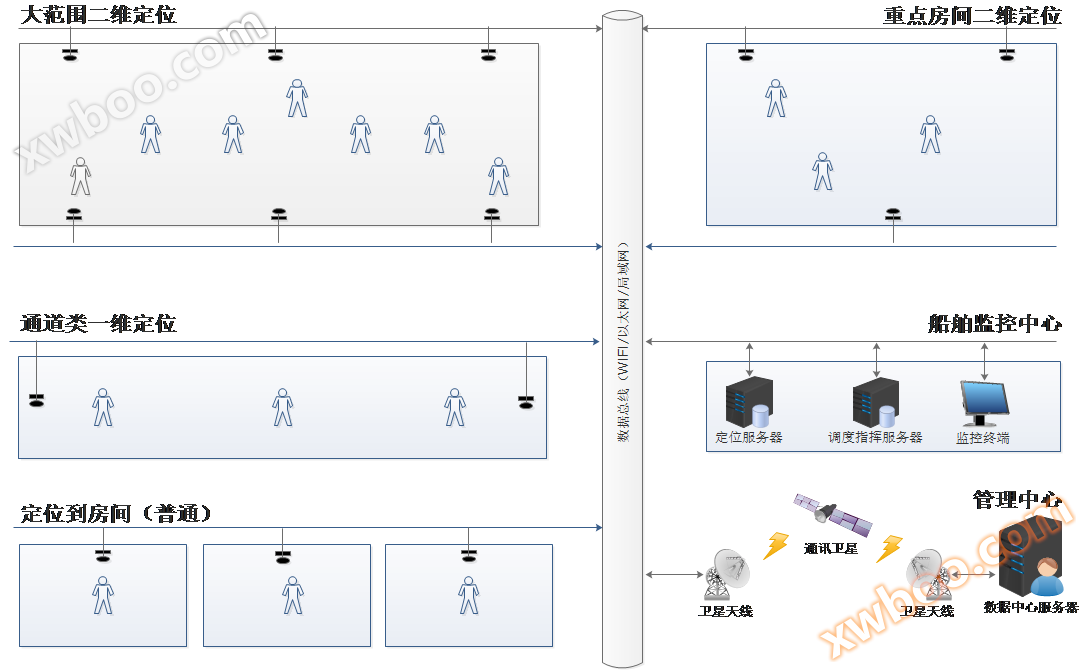
| The RFID classified asset management system is logically divided into three levels: data collection, data transmission, and business application |
 |
data collection | Data collection mainly consists of RFID tags, corresponding reading and writing devices, and sensor devices, which are mainly used to quickly, accurately, and automatically collect data on classified assets at different stages of the entire business process. The data collection layer does not perform logical processing on the collected data, but instead submits it to the upper level application platform for processing through the data transmission layer. |
 |
data transmission | Data transmission mainly consists of network hardware devices, servers, databases, and RFID middleware, which mainly transmit, filter, and store collected data. |
 |
business application | Business applications are mainly composed of application software, providing users with an interface for interpersonal interaction, realizing data logic processing of business, and controlling front-end hardware devices. |
 |
Material cabinet management subsystem | RFID unique identification is applied to classified materials and equipment, and RFID equipment cabinets are designed according to the size specifications of classified materials. By locating the position of each piece of classified material on each device, the entire process of inbound and outbound management of classified materials is automated. |
| Technical solution |
RFID system framework

network architecture

Overall design concept: Attach ultra-high frequency RFID tags to all classified materials and equipment stored in cabinets, and print barcodes or QR codes on the surface of the tags. Combined with employee work cards and fingerprint recognition systems, the inventory management and inbound/outbound management of classified materials can be completed through several methods such as RFID handheld devices, mobile phones, and RFID readers.
System functions

Scalable functionality
| ✧ | Construction of physical evidence room: including environmental monitoring, video surveillance, security monitoring, intelligent access control, temperature and humidity monitoring, formaldehyde TOVC、PM2.5、 carbon monoxide; Real time video viewing, historical video viewing; Smoke detection, illegal intrusion detection, zone setting, sound and light alarm, alarm linkage; Open door mode. | |
| ✧ | RFID technology: RFID electronic tags are attached to the file, and the file is automatically identified by an RFID reader to achieve on-site detection and full traceability. RFID features include: fast scanning; Small size; Large capacity; High security; Anti pollution and durability; Reusable; Penetration. | |
| ✧ | QR code technology: Attach QR code labels to the file, identify the file through a QR code reader, and trace the entire process. | |
| ✧ | Voiceprint recognition: Users read a random number according to prompts, and the system collects the voiceprint features of the user to identify them. At the same time, it verifies whether the number read by the user is consistent with the random number, and determines whether it is a real person. | |
| ✧ | Speech recognition: The system detects whether specific instructions are included based on the user's speech, and jumps to the corresponding operation interface according to different instructions. | |
| ✧ | Facial recognition: Automatically detect and recognize faces within the camera's range. | |
| ✧ | Handwriting recognition: The cabinet is equipped with a handwriting board, where users need to input text, they can complete the input through the handwriting panel. | |
| ✧ | ID card recognition: The cabinet is equipped with an ID card reader, and users can complete user recognition by swiping their ID card. | |
| ✧ | OCR recognition: Users scan specific documents through a camera and complete user recognition through image OCR. | |
| ✧ | Alcohol detection: Before performing any operation, users undergo alcohol blowing detection to determine if they have engaged in drinking behavior, and whether they have blown air will be detected. At the same time, it can be combined with biometric recognition technologies such as facial recognition and fingerprint recognition to determine whether it is the individual. | |
| ✧ | Video intercom: Real time two-way video intercom between the cabinet end and the platform end. | |
| ✧ | Coercive fingerprints and finger veins: When entering biometric features of fingerprints and finger veins, it is possible to mark whether they are coercive. If coercive features are used for verification, a silent alarm needs to be generated on the terminal, and a prominent alarm needs to be generated on the platform. | |
| ✧ | Open interface: Provide standard data interface for intelligent filing cabinets, facilitating third-party system integration (third-party development and management platform). |
| Cabinet system architecture |
| Structural subsystem | Design of main and auxiliary cabinets, main cabinet: control host, used for business logic control, lock control design |
| Hardware subsystem |
Data transmission mainly consists of network hardware devices, servers, databases, and RFID middleware, which mainly transmit, filter, and store collected data. Control hardware: responsible for user interaction display. Hardware module: responsible for electronic control, network, detection and other functions, including item detection and box door detection.Tag system: Ultra high frequency card reader system, used for borrowing, returning and detecting items in a single compartment, is the main functional component of alarm detection. |
| Software subsystem | Mainly responsible for the borrowing and returning process of the entire system, with the following business software for each subsystem: borrowing process, returning process, and management operations. |
| ▍ Hardware Product Introduction |
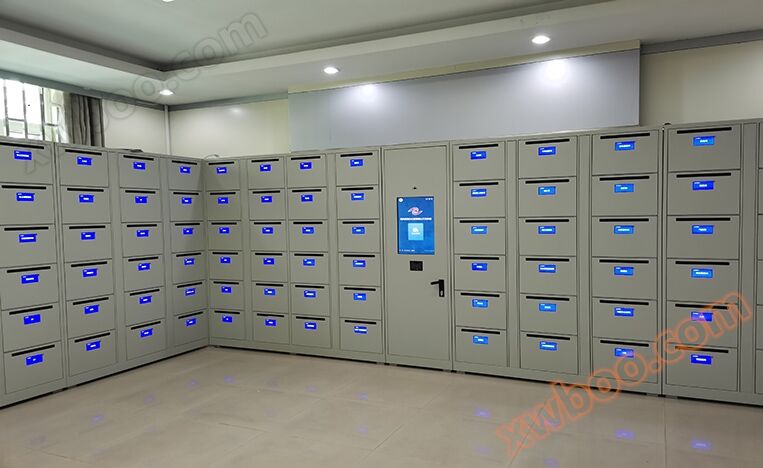
The classified asset management cabinet is composed of a metal cabinet body, an embedded management system (Linux operating system), an embedded intelligent controller, a camera, various sensors (temperature, humidity, power outage, network disconnection vibration, etc.), a laser QR code scanner, biometric recognition (card swiping, fingerprint recognition, iris recognition, finger vein, facial recognition, voiceprint, etc.), a lock control board, an electronic control lock, a power supply, UPS, and other components.

Cabinet material
▲ The steel plate is made of high-quality Baosteel galvanized sheet with a thickness of 0mm. The surface of the galvanized sheet has strong oxidation resistance, which can enhance the corrosion resistance and penetration ability of the parts, ensuring long-term use without easy rusting;
The surface of the cabinet is coated with environmentally friendly electrostatic spraying, and colors are optional;
Special parts such as the door, bottom, and top of the cabinet are reinforced with ribs to ensure absolute firmness of the cabinet;
The box door adopts a rounded corner design, which can effectively prevent and reduce users from being accidentally bumped or bumped;
Structure and appearance
▲ Surface treatment: The exterior is treated with spray coating, and there are no defects such as leakage, air, skin, pinholes, wrinkles, etc;
▲ Identification: All markings on the electrical panel are correct and without omission;
▲ The strength of the cabinet and door materials is greater than 315N/mm2;
The gap between the rear axle of the box door assembly and the door frame should be greater than 2mm and less than 5mm, and the gap between the other three sides should be greater than 1.5mm and less than 2mm, ensuring that the box door can be opened and closed flexibly;
The external power cord can withstand a tensile force of not less than 49N and cannot transmit the tensile force to the internal terminals;
▲ The box doors should be flat and consistent, with a height difference of no more than 1mm between each door;
▲ Wire harness fixation: All wire harnesses should be tied in place, and the wireless harness inside the box should be exposed;
| Management Platform |
Confidential materials are stored in the warehouse
Complete the initialization work for unique identification of materials: establish material coding rules, and use handheld devices that support RFID, barcode, and QR code simultaneously to form rules for materials according to cabinet name, cabinet number, and other information, and prepare corresponding barcodes in advance; Read the barcode or QR code information on the surface of the label through a handheld device; Automatically generate EPC codes for materials and write them to the RFID tag EPC area; Complete the initialization of the card number; Report the EPC information, TID information, QR code/barcode information, material name, material specifications, warehouse number, manufacturer, annual inspection date, annual inspection validity period, annual inspection certificate, whether it is a consumable, and other information that uniquely identifies the materials to the corresponding database table.

Outbound of classified materials
Material borrowing: Customize cabinets and store items by category in each cabinet compartment. The grid is equipped with ultra-high frequency RFID antennas, which can locate the inventory location of each item.


Inventory of classified materials
During material inventory, the administrator holds an RFID reader and uploads inventory information. The system automatically performs information verification. Materials that accidentally enter the cabinet or warehouse are marked with a light red background, missing materials are marked with a light green background, and correct materials are marked with a white background. The administrator can intuitively grasp the material information on site. Upload the inventory results to the computer for data organization, statistics, and saving of the results.At the same time, the system supports automatic inventory function. The platform sends inventory commands to complete the counting of items in the cabinet and provide reminders for abnormal incoming and outgoing materials.

system query
Borrowers can query borrowing and returning records by presenting their employee card,Support material inquiry function: including querying the inventory and borrowing status of each type of material; Comprehensive query with different query conditions, such as drawer number, etc; Support inventory record query; Support query of outbound records.
 ;
;
Similar Product Recommend