-
Phone
13033051288
-
Address
Building 75, Zone C, Jiahai Industrial Park, Xinbengbu Road, Hefei City
Product Categories
Hefei Dahan Machinery Manufacturing Co., Ltd

Fruit Wine Production Line Fruit Wine Production Equipment
NegotiableUpdate on 05/11
- Model
- Nature of the Manufacturer
- Producers
- Product Category
- Place of Origin
Overview
1、 Overview of Fruit Wine Production Line: Fruit wine literally refers to alcoholic beverages containing fruit components. Of course, there are also many fruits that can be processed, brewed, and blended according to production processes to enhance the nutritional and health benefits of fruit wine
Product Details

1、 Overview of Fruit Wine Production Line
Fruit wine literally refers to alcoholic beverages containing fruit components. Of course, there are also many fruits that can be processed, brewed, and blended according to production techniques to enhance the nutritional and health benefits of fruit wine.
Generally, according to the seasons, China produces a variety of plant fruits with different varieties and nutrients throughout the year. For example, strawberries and bayberries can be found in spring, peaches, cherries, and dragon fruit in summer, pomegranates and apples in autumn, and oranges and dates in winter.
Due to the fact that fruit wine is not simply a beverage made from fruit juice, but also produced through different processes such as fermentation and biomass conversion, fruit wine contains more nutrients that are more easily absorbed.
At present, there are many types of fruit wine sold in the market, including goji berry wine, mulberry wine, pomegranate wine, kiwi wine, schisandra wine and many other varieties.
Fruit wine is a type of alcohol produced by fermenting the sugar content of fruit itself with yeast, which contains the flavor of fruit and alcohol. Through yeast fermentation, modern engineering control, and effective and reasonable production processes and equipment, delicious fruit wines with different nutritional values can be produced.
2、 Selection of raw materials for fruit wine
The variety of raw materials is one of the factors that ensure the quality of fruit wine products, and it will directly affect the sensory characteristics of fruit wine after brewing.
At present, kiwi, bayberry, orange, grape, lychee, peach, grass plum and other ideal products are commonly available in the market. When selecting, it is required to achieve full maturity, high sugar content in the juice, no mold or deterioration, and no pests and diseases.
3、 Brewing process of fruit wine production line
(1) The process flow of fruit wine brewing:
Fresh fruit → Sorting → Crushing and removing stems → Fruit pulp → Separating and extracting juice → Clarifying → Clear juice → Fermentation → Pouring bucket → Storing wine → Filtering → Cold treatment → Mixing → Filtering → Finished product
(2) Brief description of processing equipment and technology for fruit wine production line:
2.1 Pre fermentation treatment: sorting, crushing, pressing, clarification of juice, improvement of juice, etc.
Crushing and removing stems: Crushing requires each seed to be broken, but the seeds and stems cannot be crushed, otherwise the oil esters, glycosides, and some substances in the seeds and stems will increase the bitterness of the wine. Immediately separate the crushed fruit pulp from the stem to prevent the dissolution of grassy and bitter substances from the stem.
The equipment includes double roll crushers, drum shaped scraper crushers, centrifugal crushers, hammer crushers, etc.
Separation of slag juice: self flowing juice, pressed juice. Self flowing juice has good quality and is suitable for separate fermentation to produce high-quality wine. Pressing is carried out in two stages, with the first stage gradually increasing pressure to extract as much juice as possible from the flesh. If the quality is slightly poor, it should be brewed separately or combined with the free flowing juice. Loosen the residue, add water or no water, and use it for a second press. The pressed juice has a strong odor and low quality, and is suitable for use as distilled liquor or other purposes.
The equipment is generally a continuous screw press.
Clarification of fruit juice: Some insoluble substances can have adverse effects during fermentation, bringing mixed flavors to the wine. In addition, fruit wine made from clarified juice has high colloidal stability, is insensitive to oxygen, has light color, low iron content, stable aroma, and refreshing taste.
Sulfur dioxide treatment: The functions of sulfur dioxide in fruit wine include sterilization, clarification, antioxidant, acidification, dissolution of pigments and tannins, reduction, and improvement of the flavor of the wine.
2.2 Juice Fermentation
Adjustment of substrate ratio before fermentation, utilizing the fermentation process and product synthesis
① Preparation of yeast: Following the fermentation process, excellent bacterial strains are produced through primary cultivation and multi-stage expansion cultivation.
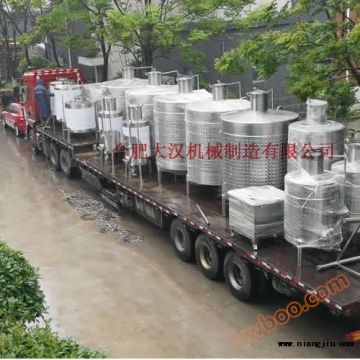
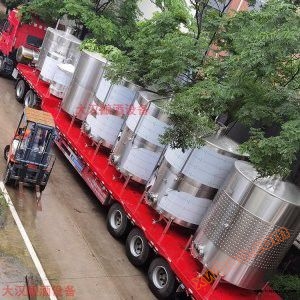
② Fermentation equipment: Fermentation equipment refers to the stainless steel fermentation tank that we often choose. The fermentation tank has a sandwich layer, temperature control function, and is designed with raw material input port, inoculation port, cleaning port, juice outlet, etc. Clean and disinfect before each fermentation.
Fermentation is divided into main (pre) fermentation and post fermentation. During the main fermentation, the juice is poured into a container, with a volume of 4/5 of the container volume. Then, 3% -5% yeast is added, stirred evenly, and the temperature is controlled at 20-28 ℃. The fermentation time varies with the activity of the yeast and the fermentation temperature, usually about 3 to 12 days. The main fermentation ends when the residual sugar drops below 0.4%. Then post fermentation should be carried out, that is, the wine container should be sealed and moved to the wine kiln, and left at 12-28 ℃ for about one month. After fermentation, clarification should be carried out using the same method as fruit juice.
(3) Finished product blending
The preparation of fruit wine mainly involves blending and adjustment. According to the different types of production, flavors, colors, nutritional components, and requirements of the nutritional table, adjustments are made to sugar content, acidity, alcohol content, etc. to achieve qualified product wine.
(4) Filtering, sterilization, and bottling: After blending and filling, the wine should be filtered before filling. Generally, filtering equipment such as diatomaceous earth filtration and microporous filtration are used for alcoholic beverages. When bottling, the bottle packaging is generally sterilized, cleaned, and dried. Pack the sterilized fruit wine in a sterile state. And pack and store for shipment. Low alcohol fruit wine should also be sterilized after bottling.
4、 The nutritional value of fruit wine
The special nutritional components and health benefits of fruit wine give it a certain cultural significance. There are many cultures about fruit wine, and people have formed many standards when choosing and tasting it. Its rich vitamins and amino acids required by the human body make its nutritional value well-known. Especially through special fermentation processes, the nutritional components of fruit wine are more easily absorbed, truly playing a role that fruit wine cannot replace.
Similar Product Recommend