-
E-mail
18879199@qq.com
-
Phone
13009129951,17300060335,15843008081
-
Address
No. 171 Shijiazhuang Road, Economic and Technological Development Zone, Changchun City, Jilin Province, China
Product Categories
- Plastic ball indentation, hardness tester, etc
- Packaging testing instrument
- Insulation performance test of conductive materials
- Automotive testing instruments
- Sponge foam material testing machine
- Universal material testing machine category
- impact testing machine
- melt flow indexer
- Density meter, moisture meter, melting point meter, muffle furnace
Jilin Huabo Technology Industry Co., Ltd
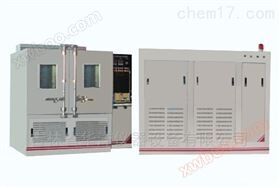
HMC-20 Automotive Pipeline Pulse Test Stand
NegotiableUpdate on 08/15
- Model
- Nature of the Manufacturer
- Producers
- Product Category
- Place of Origin
Overview
Brief description: The automotive pipeline pulse test bench is suitable for testing the pulse, vibration, and expansion measurement of automotive hoses, assessing their fatigue life and fatigue failure modes. It automatically identifies and takes corresponding measures for sample failure or machine malfunction, and controls various sensors through computer control to enable each subsystem to achieve the testing process and protection function. The pulse and vibration test section breaks the traditional method of using hydraulic cylinders and servo valves to control the test bench. And in the form of an electric cylinder, this form does not require hydraulic oil or an oil tank. It has the advantages of saving space, protecting the environment, high work efficiency, and easy maintenance.
Product Details
HMC-20Automotive pipeline pulse test bench
Product Name:Automotive pipeline pulse test bench
Product Model 2:HMC-20
Three main purposes and functions
Automotive pipeline pulse test benchThe test is suitable for measuring the pulse, vibration, and expansion of automotive hoses, assessing their fatigue life and fatigue failure modes. The automatic identification and corresponding handling of sample failure or machine malfunction are controlled by computers to enable various subsystems to achieve the testing process and protection functions. The pulse and vibration test section breaks the traditional method of using hydraulic cylinders and servo valves to control the test bench. And in the form of an electric cylinder, this form does not require hydraulic oil or an oil tank. It has the advantages of saving space, protecting the environment, high work efficiency, and easy maintenance.
productFunction:
1. Computer data acquisition and processing, printing and outputting media temperature, pulse frequency, vibration frequency, and pulse pressure waveform;
2. Experimental waveforms: triangular wave, sawtooth wave, trapezoidal wave, sine wave, etc. The control methods can be displacement control and load control.
3. The inner and outer wall panels and glass windows of the test chamber have explosion-proof and anti scalding functions, which are convenient for operation and observation;
4. Safe and reliable grounding protection;
5. Power phase loss, undervoltage, overvoltage, phase sequence protection;
6. Fan motor overcurrent protection;
7. Refrigeration machine overpressure and overload protection;
8. Heater short circuit protection;
9. The electronic control system has protective devices (partially) that can automatically shut down the entire machine and sound an alarm when starting.
4Main technical parameters:
1. Vibration and pulse:
Vibration frequency: 0-20Hz
Amplitude: ± 2 to ± 30mm (with an amplitude of 2mm at a frequency of 20 Hz)
Medium temperature: -40~160 ℃
Quantity of samples: Four samples can be made simultaneously at a time(Customizable according to user requirements)
Pulse pressure: 1-2MPa
Pulse frequency: 0.1-2HZ
Single pulse frequency: 1-3 million
Expansion measurement: 1-800ml
Experimental waveforms: triangular wave, sawtooth wave, trapezoidal wave, sine wave, etc
Waveform accuracy: ± 2%, measurement accuracy can reach ± 0.25%.
2. Environment and media box
The average heating rate of the medium is 2 ℃/minute, and the average cooling rate is 1.5 ℃/minute.
Temperature range of environmental chamber: -40-160 ℃
Temperature fluctuation: ≤± 1 ℃
Temperature deviation: ≤± 2 ℃
The average heating rate of the environmental chamber under no-load conditions is 4 ℃/min, and the average cooling rate is 2 ℃/min
Heating time: Room temperature~160 ℃ ≤ 40min (under no load)
Cooling time: Room temperature~-40 ℃ ≤ 60 minutes (under no-load)
Internal dimensions (mm): 1200 (W) x800 (D) x900 (H)(Customizable according to user requirements)
Equipment operating noise: less than 70dB
Compressor cooling method: air-cooled
Power supply: three-phase 380V.
Similar Product Recommend