-
Phone
13033051288
-
Address
Building 75, Zone C, Jiahai Industrial Park, Xinbengbu Road, Hefei City
Product Categories
Hefei Dahan Machinery Manufacturing Co., Ltd
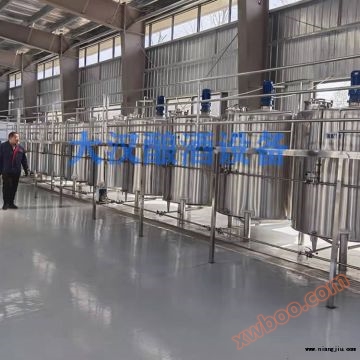
Hawthorn fruit wine production line
NegotiableUpdate on 05/11
- Model
- Nature of the Manufacturer
- Producers
- Product Category
- Place of Origin
Overview
1、 Overview of Hawthorn Juice Production Line Products Hawthorn fruit is rich in pectin substances, organic acids, and carbohydrates. The juice is small and viscous, and the flesh texture is tight. The proportion of fruit pits is relatively large, about 20% by weight
Product Details
1、 Overview of Hawthorn Juice Production Line Products
Hawthorn fruit is rich in pectin, organic acids, and carbohydrates. The juice is small and viscous, and the flesh texture is tight. The proportion of fruit pits is relatively large (about 20% by weight). The above characteristics of hawthorn fruit are generally suitable for extracting hawthorn juice by pressing method. At present, various types of hawthorn beverages and hawthorn jelly products produced domestically are basically processed by first using water infiltration technology to extract soluble substances from hawthorn, and obtain hawthorn water infiltration solution (commonly referred to as hawthorn juice, the same below). Then, using the juice as the main ingredient, different products and corresponding processing methods are selected to produce various hawthorn beverages or jelly products.
2、 The process flow of hawthorn juice production line products
Process flow: raw materials → selection → washing → crushing → softening → infiltration → coarse filtration → clarification → fine filtration → ingredients → canning → sealing → sterilization
1. Raw material standards
Selection and washing: Raw materials used for producing hawthorn juice must be removed if the hawthorn has deteriorated or suffered from serious pests and diseases due to heat. The washing of hawthorn should be based on removing dirt such as sediment and impurities, and the washing and soaking time should not be too long.
1. Processing of hawthorn:
Pressing can increase the contact area between the fruit and the infiltration medium (water), which is necessary for accelerating the infiltration rate and increasing the content of soluble solids in the infiltration solution. If hawthorn is used as raw material to produce juice, there is no need to press it.
3. Softening:
The key factors affecting the flavor, color, and yield of raw juice produced by infiltration method are the level of softening humidity and the length of softening time. Next are the amount of water used for infiltration, infiltration temperature, and infiltration method.
4. Infiltration:
(1) One time slag leaching method: The original juice obtained by one time infiltration method has a low pectin content, good transparency, good color and flavor, and is suitable for producing various beverages. The residual hawthorn after extracting the original juice can be used to produce products such as paste like hawthorn jam and hawthorn cake.
(2) Intermittent secondary infiltration method: The raw juice obtained from two infiltrations can be mixed and used to produce hawthorn beverage products and hawthorn jelly products. The residual hawthorn still has certain comprehensive utilization value.
(3) Intermittent multiple infiltration method: The resulting mixed juice is suitable for producing hawthorn frozen products and can also be used for producing hawthorn beverage products.
(4) Reverse flow continuous infiltration method: The large-scale specialized production of hawthorn juice, such as using the reverse flow continuous infiltration process, is of great significance for improving the quality of juice, increasing the yield of soluble solids, saving energy and production water, and achieving civilized production.
5. Filtering and clarification:
At present, all kinds of hawthorn beverage products produced domestically are basically clarified juice type beverages. The original juice obtained by infiltration method must undergo strict filtration and necessary clarification treatment before being delivered to the next process for use or stored for future use.
(1) Coarse filtration: The purpose of coarse filtration is to remove broken fruit flesh, skin, coarse fiber, nucleus and other substances mixed in the original juice, laying a good foundation for clarification and fine filtration. The main types of coarse filtration equipment include vibrating flat screens, fixed porous metal screens with screw conveyors, etc. The aperture of the coarse filtration screen plate is generally around 0.5 millimeters, and coarse gauze or non synthetic woven screens can be used instead of screening machines for coarse filtration operations.
(2) Clarification treatment: Hawthorn juice that has been roughly filtered can generally be processed using natural clarification or enzyme clarification methods to meet production needs.
Natural clarification method: The crude filtered juice is placed in a solvent and allowed to settle naturally at room temperature for about 12 hours. Extending the settling time appropriately is beneficial for clarification, but care must be taken to prevent fermentation and spoilage. When natural settling terminates, use siphon or other methods to remove the clear juice from the container, and handle the remaining sediment and mixed juice at the bottom of the container separately. Natural processed clarified fruit juice is suitable for producing jelly and thick tasting beverages.
(3) Enzyme clarification method:
When clarifying the juice, the amount of enzyme preparation should be determined based on the pectin content in the juice, the activity of the enzyme preparation used, and the clarification conditions (juice temperature). The raw juice processed by enzymatic method is used to produce beverage products, and the transparency and stability of the finished product are both good, generally without turbidity or sedimentation.
(4) Fine filtration: The raw juice clarified by enzymatic method can be used for beverage production immediately after fine filtration. Enzyme inactivation treatment can be combined with sterilization of the finished product.
6. Preparation of Hawthorn Juice:
(1) (Calculated based on 100 kilograms of finished product):
Original juice: (soluble solids content 6%, refractive index method) 66 kilograms; Sugar: 13.5 kilograms; **: Moderate; Rouge: 1.5-2 grams.
(2) Preparation: For the preparation of hawthorn juice, the concentration of the original juice used should be tested first (using the optical method), and then the actual amount of the original juice used should be calculated based on a concentration of 6%. For example, if the concentration of the original juice used is 5%, and 66 kilograms of the original juice with a concentration of 6% are calculated based on * *, the actual amount of the original juice used should be 79.2 kilograms (if the concentration of the original juice is less than 5%, it should be mixed with high concentration original juice or evaporated and concentrated to increase the concentration of the original juice to a standard of not less than 5% before use). After calculation and weighing, the original juice and sugar are placed in a sandwich pot and heated and stirred. After all the sugar is dissolved, other ingredients that have been previously mixed with water to a concentration of 50% are added, and an appropriate amount of water is added to adjust the total weight to 100 kilograms. After adding sugar to adjust the acidity, the soluble solids content in the juice is 15-18% (refractometer method), with a total acid content of 0.5-0.7%. When the temperature of the juice reaches 90-95 ℃, immediately remove it from the pot and filter it, then immediately pack it into cans without any backlog.
7. Jaring, sealing, and sterilization:
The juice temperature during sealing shall not be lower than 70 ℃.
Net weight 200-250 grams Sterilization formula: 3 '- (4' -5 ')/100 ℃ (water) cooling.
Net weight 280 grams Sterilization formula: 5 ′ -10 ′/100 ℃ (water) cooling.
Similar Product Recommend