-
E-mail
kathleen@fairborn.cn
-
Phone
18049883799/18049859399
-
Address
Building 10, No. 860 Xinyang Road, Lingang New Area, China (Shanghai) Free Trade Zone
Product Categories
Fairburn Precision Instruments (Shanghai) Co., Ltd

High temperature differential thermal analysis instrument
NegotiableUpdate on 03/08
- Model
- Nature of the Manufacturer
- Producers
- Product Category
- Place of Origin
Overview
Is the origin in Shanghai for import denied? The item number 582520 for processing customization is item number 52820 .....
Product Details
Technical parameters:
| Temperature range | Room temperature~1150 ℃ |
| Range of measurement | 0~±2000μV |
| DTA accuracy: | ±0.1μV |
| Heating rate | 1~80℃/min |
| Temperature resolution | 0.1℃ |
| Temperature accuracy | ±0.1℃ |
| Temperature repeatability | ±0.1℃ |
| Temperature control |
Heating up: Program control can adjust parameters as needed Cooling: Air cooling program control |
| Furnace structure | The furnace body adopts an open top structure, replacing the traditional lifting furnace body, with high precision and easy operation |
| Atmosphere control | Internal program automatic switching |
| Data interface | Standard USB interface with accompanying data cable and operating software |
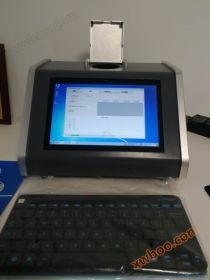
| Display mode | 24 bit color 7-inch LCD touch screen display |
| Parameter standards | Equipped with standard materials and one click calibration function, users can calibrate the temperature themselves |
| Baseline adjustment | Users can adjust the baseline by its slope and intercept |
| Working power supply | AC 220V 50Hz |
Product Introduction:
Fairburn differential thermal analysis is a technique for measuring the temperature difference and temperature relationship between a substance and a reference substance under program-controlled temperature. The differential thermal analysis curve describes the temperature (△ T) relationship between a sample and a reference material as a function of temperature or time. In the DTA test, the change in sample temperature is caused by the endothermic or exothermic effects of phase transition or reaction. For example: phase transition, melting, crystal structure transformation, boiling, sublimation, evaporation, dehydrogenation reaction, fracture or decomposition reaction, oxidation or reduction reaction, lattice structure destruction, and other chemical reactions.