-
E-mail
yxldhb@163.com
-
Phone
13961538666
-
Address
Heqiao Town, Yixing City, Jiangsu Province
Product Categories
Yixing Green Island Water Treatment Equipment Co., Ltd
Low price direct sales of equipment for treating river water into tap water
NegotiableUpdate on 11/06
- Model
- Nature of the Manufacturer
- Producers
- Product Category
- Place of Origin
Overview
Low price direct sales of equipment for treating river water into tap water
Product Details
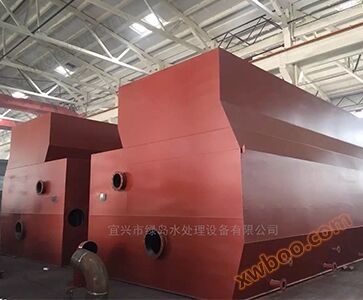
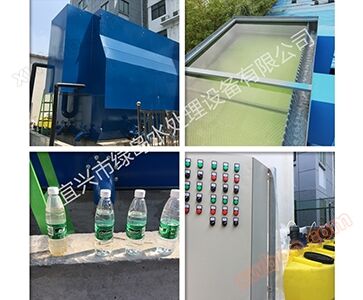
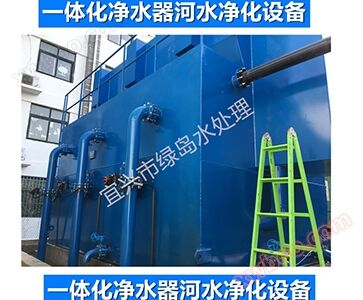
The equipment for treating river water into tap water is widely used for purifying surface water such as rivers, lakes, etc. It can turn turbid water into clean tap water, which can be used for industrial or domestic purposes. It can also purify and reuse industrial wastewater such as circulating water, cooling water, and mine water, improving the reuse rate of water. Equipment for treating river water into tap waterThe production process of tap water includes coagulation reaction treatment, precipitation treatment, filtration treatment, and post filtration disinfection treatment. 1. Mixing and flocculation treatment After being lifted by the water intake pump room, the raw water is first treated with flocculation technology. Common water treatment agents include polyaluminum chloride, aluminum sulfate, ferric chloride, etc. They all have adsorption properties, which can stabilize and aggregate colloidal particles and small suspended solids that are not easy to precipitate in water, and then be adsorbed and bridged to form larger flocs, which are conducive to separation and settling from water. The purpose of mixing is to rapidly and evenly disperse the chemicals in water through hydraulic and mechanical agitation. The water treated with flocculation flows into the sedimentation tank through a pipeline and enters the second stage of water purification. 2. Precipitation treatment The process of separating flocs formed during the flocculation stage from water by gravity is called precipitation, which occurs in a sedimentation tank. The particles in the water settle at the bottom of the pool, and the sludge continues to accumulate and concentrate, and is regularly discharged outside the pool. 3. Filter processing Filtering generally refers to the process of using porous granular filter media layers such as quartz sand to retain suspended particles in water through adhesion, thereby further removing small suspended impurities, organic matter, bacteria, viruses, etc. from the water, and clarifying the water. 4. Disinfection treatment after filtration Shui JingEquipment for treating river water into tap waterAfter filtration, the turbidity is further reduced, and residual bacteria, viruses, etc. lose their turbidity protection or attachment, creating favorable conditions for post filtration disinfection. Although most bacteria and viruses can be removed from water after coagulation, sedimentation, and filtration, disinfection plays a role in meeting the "Sanitary Standards for Drinking Water" (GB5749-2006) for tap water. Model and specification table of river water purification and tap water equipment: Device Model Processing water volume (m3/h) Dimensions (mm) Equipment weight (T) Operating power (W) FL-10 10 1800×2500×4400 8 60 FL-30 30 3500×3600×4400 12 150 *FL-50 50 5000×3600×4400 14 260 *FL-100 100 7200×4600×4400 30 450 FL-150 150 10500×4600×4400 45 600 *FL-200 200 15000×4600×4400 60 850 FL-250 250 17500×5000×4400 75 1050 tap waterThe production process shows that various suspended particles and colloidal substances originally present in the river water have been separated during the coagulation process. And the pathogenic microorganisms in the raw water have also been eliminated during the disinfection process after filtration. Therefore, harmful substances to human health contained in the raw water have been removed during the production process of tap water. Firstly, it is necessary to select a suitable water source and intake, transport it through pipelines to the first level pump room (intake pump room), and add chlorine in front of the first level pump room to kill algae, plants, and shellfish. Then, the water is sent to the internal treatment system through the first level pump room. Usually, after mixing (adding an appropriate amount of aluminum chloride, commonly known as alum, to the source water), reaction, precipitation, filtration, disinfection and other treatment processes, each process is equipped with corresponding structures (such as sedimentation tanks, filter tanks, clean water tanks, etc.). After filtration, disinfection is usually carried out by adding chlorine and ammonia. The water with disinfectant added becomes qualified drinking water after passing through the clean water tank and staying in the tank for about an hour. It is then pressurized and transported to the urban pipeline network through the secondary pump room (water supply pump room) for domestic drinking and production use. The current disinfection method is chlorine disinfection, while also maintaining a certain amount of residual chlorine at the end of urban water pipes to control bacterial growth and prevent pollution. After disinfection, the tap water is raised to a certain water pressure by the clean water tank and the water supply pump room, and then sent to thousands of households through the water transmission and distribution network.
The equipment for treating river water into tap water, also known as a river water clarifier, mainly filters, purifies, and coagulates impurities such as suspended solids, sediment, and organic matter in river water to meet domestic water standards. It is used for residential drinking, industrial cleaning, and other water requirements. Generally, coagulation sedimentation, quartz sand filters, multi-media filters, precision filters, and disinfection treatments are used.
purpose
Equipment for treating river water into tap water

Similar Product Recommend