-
Phone
13585452000
-
Address
Xuejia Industrial Park, Xinbei District, Changzhou City, Jiangsu Province
Product Categories
Changzhou Tianhuan Purification Equipment Co., Ltd
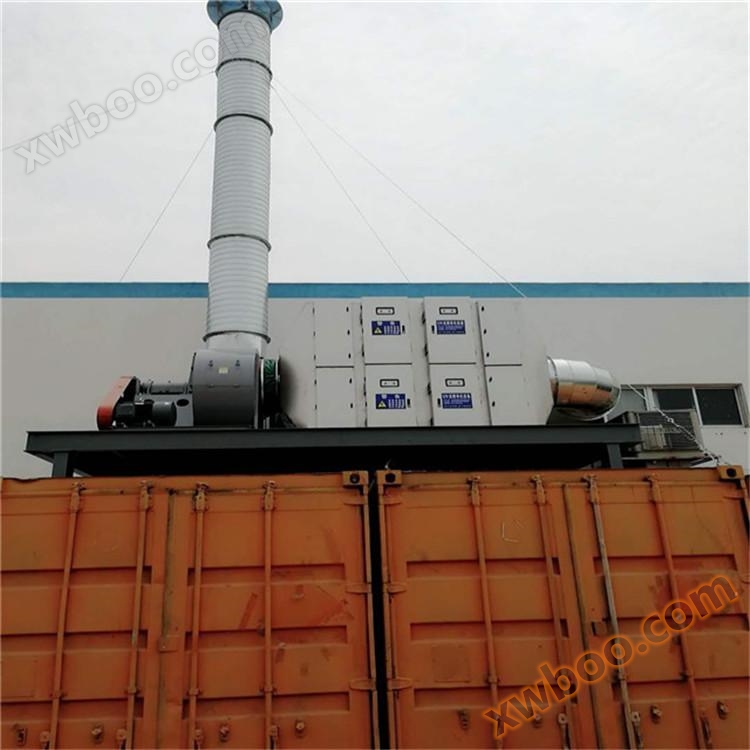
Ma'anshan Spray Painting VOC Treatment Equipment - Spray Painting Workshop Spray Mist Treatment Device - Multiple Treatment Processes
NegotiableUpdate on 12/04
- Model
- Nature of the Manufacturer
- Producers
- Product Category
- Place of Origin
Overview
Product Parameters: Brand: Tianhuan Air Volume: 300-10000m3/h, Customization: Attribute: Exhaust Gas Treatment Equipment, Concentration: Any Concentration, Material: PP Stainless Steel, Carbon Steel, Glass Fiber Reinforced Plastic, Temperature: 100 ° C, Self made, Self produced, Self sold, Suitable for Any Industry, External Dimensions: Non standard Customization, Applicable to Neighborhood Production Factories. Product Introduction: Spray Painting Exhaust Gas Overview: Spray painting is a surface treatment that covers up products and semi-finished products that have passed inspection and are qualified.
Product Details
Product Specifications
| brand | Tianhuan | air volume | 300-100000m3/h |
|---|---|---|---|
| Customized or not | yes | attribute | Waste gas treatment equipment |
| concentration | Any concentration | material | PP stainless steel, carbon steel, fiberglass |
| temperature | 100 | Is it self-made | self-produced and self-marketed |
| Applicable Industries | Any industry | Overall dimensions | Non-standard customization |
| Applicable Neighborhood | Production-oriented factory |
Product Introduction
Overview of Spray Paint Exhaust Gas
Spray painting is a surface treatment that covers up products and semi-finished products that have passed inspection and are qualified. Spray painting plays a role in rust prevention, corrosion prevention, beauty, and has a distinctive effect. It is necessary to perform pre-treatment before painting. At this time, a full inspection of the product to be painted should be conducted, and repairable defects should be repaired and compensated for.
Spray painting waste gas comes from organic waste gas generated in the spray painting workshop, mainly composed of toluene, xylene, trimethylbenzene and other organic waste gases. If this organic waste gas is not treated and directly discharged into the atmosphere, it will not only affect the health of employees but also pollute the surrounding environment. Therefore, it is necessary to purify the waste gas in the spray painting workshop to meet the emission standards.
Characteristics of spray painting exhaust gas:
During the spray painting process, paint mist and organic waste gas pollution mainly occur. The paint is atomized into particles under high pressure. During the spraying process, some of the paint does not reach the surface of the sprayed object and disperses with the airflow, forming paint mist; Organic waste gas comes from the evaporation of diluents, and organic solvents will not adhere to the surface of the painted object with the paint. During the painting and curing process, they will be completely released to form organic waste gas.
There are literature reports on hundreds of volatile organic compounds, classified as alkanes, cycloalkanes, alkenes, aromatic compounds, alcohols, aldehydes, ketones, esters, ethers, and other compounds.
Damage caused by spray painting exhaust gas:
In the process of painting, some spray particles and other forms of organic waste gas often occur. The waste gas contains many toxic substances, which will affect people's health, pollute the environment and cause many problems.
Spray painting exhaust gas treatment plan method
The current methods for treating paint exhaust gas include condensation, adsorption, absorption, incineration, biological methods, photocatalytic methods, plasma methods, UV photolysis methods, etc.
1. Water spray method
The water spray process is widely used in air pollution treatment and has also been applied in the spraying process. For example, the water curtain cabinet is an example. Its principle is to spray water onto the exhaust gas, and settle the water-soluble or large particle components in the exhaust gas to achieve the purpose of separating pollutants from clean gases.
Its advantage is that water resources are easily accessible, and after filtration and sedimentation, they can be reused, reducing water waste to a certain extent. Water spraying has a high efficiency in treating large particle components and is often used as a pre-treatment for exhaust gas treatment.
2. Absorption method
Absorption methods can be divided into chemical absorption and physical absorption, and chemical absorption is not suitable for most organic waste gases. The absorbent for physical absorption should have a high affinity with the absorbing components, low volatility, and also have low volatility. After the absorption liquid is saturated, it can be reused after analysis or distillation. This method is suitable for medium to high concentration exhaust gases, but it is difficult to choose an inexpensive low volatility absorption solution. Factors that need to be considered together include solubility, selectivity, volatility, viscosity, ignition point, regenerability, and toxicity. It is also difficult to solve the problem of secondary pollution and has limited purification effect. It is often used as a pre-treatment process in exhaust gas management, which can play a role in cooling and dust removal. 、
3. Adsorption method
There are various types of adsorption methods, such as one-time adsorption, adsorption recovery, adsorption catalytic incineration, etc. Activated carbon adsorption has a high removal efficiency, but the disposable activated carbon method requires frequent replacement of activated carbon to ensure purification, resulting in secondary pollution during loading, unloading, transportation, and other processes. The adsorption recovery method is suitable for managing waste gases with medium to high concentrations, medium to low air volumes, and recovery value. However, if the organic gas composition is chaotic and cannot be directly used for production after recovery, subsequent operations such as distillation, extraction, and separation are required, which not only causes secondary pollution but also greatly increases management costs. The adsorption catalytic incineration method is suitable for the management of high air volume and low concentration waste gas, and is currently a mature and effective method for managing organic waste gas in China.
4. Incineration method
Incineration methods are divided into direct incineration and catalytic incineration, primarily used for the purification and treatment of high concentration VOCs waste gas. For low to medium concentration exhaust gases that cannot be incinerated themselves, combustion aids or heating are usually required, which consumes a lot of energy and incurs operating costs more than 10 times higher than catalytic incineration. The operational skills required are high and difficult to control and master.
The advantage of catalytic incineration method is that it is flameless incineration with good performance. The characteristics of this method are low ignition temperature and energy saving; High purification rate, no secondary pollution; Simple process, easy operation, and good performance; The equipment has a small volume and occupies a small area; The maintenance and depreciation costs of the equipment are relatively low. This method is applicable to the management of high temperature, medium high concentration organic waste gas, and has been widely used both domestically and internationally, with good results.


Similar Product Recommend


