-
E-mail
shrisechina@163.com
- Phone
-
Address
2402 Jinxiao Building, No.1 Lane 36, Biquan Road, Minhang District, Shanghai
Product Categories
Shanghai Ranchao Optoelectronics Technology Co., Ltd
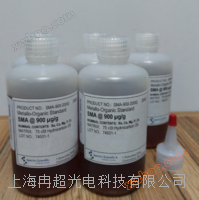
Oil spectrum analyzer standard oil
NegotiableUpdate on 10/07
- Model
- Nature of the Manufacturer
- Producers
- Product Category
- Place of Origin
Overview
The standard oil SMA-900-200G of the Speyer super oil spectral analyzer contains five elements Ba, Ca, Mg, P, and Zn. The standard oil of the oil spectral analyzer is used to calibrate and calibrate oil spectrometers, mainly used in oil spectrometers and other applications.
Product Details
Spee super oil spectral analyzer standard oil
Spee super oil spectral analyzer standard oilSMA-900-200GContaining five elements Ba, Ca, Mg, P, and Zn, it is used for calibrating and calibrating oil spectrometers, mainly applied in oil spectrometers, etc.
The oil spectral analyzer standard oil (SMA-900-200G) is applied to Q100, M/C, M/C-W and other types of oil spectrometers.
English name: Metallic Organic Standard SMA @ 900ug/g.
SMA-900-200GThe parameters are:Special 5 additive element standard oil, 200g/bottle.
Oil spectrum analyzer standard oilThe 5 additive elements tested are: magnesium Mg, zinc ZnBoron B, Calcium CaPhospho-P.
Oil spectrum analyzer standard oilProduct Introduction:
1.Description:Special standard oil for oil spectrometer, containing 5 elements, with an uncertainty of ± 1% for each element concentration, and traceable to NIST SRM1085b. Mainly used for optical line drawing, daily standardized inspection, and fully standardized testing.
2.Optical line drawingThe purpose is to check whether the optical path is accurate, and optical tracing is required in the following situations:
a) Perform optical line drawing at least once a month;
b) After the instrument is moved to a new position, optical line tracing is required;
c) When the instrument is subjected to a temperature difference greater than 15 ° F (10 ° C), optical tracing is required.
3.Daily calibration,The purpose is to verify and calibrate the instrument in a calibrated state. This is a method for quickly verifying whether an instrument can obtain accurate results without undergoing fully standardized testing. Suggest testing once a day.
4.Fully standardized testing:The purpose is to make the parameter values of the instrument as close as possible to the standard values made during the initial production of the instrument in the manufacturing plant. The fully standardized operation is carried out under the following conditions:
a) When the instrument is moved to another location for use;
b) The complete standardization operation of the instrument is usually carried out after the optical line drawing operation is completed;
c) When the results of daily standardized inspections fall outside the allowable range of operations.