-
E-mail
shrisechina@163.com
- Phone
-
Address
2402 Jinxiao Building, No.1 Lane 36, Biquan Road, Minhang District, Shanghai
Product Categories
Shanghai Ranchao Optoelectronics Technology Co., Ltd
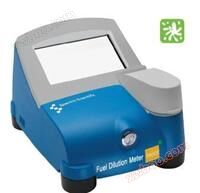
Portable fuel sniffer (fuel dilution)
NegotiableUpdate on 10/07
- Model
- Nature of the Manufacturer
- Producers
- Product Category
- Place of Origin
Overview
The portable fuel sniffer (fuel dilution) FDM6000 is jointly developed by SpiceJet Corporation and the US Navy, specifically designed for quantitative analysis of fuel contamination levels in engine oil. The portable fuel sniffer (fuel dilution) FDM6000 is designed and developed based on surface acoustic wave sensor technology and the "Henry's Law" (the concentration of fuel vapor is proportional to the fuel content present in lubricating oil). It detects the fuel content in lubricating oil by detecting the "vapor in the headspace" of the oil sample bottle. Its detection accuracy is comparable to gas chromatography, but the cost is lower and the operation is simpler.
Product Details
Portable fuel sniffer (fuel dilution)
1、 Introduction
Portable fuel sniffer (fuel dilution)The FDM6000 was jointly developed by Spaghetto Technologies and the US Navy. It uses surface acoustic wave sensor technology to detect the fuel content in lubricating oil by detecting the "vapor in the headspace" of the oil sample bottle. Its function is to monitor the pollution status of fuel in engine oil.
Portable fuel sniffer (fuel dilution)Design and development based on Henry's Law: The concentration of fuel vapor is directly proportional to the amount of fuel present in the lubricating oil.
2、 Fuel dilution
Fuel dilution: Incomplete combustion of fuel under high pressure can enter the crankcase through the piston rings and contaminate the engine oil.
(1) Reason for occurrence:
(2) Harmfulness
IIIPortable fuel sniffer (fuel dilution)Main Features
1. Only one calibration curve is supported;
Portable fuel sniffer (fuel dilution)The built-in sampling pump transmits fuel vapor to a surface acoustic wave sensor, which measures the content of hydrocarbons (the main component of fuel) based on the frequency changes.
1. Frequently started internal combustion engines;
2. Excessive idle running and low-temperature operation;
3. Incomplete combustion+fuel system leakage;
4. Research has shown that diluted fuel accounts for approximately 0.36% of total fuel consumption.
1. Diesel dilution during operation under low temperature conditions can form wax, which can cause a decrease in oil pressure and even lean fuel during start-up;
2. Unsaturated aromatic hydrocarbons in fuel are oxidants that cause a rapid decrease in base value, thickening the oil and obstructing its flow, resulting in lean fuel;
3. Reduce viscosity, such as changing 15W40 to 5W20, which will thin the oil film and increase the wear of piston rings, cylinder liners, and bearings;
4. The leaked fuel will wash away the lubricating oil on the cylinder wall, accelerate the wear of piston rings and cylinder liners, and cause blowby, resulting in increased fuel consumption;
Reduce the effectiveness of additives;
5. The problems caused by biofuel diesel engines are more serious, such as oxidation stability, clogged filter screens, formation of sediment, and accumulation of crankcase caused by evaporation.
2. Fast analysis speed (about 1 minute) and accurate results (10% of measured values);
3. Low usage cost, no need for chemical reagents or other consumables.