-
E-mail
sungoll@126.com
-
Phone
13160107223
-
Address
120, Building 2, No. 83, Beixiang North Road, East the Taihu Lake Lake Eco tourism Resort (the Taihu Lake New Town), Wujiang District, Suzhou
Product Categories
Suzhou Shanggao Testing Equipment Co., Ltd
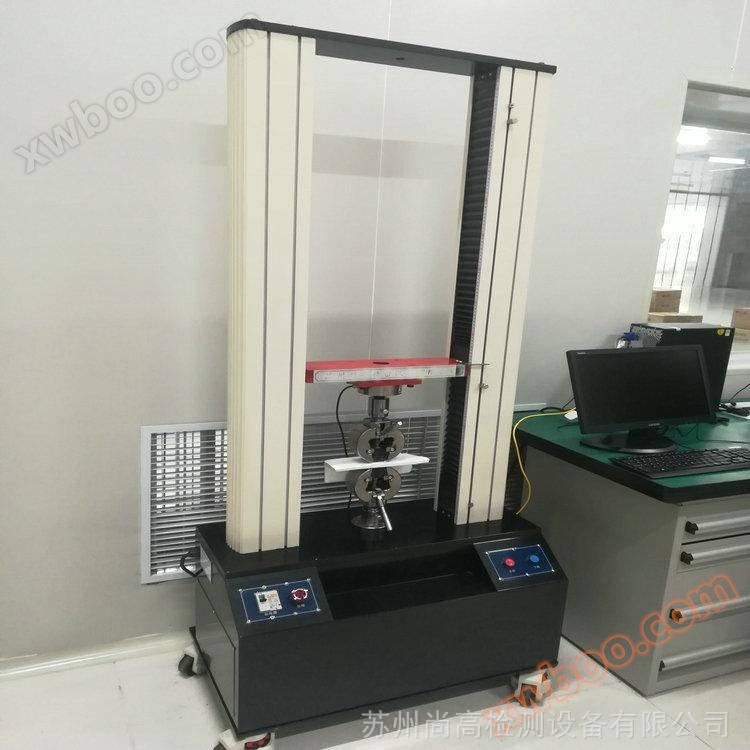


Rubber tensile testing machine, plastic tensile testing machine, gantry tensile testing machine
NegotiableUpdate on 03/13
- Model
- Nature of the Manufacturer
- Producers
- Product Category
- Place of Origin
Overview
Rubber tensile testing machine Plastic tensile testing machine Longmen tensile testing machine Rubber tensile testing machine Application scope: mainly used in the production or scientific research of plastic, rubber and other raw materials and products to determine the mechanical properties of materials
Product Details
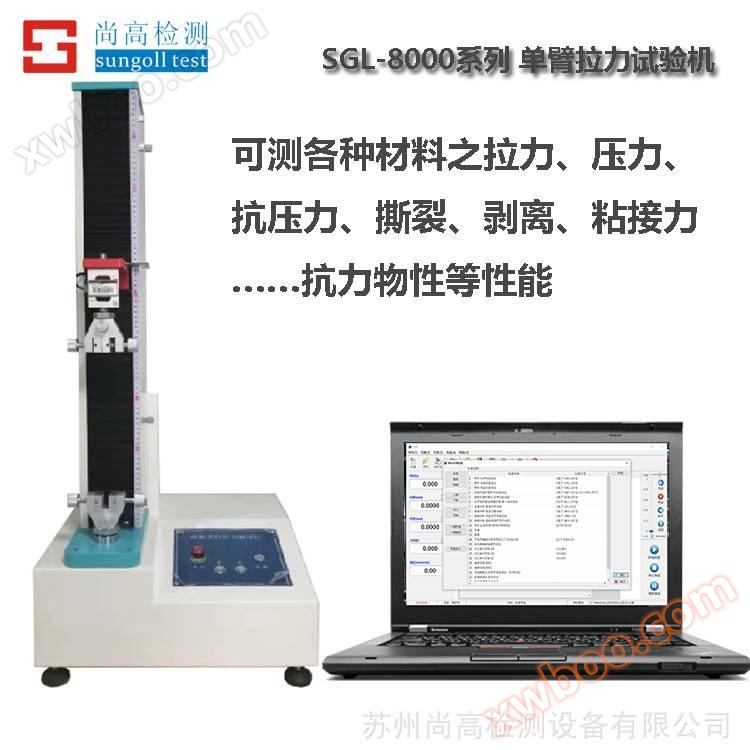
Rubber tensile testing machine, plastic tensile testing machine, gantry tensile testing machine

Application scope of rubber tensile testing machine:
It is mainly used as a testing machine for the production or scientific research of plastic, rubber and other raw materials and products to determine the mechanical properties of materials. Mainly conducting various performance tests such as tensile performance, tensile strength and deformation rate, tensile strength, tear resistance, heat sealing strength, drum peeling test, 90 degree peeling, rope tensile strength, pants tearing force, 180 degree peeling, compression test, bending test, shear test, and burst test.
The plastic rubber tensile testing machine has a multifunctional function, which can install different fixtures or set different technical data, meet multiple standards, and can also be used for testing materials such as plastic film, fabric, leather, monofilament, metal foil, etc.
This machine is mainly used to test the physical properties of metal and non-metal material products, such as tensile, compressive, tear, bending, shear, three-point bending, etc. At the same time, testing and data processing can be conducted according to various standards provided by GB, ISO, JIS, ASTM, and users.
This machine is widely used for material inspection and analysis in industries such as hardware tools, fasteners, automotive and motorcycle parts, aerospace, wire and cable, rubber and plastic, paper packaging, etc. It is an ideal testing equipment for research institutes, colleges and universities, industrial enterprises, technical supervision, commercial inspection and arbitration departments.
Technical parameters:
1. Test force: 5T;
2. Accuracy level: 0.5 level;
3. Load measurement range: 0.2% - FS;
4. Allowable error limit for test force indication: within ± 0.5% of the indication;
5. Resolution of test force indication: 1/± 200000 of test force;
6. Deformation measurement range: 0.2% - FS;
7. Limit of deformation indication error: within ± 0.50% of the indication;
8. Deformation resolution: 1/80000 of deformation
9. Limit of displacement indication error: within ± 0.5% of the indication;
10. Displacement resolution: 0.01mm
11. Range of force control rate adjustment: 0.01-10% FS/S;
12. Accuracy of force control rate control: within ± 1% of the set value;
13. Deformation rate adjustment range: 0.02-5% FS/S;
14. Deformation rate control accuracy: within ± 1% of the set value;
15. Displacement speed adjustment range: 0.1-500mm/min
16. Displacement rate control accuracy: within ± 1.0% of the set value when the rate is less than 0.1mm/min; When the speed is ≥ 0.1mm/min, within ± 0.2% of the set value;
17. Effective test width: 380mm
18. Effective stretching space distance: 800mm or 1000mm
19. Overall dimensions of the host (length x width x height): approximately 800 x 600 x 1950 (mm)
20. Power supply: AC220V 50Hz;
Features of control and data processing software functions:
1. The chip integration technology and designed data acquisition and amplification system have the advantages of high integration and convenient use. The control software can automatically obtain detection data such as tensile strength, yield strength, fracture strength, elastic modulus, elongation, etc. Open formula editing can automatically calculate the force, stress, displacement, deformation and other data results at any point during the test process. The control and data processing of the experimental process comply with the requirements of the corresponding metal and non-metal material standards.
2. Control methods: Optional control methods include constant speed, positioning displacement, constant load, constant load rate, constant stress, constant stress rate, constant strain, and constant strain rate;
3. Automatic zeroing: After the experiment begins, the measurement system automatically resets to zero;
4. Automatic shifting: automatically switches to the appropriate range according to the load size to ensure the accuracy of measurement data;
5. Automatic saving: automatic saving of experimental data and conditions, data loss caused by forgetting to save;
6. Batch test: For samples with the same parameters, a batch of tests can be completed sequentially after one setting;
7. Display mode: Data and curves are dynamically displayed during the experimental process;
8. Curve traversal: After the experiment is completed, the curve can be reanalyzed by using the mouse to find the data corresponding to each point on the experimental curve;
9. Curve selection: stress-strain, force displacement, force time, displacement time and other curves can be selected for display and printing;
10. Unit switching: Force units: (g, kg, N, lb), stress units: (kg/mm2, N/mm2, Mpa, lbf/in2), displacement units: (m, mm, in)
11. Test report: The test report can be programmed and printed in the format required by the user, and can be exported as an EXCEL file;
12. Security protection: When the load exceeds 2-10%, automatic security protection is implemented;
13. It can automatically detect and calculate the mechanical performance indicators of the sample, and can also manually intervene in the analysis process. According to the requirements of relevant standards, the automatic analysis results can be corrected to improve the accuracy of the data;
Random standard accessories:
1. Load sensor: load element, 50kN each;
2. Data acquisition card: one 64 bit closed-loop measurement and control motherboard;
3. Testing software: One set of English/Simplified Chinese/Traditional Chinese three in one measurement and control system;
4. Power system: one set of servo motor and control drive system;
5. Transmission system: One set of ABBA ball screw from Taiwan;
6. Test fixture: one set of stretching fixtures;
7. Computer: one set;


Similar Product Recommend