|
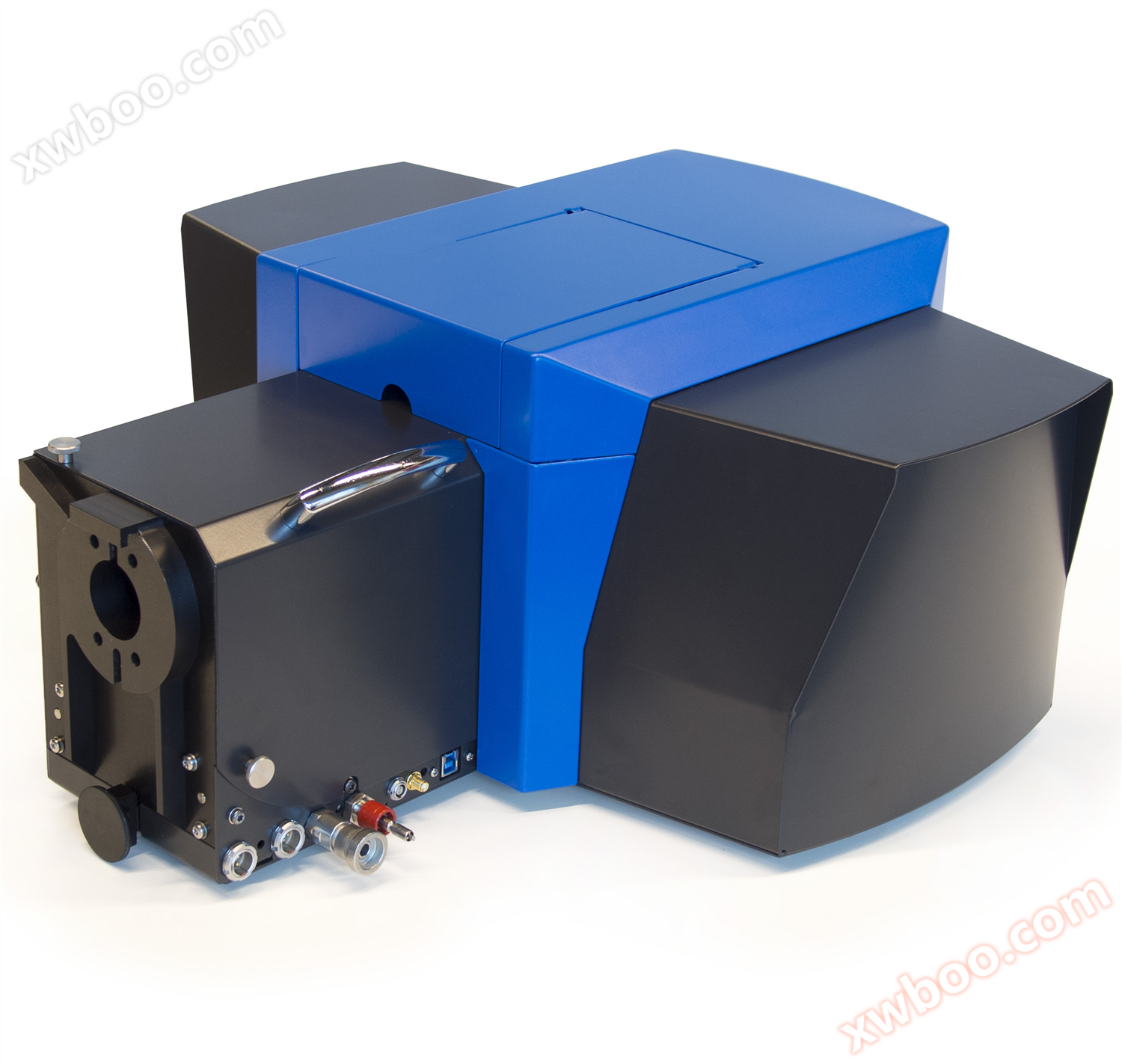
AMOLF Albert Polman's innovative research and development of ARC (angle resolved cathodoluminescence) technology won the 2014 MRS Award. Later, the technology was redesigned and commercialized by the Dutch company Delmic, and named SPARC.
The SPARC system is a high-performance cathodoluminescence collection and detection system. The uniqueness of this system lies in its ease of use and compatibility, which can be installed on any SEM. With the unique high-precision mirror, the ultra-high sensitivity and ease of use bring cathodoluminescence applications to a new level.
SPARC is also the only cathodoluminescence detection system in the world with angle resolution mode, which can achieve fast and high-sensitivity detection of nanoscale optical properties and material characteristics. It is mainly used in nanooptics, materials science, and geological research. SPARC has opened up new advanced applications, such as nanophotonics, surface plasmons, photovoltaic cells, nanoantennas, and more.
 
High end research
Comprehensive characterization of sample characteristics
SPARC is an ideal platform for studying nanoscale spectral information. The system integration is installed on SEM, allowing you to easily achieve cathodoluminescence imaging and perfect correlation with other SEM detection results, such as EBSD electron backscatter diffraction, EBIC, and BSD, to comprehensively characterize your sample and obtain more information.
Seamless integration with SEM
The system is installed on the vacuum port provided by SEM without interference, and the internal collection mirror can be electrically retracted. Restoring the electron microscope to its original state is extremely simple and easy. You only need to operate the software and click on the parabolic mirror rollback function. The entire process takes less than five minutes to fully restore SEM to its original state.
Semi parabolic mirror automatic rollback demonstration
Imaging Mode
Fast intensity scanning
Rapid analog photomultiplier tube (PMT) detection can be used for large-scale rapid imaging. For rapid detection of large-area samples, it is highly suitable for applications in the geological field, research on ultrafast devices, and rapid localization of areas of interest. Built in filter wheel, can configure and filter spectrum according to needs.

Angular resolution spectral imaging
SPARC provides a very unique angular resolution resolution image. Unlike conventional coupling of light through optical fibers or narrow openings, large-area semi parabolic mirrors directly couple and reflect to imaging cameras, greatly improving photon collection efficiency. Most notably, the system can also detect the directionality of light emission, also commonly referred to as instantaneous spectroscopy. In this mode, adjust the specific filter on the filter wheel to select the desired wavelength.

Hyperspectral image
When the SPARC system operates in spectral mode, the light transmitted from the mirror is focused onto a grating or a Cherny Turner spectrograph for imaging. Different imaging detectors can cover the spectral range of 200nm-1600nm. By scanning the entire sample with an electron beam, high-resolution spectral images can be obtained.

Cathodoluminescence polarization image
By using polarizers or polarimeters in angle resolution mode, SPARC systems can reconstruct the polarity state of light emitted at different angles. The automatic calibration of advanced optical systems includes the alignment verification of semi parabolic mirrors, which is the most critical step for polarity state reconstruction. SPARC provides a complete system automatic calibration function.

User friendly interaction
Odemis software
Modular design combined with open-source ODEMIS software, we provide user-friendly interactive solutions to serve a wide range of user types. We provide systematic solutions to achieve unique systems that are truly customized according to application needs, fully meeting the different needs of scientists.
Software Features
Powerful software features, such as automatic peak calibration of images, real-time polarity mapping, image wandering and drift correction, etc., improve the efficiency and quality of your image acquisition. Open source programs are written in Python language, and expert users can customize their own image algorithms and hardware controls through secondary development.
 
|

 Home ···· Product Center ···· Electron Microscope Accessories