WMS Warehouse Management System
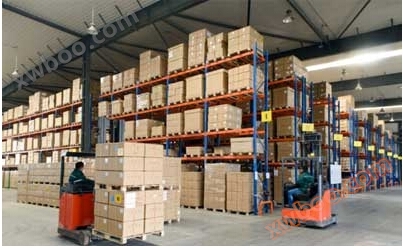
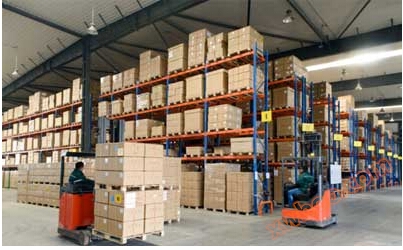
All industries need to improve warehouse turnover efficiency, reduce the occupation of operating funds, turn frozen assets into cash, and reduce costs caused by warehouse obsolescence.
Objective of WMS Warehouse Management System
1. Manual labor can reduce by 20-30%;
2. 99% of warehouse products are visualized to reduce the risk of missing items;
3. Improved supply chain management will reduce work service time by 20-25%;
4. Improve the accuracy and reliability of warehouse information;
5. Efficient and accurate data collection, providing operational efficiency;
6. Automatic collection of inbound and outbound data to reduce human errors;
7. Reduce the warehousing and logistics costs of enterprises.
Design of WMS Warehouse Management System
Based on RFID technologyWMS Warehouse Management SystemMainly combining RFID technology features with warehouse management processes to achieve more scientific and visual management through software.
1. Warehouse management
Deploy RFID fixed readers at the entrance of the warehouse, and plan the RF according to the on-site environment, such as installing four antennas on the top, bottom, left, and right sides to ensure that RFID electronic tags are not missed.
After receiving the inventory order, the products are stored according to certain rules. When the RFID electronic tag (ultra-high frequency) enters the electromagnetic wave range of the RFID fixed reader, it will be actively activated. Then, the RFID electronic tag communicates with the RFID fixed reader. After collecting the RFID tag, it will be compared with the order to check whether the quantity and model of the goods are correct. If there are any errors or omissions, manual processing will be carried out. Finally, the goods will be transported to the designated location and placed according to the rules.
The main advantage of RFID in warehouse management applications is non-contact long-distance identification, which can be read in batches, improving efficiency and accuracy.
2. Outbound management
According to the delivery plan, sort and manage the outgoing goods. If there are a large number of outgoing goods, push the goods in batches to the warehouse entrance, use a fixed reader to communicate with the tags, collect the RFID electronic tags of the outgoing goods, check if they correspond to the plan, and if there are any errors, handle them manually as soon as possible.
For small quantities of goods, RFID handheld terminals (handheld scanners or RFID tablets) can be used to collect information from RFID electronic tags. When an error occurs, an alarm will be issued, and the staff should handle it in a timely manner. Finally, the data should be sent to the management center to update the database and complete the outbound process.
According to the requirements of warehouse management, conduct regular and irregular inventory checks. Traditional inventory is time-consuming, labor-intensive, and prone to errors. And all of this RFID solves these problems. When there is an inventory plan, RFID handheld terminals are used to scan the inventory of goods and check the information of clothing. The information can be transmitted to the backend database through wireless networks and compared with the information in the database to generate real-time differential information displayed on the RFID handheld terminal for inventory staff to verify.
After the inventory is completed, the inventory information is checked against the database information in the background to complete the inventory. During the inventory process,WMS Warehouse Management SystemBy using RFID non-contact reading (usually within a range of 1-2 meters), it is very fast and convenient to read cargo information, which will improve a lot of efficiency and inventory accuracy compared to traditional modes.
4. Basic Information Management
The main functions of setting and managing the attributes of goods include adding, editing, deleting, and querying the basic attributes of stored goods in the warehouse. This allows for the setting of product attributes for different businesses, ensuring that they meet the personalized needs of each enterprise. Warehouses can also be divided into locations, such as warehouses, regions, and storage locations, to achieve more precise management of large warehouses. Warehouse management personnel at all levels can query and perform related business operations on inventory information from different dimensions.
5. WMS Warehouse Management System Information Management
Fully consider the scalability and security of the system, and provide reasonable tools to ensure system security. System management mainly completes the calibration and maintenance of system operating parameters. Complete operations such as permission allocation, addition, modification, and deletion of data forms. At the same time, it has a complete login program (username and password). Different personnel are granted different permissions, which are set by the system administrator. The system also provides a one click data backup and recovery function, further ensuring the security and continuity of business data.
6. Data statistical analysis
WMS Warehouse Management SystemStatistical reports can be generated based on factors such as time and quantity to clarify turnover cycles and efficiency, facilitating the planning and control of inventory management business processes. The unified operation can accelerate the speed of goods entering and leaving the warehouse, thereby increasing the throughput of the inventory center, providing timely and accurate inventory information to managers and decision-makers, improving the accuracy of goods queries, reducing inventory levels, and enhancing the efficiency of logistics systems to strengthen the competitiveness of enterprises.
Hardware equipment selection for WMS warehouse management system
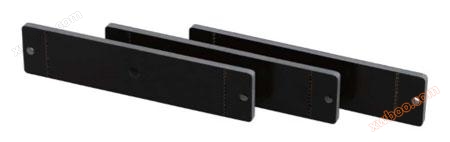
WMS Warehouse Management SystemThe hardware part usually consists of a fixed RFID reader/writer, a fixed RFID antenna, a handheld RFID reader/writer, a desktop RFID card issuer, and RFID electronic tags.
BarTenderThere are more WMS warehouse management systems and usage methods for label printing software. Please pay attention to BarTender's barcode printing software.