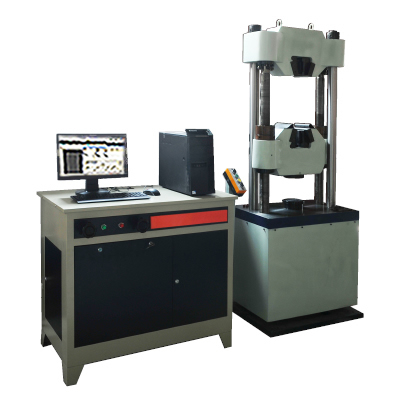
Resistance sensor
A resistive sensor is a device that converts physical quantities such as displacement, deformation, force, acceleration, humidity, temperature, etc. into resistance values. There are mainly resistance sensors such as strain gauges, piezoresistive sensors, thermistors, thermosensitive sensors, gas sensitive sensors, and humidity sensitive sensors.
Resistance strain sensor
The resistance strain gauge in the sensor has the strain effect of metal, which produces mechanical deformation under external force, resulting in a corresponding change in resistance value. There are mainly two types of resistance strain gauges: metal and semiconductor. Metal strain gauges can be divided into wire type, foil type, and thin film type. Semiconductor strain gauges have advantages such as high sensitivity (usually tens of times that of wire and foil) and small lateral effects.
Piezoresistive sensor
A piezoresistive sensor is a device made by diffusing resistance on a semiconductor substrate based on the piezoresistive effect of the semiconductor material. The substrate can be directly used as a measurement sensing component, and the diffusion resistance is connected in the form of a bridge inside the substrate. When the substrate is deformed by external force, the resistance values will change, and the bridge will produce corresponding unbalanced output.
The substrate (or membrane) materials used as piezoresistive sensors are mainly silicon wafers and germanium wafers. Silicon piezoresistive sensors made of silicon wafers as sensitive materials are increasingly being valued, especially solid-state piezoresistive sensors that measure pressure and velocity, which are widely used.
Thermal Resistive Sensors
Thermal resistance sensors mainly use the characteristic that the resistance value changes with temperature to measure temperature and temperature related parameters. In situations where high temperature detection accuracy is required, this type of sensor is more suitable. At present, platinum, copper, nickel and other widely used thermal resistance materials have the characteristics of high temperature coefficient of resistance, good linearity, stable performance, wide temperature range of use, and easy processing. Used for measuring temperatures within the range of -200 ℃ to 500 ℃.