-
E-mail
cdysyb@163.com,@qq.com
-
Phone
18908016281,13980818230
-
Address
No. 1001, Zone A, No. 1299 Tianfu Avenue South, High tech Zone, Chengdu City
Product Categories
Chengdu Hengshengyuan Technology Co., Ltd
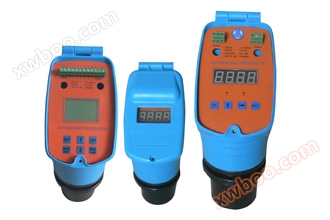
HT100AX integrated ultrasonic level gauge
NegotiableUpdate on 09/22
- Model
- Nature of the Manufacturer
- Producers
- Product Category
- Place of Origin
Overview
The HT100AX series products adopt two-wire or four wire technology, with independent power supply and signal output circuits. When using 220V power supply or 24V power supply and requiring complete isolation between the power supply and signal output circuits, four core cables should be used. Application areas: Water and sewage treatment: pump rooms, collection wells, biochemical reaction tanks, sedimentation tanks, mud storage tanks, etc. Power, mining: mortar tanks, coal slurry tanks, water treatment
Product Details
Durable and stable sensors suitable for harsh industrial environments;
• Advanced algorithm integrating rich field experience can effectively overcome field interference such as foam and surge;
The ultrasonic transducer adopts imported piezoelectric ceramic materials and acoustic matching technology to improve emission efficiency;
The transducer is equipped with a built-in temperature sensor to achieve real-time automatic temperature compensation of the measured values;
Program controlled automatic emission energy adjustment takes into account both large range and small blind spots;
Blind spots can also be manually set to block interference signals near the probe;
4~20mA isolated current output, optional fieldbus interface.
Range: HT100A1: 0-5.00 meters
HT100A2: 0-10.00 meters
HT100A3: 0-15.00 meters
Blind spot: HT100A1: 0.2 meters
HT100A2: 0.35 meters
HT100A3: 0.45 meters
Launch angle: 5 degrees
Resolution: 0.001 meters
Accuracy: ± 0.25% FS
Analog output: two-wire or four wire analog 4-20mA output
Switching output: high position, low position relay, normally open
Input power supply: DC24V (± 10%) or AC220V (± 10%) 50Hz
Cable device: PG13.5 sealing sleeve
Protection level: IP67
Shell material: PBT-FR
Sensor material: polyester, epoxy resin.
Integrated ultrasonic level gauge for display, measurement, output, and control!
Please note when installing the integrated ultrasonic sensor: The installation of integrated ultrasonic level gauges must be well protected against rain and water; To ensure a stable installation. The installation diagram is as follows:
1. The emission surface of ultrasonic sensors must be horizontal;
2. The installation height of ultrasonic sensors should be less than the range of the instrument;
3. The height from the surface of the ultrasonic sensor to the highest liquid level should be greater than the blind spot of the instrument;
4. The distance from the ultrasonic sensor to the pool wall, riverbank, and embankment generally needs to be greater than 0.5 meters. If the wall is not smooth and has obvious protrusions, it is necessary to increase the distance appropriately;
5. The installation position of the sensor should avoid areas directly below where there are significant fluctuations in the liquid level, such as the inlet and outlet ports;
6. If the requirements of 4) and 5) cannot be met, it is necessary to consider installing PVC pipes with a diameter of about 100mm on site and placing the sensors of the instrument in the PVC pipes.