-
E-mail
cdysyb@163.com,@qq.com
-
Phone
18908016281,13980818230
-
Address
No. 1001, Zone A, No. 1299 Tianfu Avenue South, High tech Zone, Chengdu City
Product Categories
Chengdu Hengshengyuan Technology Co., Ltd
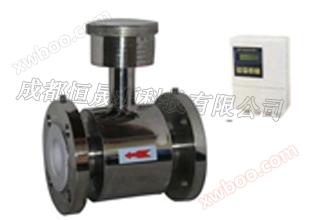
LDH series electromagnetic flowmeter ND50 to DN500
NegotiableUpdate on 09/22
- Model
- Nature of the Manufacturer
- Producers
- Product Category
- Place of Origin
Overview
The LDH type intelligent electromagnetic flowmeter is a fully intelligent flowmeter developed by our company using the latest advanced technology at home and abroad, especially in terms of measurement accuracy reliability, stability, functional use, and service life. Application areas: Flow monitoring of tap water entering the plant, leaving the plant, and pipeline network. Flow monitoring of sewage treatment and wastewater treatment. Flow monitoring of strongly corrosive liquids (selecting lining according to water quality)
Product Details
Lining material
Main performance
Scope of lining application
Example of measurable medium
Precautions
︵
special
fluorine
Long
︶PTFE
1. It has excellent chemical stability, but chlorine and molten metal sodium have certain corrosiveness to its products. 2. It can withstand hydrochloric acid, sulfuric acid, and aqua regia, and organic solvents have almost no effect on it. 3. Poor wear resistance and adhesion performance. 4. Excellent electrical insulation performance, but poor corona resistance.
1. The long-term use temperature of the flowmeter is -10~+120 ℃. 2. Can be used to measure most highly corrosive media such as strong acids, strong bases, and strong oxidants; But it is not suitable for use with KOH, nitric acid, hydrofluoric acid, etc. 3. Sanitary media.
1. Hydrochloric acid, sulfuric acid, aqua regia. 2. Most other strong acids, strong bases, and oxidants.
1. Not applicable to KOH, nitric acid, and hydrofluoric acid. 2. Generally not used for measuring electrolytes, such as NaC1 solution flowing out of electrolytic cells; 3. Not suitable for media with solid particles
FEP
1. Its chemical stability, electrical insulation, lubricity, non adhesiveness, and non flammability are similar to PTFE (F4), but FEP material has better strength, aging resistance, temperature resistance, and low-temperature flexibility than PTFE. 2. It has good adhesion to metals and better wear resistance than PTFE. 3. Has good tear resistance.
1. The long-term use temperature of the flowmeter is -40~+80 ℃. 2. Can be used to measure most highly corrosive media such as strong acids, strong bases, and strong oxidants; But it is not suitable for use with KOH, nitric acid, hydrofluoric acid, etc. 3. Sanitary media.
1. Hydrochloric acid, sulfuric acid, aqua regia, 2. Most other strong acids, strong bases, and oxidants, 3. Media with a small amount of fine particles.
1. Not applicable to KOH, nitric acid, and hydrofluoric acid. 2. Generally not used for measuring electrolytes, such as NaC1 solution flowing out of electrolytic cells.
PFA
1. Its chemical stability, electrical insulation, lubricity, non adhesiveness, and non flammability are similar to FEP (F46), but PFA material has better strength, aging resistance, and temperature resistance than PTFE and FEP. 2. It has good adhesion to metals and better wear resistance than PTFE and FEP. 3. It has low smoke, flame retardant, and high temperature resistance, with high temperature mechanical strength twice as high as PTFE.
1. The long-term use temperature of the flowmeter is -40~+160 ℃. 2. Can be used to measure most highly corrosive media such as strong acids, strong bases, and strong oxidants; But it is not suitable for use with KOH, nitric acid, hydrofluoric acid, etc. 3. Sanitary media.
1. Hydrochloric acid, sulfuric acid, aqua regia, 2. Most other strong acids, strong bases, and oxidants, 3. Media with a small amount of fine particles, 4. Beer, saponification liquefied gas, etc.
1. Not suitable for KOH, nitric acid, hydrofluoric acid, 2. Generally not used for measuring mud, coal slurry, and mineral slurry.
polyurethane
1. It has excellent wear resistance and good oil resistance; 2. High strength and good tear resistance, but poor acid and alkali resistance; 3. Poor heat resistance, usually at 60 ℃.
1. The general long-term use temperature is -10~+60 ℃. 2. Good wear resistance, suitable for liquids containing solid particles. 3. Cannot be used to measure water containing organic solvents.
1. Neutral and strongly worn mineral slurry, coal slurry, and mud; 2. Domestic water, industrial water, sewage, and seawater.
1. Liquid temperature range: 0~40 ℃; 2. Generally not used for measuring media mixed with organic solvents.
neoprene
1. It has good elasticity and tear resistance, and has a certain degree of oil resistance; 2. The aging resistance is poor, and the brittleness temperature is -28 ℃; 3. The wear resistance is not as good as polyurethane adhesive; 4. Resistant to corrosion in general low concentration acid, alkali, and salt media, but not resistant to corrosion in oxidizing media.
1. Long term use temperature -10~+80 ℃;
2. Due to the presence of antioxidant D, it is slightly polluting.
3. Suitable for measuring general low concentration acid, alkali, salt media and sewage.1. General water and sewage;
2. Mud and slurry.1. Cannot be used for measuring food; 2. Not suitable for measuring strong acids, strong bases, and strong oxidizing media.
ceramics
1. High strength, no deformation under high temperature and high pressure; 2. Unique platinum alumina metal ceramic electrode; 3. It has good resistance to mud noise and is suitable for permeable fluids; 4. Good wear resistance, its wear resistance is 10 times that of polyurethane.
1. Suitable for high-temperature and high-pressure fluids, viscous fluids, and corrosive fluids; 2. Permeable fluid, a slurry containing solid particles.
1. Slurry containing hard solids, corrosive fluids, viscous fluids, and high-temperature and high-pressure fluids; 2. Chromium sulfate, 25% sodium hypochlorite, nitric acid, etc.
1. Not applicable to hydrofluoric acid, nitric acid, aqua regia NaOH、 70% concentration sulfuric acid. 2. Cannot be used for some salt substances such as copper sulfate and sodium bicarbonate.
measurement range
Measure fluid
Lower limit of flow velocity (m/s)
Upper limit of flow velocity (m/s)
Gas (including steam)
7
55 (DN>200 is 50)
liquid
0.7
5.5
Rated pressure:
GB 1.6MPa 2.5MPa 4.0MPa 6.4MPa DIN PN16 PN25 PN40
JIS 10K 20K 40K ANSI Class150 Class300 Class600
Medium temperature:
-40~250 ℃ (ordinary type, plug-in type -40~120 ℃) 100~350 ℃ (high temperature type)
structural type
Component Name
material
Sensor body
304 stainless steel
bluff body
304 stainless steel
Detection probe
316 stainless steel
connecting rod
304 stainless steel
radiator
aluminum alloy
shim
High temperature resistant asbestos pad, nitrile rubber pad, graphite pad
power supply
Power supply mode one
24VDC power supply
Power supply mode 2
3.6V lithium battery power supply (local display type)
Power supply mode three
Dual power supply of 24VDC and 3.6V lithium battery
Power supply mode three
Dual power supply of 24VDC and 3.6V lithium battery
output signal
Pulse output, 4-20mA current output, RS-485、 Hart, ModBus communication and other outputs are available for selection
electrical interface
M20*1.5
Explosion-proof rating
Explosion proof Ex d IIBT3-6, intrinsically safe Exia IIC T3-6
Protection level
IP65
Table body processing
The sensor body is made of stainless steel sandblasted, and the amplifier housing is made of plastic
ambient temperature
-35-60 ℃ (without LCD), 5-60 ℃ (with LCD)
relative temperature
5~9.5%
Standard configuration: Split type (sensor and controller separated, commonly used), integrated type.
Installation adopts pipeline installation and flange connection