-
E-mail
wxbrck@ 163.com
-
Phone
13812024099
-
Address
No. 35 Xigang East Road, Xishan District, Wuxi City
Product Categories
Jiangsu Borui Measurement and Control Technology Co., Ltd
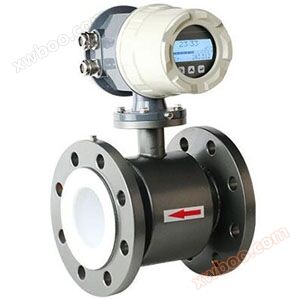
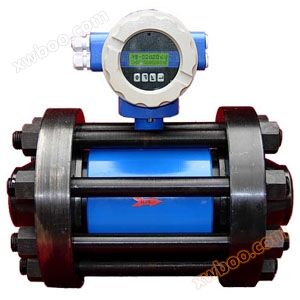
Platinum Rui electromagnetic flowmeter
NegotiableUpdate on 11/13
- Model
- Nature of the Manufacturer
- Producers
- Product Category
- Place of Origin
Overview
1、 The working principle of the Platinum Ray LDE electromagnetic flowmeter is a flowmeter that measures flow based on Faraday's law of electromagnetic induction. The advantages of electromagnetic flow meters are low pressure loss and a wide range of measurable flow rates. The ratio of maximum flow to minimum flow is generally 20:1 or above, and is used ..
Product Details
1、 Working principle
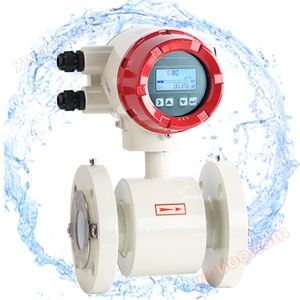
Platinum Ray LDE electromagnetic flowmeter is a flowmeter that measures flow based on Faraday's law of electromagnetic induction.The advantages of electromagnetic flow meters are low pressure loss and a wide range of measurable flow rates. The ratio of maximum flow rate to minimum flow rate is generally above 20:1, and the industrial pipe diameter range used is wide. It can measure pipe diameters within the range of DN10~DN2000, and the output signal is linear with the measured flow rate, with high accuracy,The fluid flow rate of acid, alkali, salt solutions, water, sewage, corrosive liquids, as well as mud, slurry, pulp, etc. with a measurable conductivity of ≥ 5 μ s/cm is shown in Figure 1. Widely used in industrial sectors such as chemical, metallurgical, textile, papermaking, environmental protection, food, domestic sewage, industrial sewage, cooling water, water plants, as well as municipal management, water conservancy construction, river dredging, building water supply measurement and other fields for flow meter measurement.
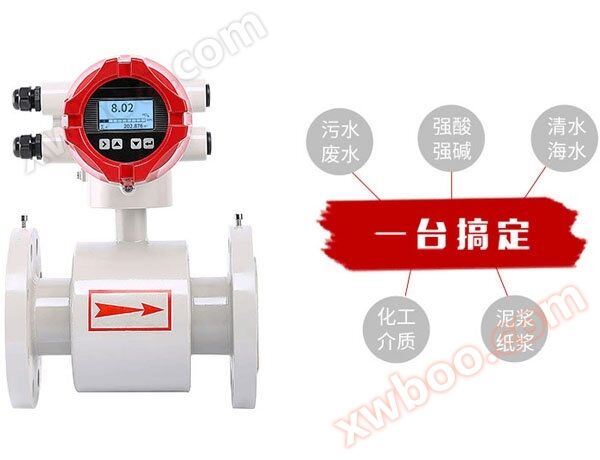
Figure 1
2、 Principle structure
The structure of an electromagnetic flowmeter mainly consists of a measuring conduit, electrodes, housing, lining, and converterAs shown in Figure 2.
Measurement catheter: Its function is to allow the measured conductive liquid to pass through. In order to divert or short-circuit the magnetic flux when the magnetic field lines pass through the measuring conduit, the measuring conduit must be made of non-magnetic, low conductivity, low thermal conductivity, and materials with certain mechanical strength, such as non-magnetic stainless steel, fiberglass, high-strength plastic, aluminum, etc.
Electrode: Its function is to generate an induced potential signal proportional to the measured value. The electrode is generally made of non-magnetic stainless steel and is required to be flush with the lining so that fluid can pass through without obstruction. Its installation position should be in the vertical direction of the pipeline to prevent sediment from accumulating on it and affecting measurement accuracy.
Shell: Made of ferromagnetic material, it is the outer shell of the distribution system excitation coil and isolates the interference of external magnetic fields.
Lining: There is a complete layer of electrical insulation lining on the inner side of the measuring conduit and the flange sealing surface. It directly contacts the liquid being measured, and its function is to increase the corrosion resistance of the measuring conduit and prevent the induced potential from being short circuited by the metal measuring conduit wall. The lining materials are mostly corrosion-resistant, high-temperature resistant, wear-resistant polytetrafluoroethylene plastics, ceramics, etc.
Converter: The induced potential signal generated by liquid flow is very weak and greatly affected by various interference factors. The function of the converter is to amplify and convert the induced potential signal into a unified standard signal and suppress the main interference signal. Its task is to amplify and convert the induced potential signal Ex detected by the electrode into a unified standard DC signal.
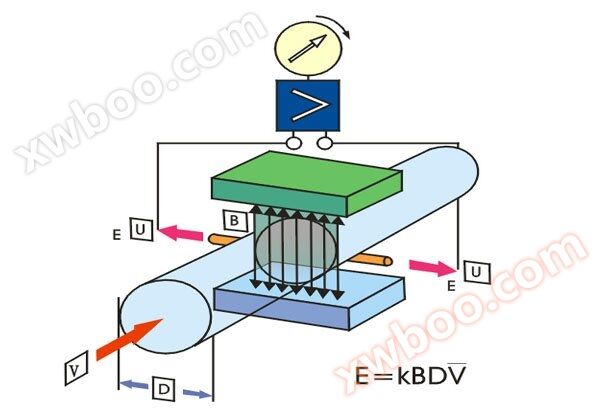
Figure 2
3、 Product Features
1. The conversion display adopts a 16 bit high-performance microprocessor, 2 × 16 LCD display, convenient parameter setting, and reliable programming
2. Bidirectional measurement system, equipped with three integrators that can display the total amount of forward flow, reverse flow, and the difference between forward and reverse flow, respectively
3. The conversion display has multiple outputs: current, pulse, digital communication HART、 485 communication protocol
4. Suitable for large diameter pipelines, DN300—1400mm
5. There are various materials to choose from for the sensor body and electrodes
6. Small size, light weight, easy transportation and installation, capable of continuous flow maintenance, disassembly and assembly
5、 Electrode selection table
6、 Comparison Table of Flow Caliber
7、 Selection Comparison Table
4、 Lining selection table
| Lining material | Main performance | Maximum medium temperature | Scope of Application | |
| Integrated type | Separated type | |||
| Polytetrafluoroethylene(F4) | It is a chemically stable plastic that can withstand boiling hydrochloric acid, sulfuric acid, nitric acid, and aqua regia, as well as concentrated alkali and various organic solvents. Not resistant to corrosion from chlorine trifluoride, high-temperature chlorine trifluoride, high flow rate liquid fluorine, liquid oxygen, and auto oxygen. | 70℃ |
100℃ 250℃ (Special order required) |
1. Strong corrosive media such as concentrated acid and alkali. 2. Sanitary media. |
| Perfluoroethylene propylene(F46) | 同F4, Wear resistance and negative pressure resistance are higher than F4. | Ditto. | ||
| Polyfluoroethylene(Fs) | The upper limit of applicable temperature is lower than that of polytetrafluoroethylene, but the cost is also lower. | 80℃ | ||
| Polychloroprene rubber |
1. Has excellent elasticity, high tensile strength, and good wear resistance. 2. Resistant to corrosion in general low concentration acid, alkali, and salt media, but not resistant to corrosion in oxidizing media. |
80℃ 120℃ (Special order required) |
Water, sewage, and weakly abrasive slurry. | |
| polyurethane rubber | 1Extremely strong wear resistance. | 80℃ | Neutral strong abrasion slurry, coal slurry, mud | |
| 2Poor corrosion resistance. | ||||
5、 Electrode selection table
| electrode material | Corrosion resistance and wear resistance |
| stainless steel0Crl8Nil2M02Ti | Used for weakly corrosive media such as industrial water, domestic water, sewage, etc., suitable for industrial sectors such as petroleum, chemical, steel, as well as municipal and environmental protection fields. |
| HastelloyB | It has good corrosion resistance to all concentrations of hydrochloric acid below boiling point, as well as to non chlorinated acids, bases, and non oxidizing salt solutions such as sulfuric acid, phosphoric acid, hydrofluoric acid, and organic acids. |
| HastelloyC | Can withstand corrosion from non oxidizing acids such as nitric acid, mixed acids, or mixed media of chromic acid and sulfuric acid, as well as oxidative salts such as:Corrosion under Fc+, Cu+or with other oxidants, such as corrosion in hypochlorite solutions above room temperature or seawater |
| Titanium | Capable of withstanding seawater, various chlorides and hypochlorites, and oxidizing acidsCorrosion caused by (including fuming sulfuric acid), organic acids, and alkalis. Not resistant to the corrosion of relatively pure reducing acids (such as sulfuric acid, hydrochloric acid), but if the acid contains oxidants (such as nitric acid, Fc+, Cu+), the corrosion is greatly reduced. |
| Tantalum | It has excellent corrosion resistance and is very similar to glass. Except for hydrofluoric acid, fuming sulfuric acid, and alkali, it can almost withstandCorrosion of a chemical medium (including boiling point hydrochloric acid, nitric acid, and sulfuric acid below 50 ℃). Dig in alkali; Corrosion resistance. |
| Platinum/titanium alloy | Can withstand almost all chemical media, but not suitable for aqua regia and ammonium salts. |
| Stainless steel coated with tungsten carbide | Used for non corrosive and highly abrasive media. |
| Note: Due to the wide variety of media and the complex factors such as temperature, concentration, and flow rate that affect their corrosiveness, this table is for reference only. Users should make their own choices based on the actual situation, and if necessary, conduct corrosion resistance tests on the selected materials, such as hanging plate tests. | |
6、 Comparison Table of Flow Caliber
| calibermm | Flow range m ³/h | calibermm | Flow range m ³/h |
| DN10 | 0.16~2.5 | DN400 | 250~4000 |
| DN15 | 0.4~6 | DN500 | 400~6000 |
| DN20 | 0.6~12 | DN600 | 600~10000 |
| DN25 | 1.0~16 | DN700 | 800~12000 |
| DN32 | 1.6~25 | DN800 | 1000~16000 |
| DN40 | 2.5~40 | DN900 | 1200~20000 |
| DN50 | 4.0~60 | DN1000 | 1600~25000 |
| DN65 | 6.0~120 | DN1200 | 2500~30000 |
| DN80 | 10~160 | DN1400 | 3000~50000 |
| DN100 | 16~250 | DN1600 | 3000~60000 |
| DN125 | 25~400 | DN1800 | 5000~60000 |
| DN150 | 40~600 | DN2000 | 6000~100000 |
| DN200 | 60~1000 | DN2200 | 1367.78~136778.4 |
| DN250 | 100~1600 | DN2400 | 1627.78~162777.6 |
| DN300 | 160~2500 | DN2600 | 1910.38~191037.6 |
| DN350 | 200~3000 | DN2800 | 2306.56 ~ 236062.8 |
7、 Selection Comparison Table
| model | caliber | |||||||
| LDE | 10~2600 | |||||||
| code name | Installation type | |||||||
| Y | integrated | |||||||
| F | split-type | |||||||
| code name | transformer model | |||||||
| ZA | rotundity | |||||||
| ZB | Square (only applicable to split type) | |||||||
| code name | Power supply form | |||||||
| AC | (AC) 220V AC 50Hz (90~245V AC 50Hz) | |||||||
| DC | (DC) 24V DC (20-36V DC) | |||||||
| LD | Lithium battery power supply (without signal output) | |||||||
| code name | ||||||||
| I | ||||||||
| f | ||||||||
| Rs | ||||||||
| H | ||||||||
| C | ||||||||
| medium temperature | ||||||||
| ≤65℃ | ||||||||
| ≤120℃ | ||||||||
| ≤ 180 ℃ (only applicable to split type) | ||||||||
| code name | Lining material | |||||||
| NE | Chloroprene rubber (≤ 65 ℃) | |||||||
| PVC | Polyvinyl chloride (≤ 70 ℃) | |||||||
| PU | Polyurethane wear-resistant (≤ 80 ℃) | |||||||
| PTFE | Polytetrafluoroethylene (≤ 180 ℃) | |||||||
| code name | electrode material | |||||||
| 316L | stainless steel | |||||||
| HC | Hastelloy C | |||||||
| Ti | Titanium | |||||||
| Ta | Tantalum | |||||||
| Pt | platinum | |||||||
| Reminder: Essential for selecting an electromagnetic flowmeter, including medium, diameter (flow range), electrode material, lining material, and installation method | ||||||||
8、 Installation specifications
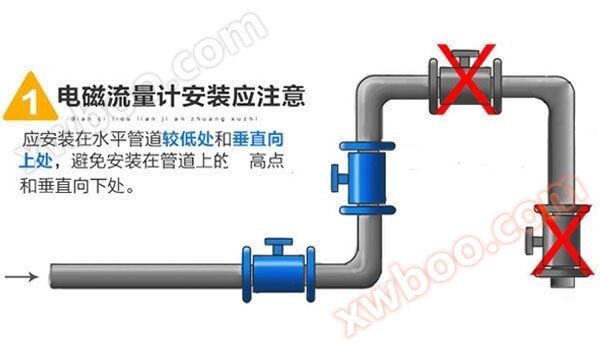
1. It should be installed at the lower and vertically upward positions of the horizontal pipeline, avoiding installation at the highest point and vertically downward position of the pipeline;
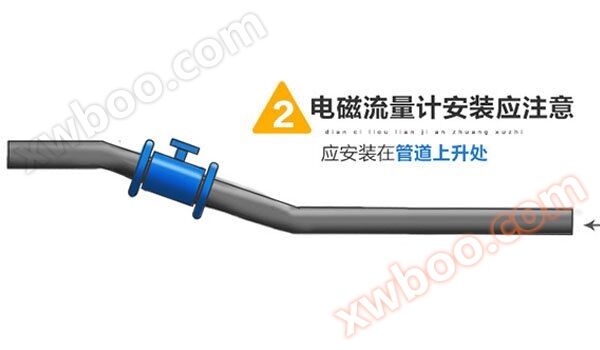
2. Should be installed at the rising point on the pipeline;
3. When installing an open discharge pipeline, it should be installed at the lower part of the pipeline;
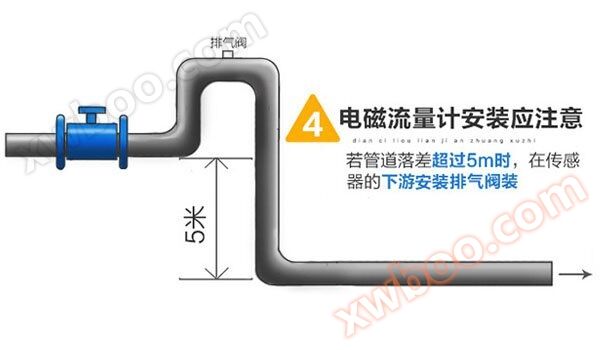
4. If the pipeline drop exceeds 5m, install an exhaust valve downstream of the sensor;
5. Control valves and shut-off valves should be installed downstream of the sensor, rather than upstream of the sensor;
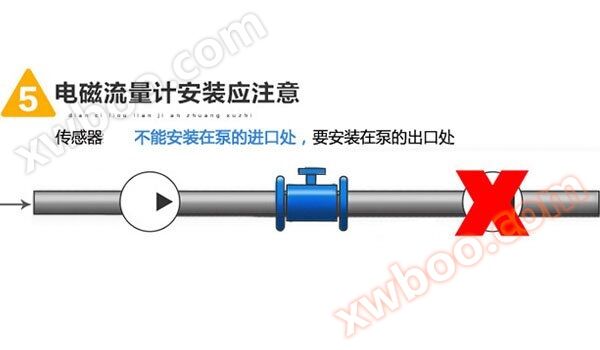
6. Sensors should never be installed at the inlet and outlet of the pump, they should be installed at the outlet of the pump.
9、 Correct installation diagram
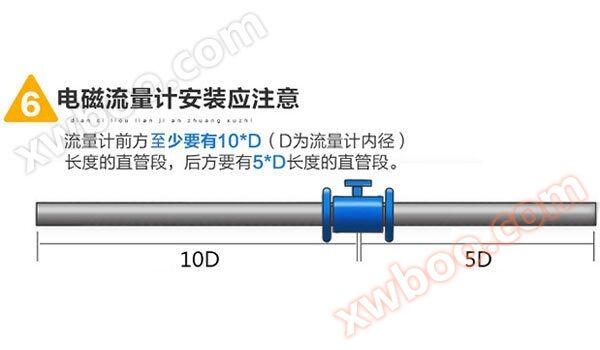
The accuracy of an electromagnetic flowmeter depends on whether it is installed properly. Proper installation can improve the linearity and stability of the electromagnetic flowmeter.The correct installation diagram mainly consists of the following six types.

10、 Product price
The most important concern for manufacturers is price, which determines the cost of the enterpriseThe prices marked online now vary greatly, and the prices are not the same. The merchants are confused about how much different models and specifications are priced. Platinum Rui Instrument
9、 Correct installation diagram
The accuracy of an electromagnetic flowmeter depends on whether it is installed properly. Proper installation can improve the linearity and stability of the electromagnetic flowmeter.The correct installation diagram mainly consists of the following six types.
10、 Product price
The most important concern for manufacturers is price, which determines the cost of the enterpriseThe prices marked online now vary greatly, and the prices are not the same. The merchants are confused about how much different models and specifications are priced. Platinum Rui Instrument
We will offer the most favorable priceAnd quality service for you.
Similar Product Recommend