-
E-mail
gzthermotex@163.com
-
Phone
132-4733-3419
-
Address
No.1 Yanbu Hexi Dajiwei Industrial Zone, Nanhai District, Foshan City, adjacent to Xinhongxing Hardware and Plastic Factory (Foshan Factory of Guangzhou Jingxiu Thermal Equipment Co., Ltd.)
Product Categories
Guangzhou Jingxiu Thermal Equipment Co., Ltd
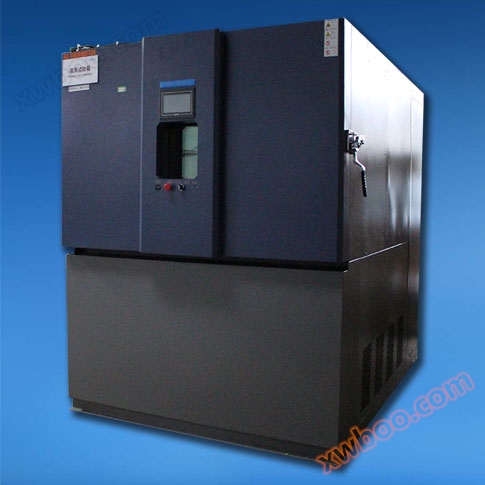
Simulated high-altitude test chamber
NegotiableUpdate on 02/22
- Model
- Nature of the Manufacturer
- Producers
- Product Category
- Place of Origin
Overview
The high-altitude low-pressure test chamber is suitable for conducting high temperature, low temperature, altitude (simulated altitude: 0-5600m), high and low temperature cycle tests, and temperature altitude comprehensive tests on products (whole machines), components, and materials. It is usually used in the defense industry, aerospace industry automation components, automotive components, electronics, electrical components, plastics, chemical industry, food industry, pharmaceutical industry, and related products to simulate high altitude, high altitude, (high-altitude areas) climate for storage and transportation reliability tests under single or simultaneous high and low pressure, and can also test the electrical performance parameters of the test piece when powered on.
Product Details
Product Introduction
The high-altitude low-pressure test chamber is suitable for conducting high temperature, low temperature, altitude (simulated altitude: 0-5600m), high and low temperature cycle tests, and temperature altitude comprehensive tests on products (whole machines), components, and materials. It is usually used in the defense industry, aerospace industry automation components, automotive components, electronics, electrical components, plastics, chemical industry, food industry, pharmaceutical industry, and related products to simulate high altitude, high altitude, (high-altitude areas) climate for storage and transportation reliability tests under single or simultaneous high and low pressure, and can also test the electrical performance parameters of the test piece when powered on.
Main technical parameters
Temperature range: -50 ℃ to+80 ℃
Temperature deviation: ≤± 2 ℃ (constant state under normal pressure and no load)
Temperature fluctuation: ≤± 0.5 ℃ (constant state under normal pressure and no load)
Temperature uniformity: ≤ 3 ℃ (constant state under normal pressure and no load)
Heating rate: -40 ℃ →+85 ℃ (average throughout the process ≥ 5 ℃/min, atmospheric pressure)
Cooling rate:+85 ℃ → -40 ℃ (average throughout the process ≥ 5 ℃/min, normal pressure)
Pressure range: atmospheric pressure~50KPa
Simulated altitude: 0-5600m
Pressure reduction rate: atmospheric pressure~50KPa, pressure reduction time ≤ 10min
Pressure recovery rate: ≤ 10.0KPa/min
Pressure deviation: When the pressure is ≥ 40KPa: ≤± 2KPa
Noise: A-level ≤ 80dB (A) (at a height of 1.2m above the ground 1m in front of the gate, in free space)
Temperature resolution: 0.1 ℃ Humidity resolution: 0.1% RH Pressure resolution: 0.01KPa
Inner box size: Test area: W1200 × H800 × D1000 mm. ▲ Attention: The capacity for placing actual products should not exceed 2/3 of the capacity of the testing area.
Outer box size: W1500 × H2300 × D2400 mm
Power supply: AC380V ± 10% 50HZ ± 10%
Power: Approximately 45KW
Reference standards
GB10590-89 Technical Conditions for Low Temperature/Low Pressure Test Chamber;
GB15091-89 Technical Conditions for High Temperature/Low Pressure Test Chamber;
GB11159-89 Technical Conditions for Low Pressure Test Chamber;
GB/T2423.25-1992 Low temperature/low-pressure comprehensive test chamber;
GB/T2423.26-1992 High temperature/low pressure comprehensive test chamber;
GJB150.2-86 Low temperature/low pressure (altitude) test;
Operation steps
1. Connect the test sample to the wire and place it inside the box;
2. Connect the exhaust pipe properly;
3. Close the box door and turn on the vacuum pump to start pumping air;
4. When the air pressure reaches the test atmospheric pressure, close the exhaust valve;
5. Keep the air pressure at the specified test time;
6. Open the intake valve to allow the air pressure inside the box to return to normal;
7. Open the box door and take out the test sample.
Product Rendering
Application case shooting
Similar Product Recommend