-
E-mail
746901602@qq.com
-
Phone
13643261446,13703276403
-
Address
Siying Industrial Zone, Botou City, Hebei Province
Product Categories
Cangzhou Chaoyi Pipeline Equipment Co., Ltd
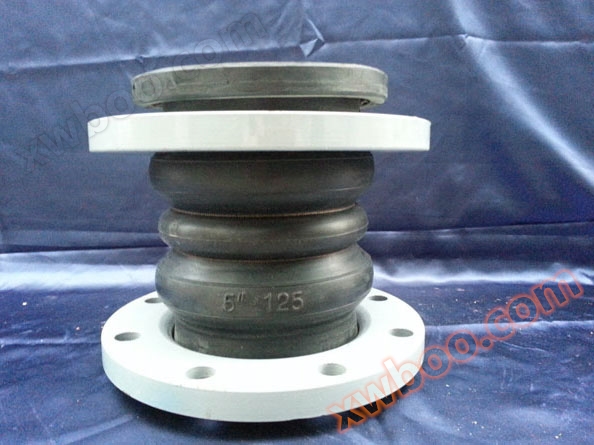
Strengthen the flexible rubber joint
NegotiableUpdate on 03/15
- Model
- Nature of the Manufacturer
- Producers
- Product Category
- Place of Origin
Overview
Description: Reinforced flexible rubber joints, also known as rubber joints, rubber flexible joints, flexible joints, shock absorbers, pipeline shock absorbers, shock absorbers, etc., are a type of pipeline joint with high elasticity, high airtightness, medium resistance, and weather resistance
Product Details
Strengthening flexible rubber joints, also known as rubber joints, rubber flexible joints, soft joints, shock absorbers, pipeline shock absorbers, shock absorbers, etc., is a type of pipeline joint with high elasticity, high airtightness, medium resistance, and weather resistance.
Enhance the product performance of flexible rubber joints:
Strengthening the flexible rubber joint utilizes the elasticity, high air tightness, medium resistance, weather resistance, and radiation resistance of rubber. It is made by compounding polyester curtain fabric with strong thermal and heat stability at an oblique angle, and then vulcanization through high-pressure and high-temperature molds.
Characteristics of reinforced flexible rubber joints: high internal density, ability to withstand high pressure, and good elastic deformation effect.
Advantages of strengthening flexible rubber joints: shock absorption, noise reduction, lightweight.
Strengthening the use of flexible rubber joints: connection with pumps and valves, pipelines with high vibration, and pipelines with frequent changes in temperature. Applicable media: seawater, fresh water, hot and cold water, drinking water, domestic sewage, crude oil, fuel oil, lubricating oil, finished oil, air, coal gas, steam, and granular powder.
Installation instructions for strengthening flexible rubber joints:
1. Select the appropriate model based on the working pressure, connection method, medium, and compensation amount of the pipeline, and choose the quantity according to the noise reduction displacement requirements.
2. When the pipeline generates instantaneous pressure greater than the working pressure, a joint with a gear higher than the working pressure should be selected. When the instantaneous pressure during pipeline start-up is greater than 1.0MPa, a joint with a working capacity of 1.6MPa should be selected. When the instantaneous pressure is greater than 1.6MPa, a 2.5MPa joint should be selected.
3. When the pipeline medium is acid alkali, oil, high temperature, or other materials, a joint that is one level higher than the pipeline working pressure should be selected.
4. The flange connecting the rubber joint should be a valve flange or a flange that complies with GB/T9115.1 (RF).
5. The normal applicable medium for bendable rubber joints is ordinary water with a temperature of 0-60 ℃. For media such as oil, acid and alkali, high temperature, and other corrosive and hard materials, corresponding special resistant materials should be selected for rubber joints, and they should not be blindly used or used interchangeably.
6. Flexible rubber joints used at the inlet and outlet of water pumps should be located on the side close to the water pump, and metal variable diameter joints should be installed between the water pump and the flexible rubber joint, and installed at the large diameter of the variable diameter.
7. When the displacement of the pipeline is greater than or equal to the compensation amount of the joint, the number of joints should be increased to parallel the displacement. It is strictly prohibited to adjust the pipeline's tolerance by keeping the joint in a state of limited deflection and deviation, and not exceeding the limit (expansion, displacement, deflection, etc.). The specific installation data is shown in the table below.
8. For high-rise water supply or suspended water supply, the pipeline should be fixed on hangers, brackets or anchor frames, and the joint should not bear the weight and axial force of the pipeline itself. Otherwise, the joint should be equipped with anti pull devices (which can withstand a force greater than the axial force of the pipeline).