-
E-mail
info@shunhou.com.cn
-
Phone
13341658096
-
Address
Room 2826, Building 4, Greenland Jade, Lane 1018, Jiefang East Road, Fengxian District, Shanghai
Product Categories
Shanghai Shunhou Intelligent Technology Co., Ltd
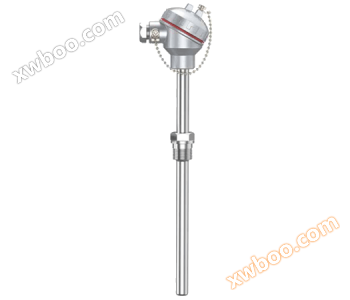
TA temperature sensor/temperature transmitter
NegotiableUpdate on 10/12
- Model
- Nature of the Manufacturer
- Producers
- Product Category
- Place of Origin
Overview
A temperature sensor refers to a sensor that can sense temperature and convert it into a usable output signal
Product Details
A temperature sensor refers to a sensor that can sense temperature and convert it into a usable output signal. Temperature sensors are the core part of temperature measuring instruments, with a wide variety of types. According to the characteristics of sensor materials and electronic components, they are divided into two categories: thermistor and thermocouple.
Basic Principles
Temperature is one of the most frequently measured parameters in the process industry. In contact temperature sensors, two main measurement principles are used: sensor 2, thermistor, and thermocouple. The principles are completely different, but there are also commonalities in their use, which are listed separately in the following introduction.
Product Application
·Mechanical manufacturing
·Equipment and Ship Construction
·Hydraulic system
·Electric Power Petroleum
·Building materials
·Scientific research
Thermistor (RTD)
RTD (Resistance Temperature Detector) is a sensor whose resistance increases with the temperature of the sensor and can be repeated over time. RTD is a passive device. It does not generate output independently. External electronic devices can be used to measure sensor resistance by passing a small current through the sensor to generate voltage. Typically, the measurement current is 1mA or lower, with a maximum of 5mA, and there is no risk of self heating.
Thermocouple (TC)
The use of thermocouples for temperature measurement is based on the thermoelectric effect discovered by T. J. Seebeck in 1821, and A.C. Becquerel was the first to measure temperature based on the thermoelectric effect in 1826.
The working principle of a thermocouple is that two conductors with different compositions are welded at both ends to form a circuit. The temperature measuring end is called the measuring end, and the wiring terminal is called the reference end. When there is a temperature difference between the measuring end and the reference end, according to the Seebeck effect, a thermal current will be generated in the circuit. When connected to a display instrument, the instrument will indicate the corresponding temperature value of the thermoelectric potential generated by the thermocouple, and the direction of the thermoelectric potential depends on the direction of the temperature gradient.
Thermoelectric properties are a universal characteristic of matter, but only a pair of metal conductors with good linearity, stability, repeatability, high thermoelectric potential, easy standardization, abundant material resources, easy purification, and good corrosion resistance in the relationship curve between thermoelectric potential and temperature can become materials for making thermocouples. Thermocouples are the most widely used on-site temperature measuring instruments.

The thermoelectric potential of a thermocouple will increase as the temperature at the measuring end rises. The magnitude of thermoelectric potential is only related to the material of the thermocouple conductor and the temperature difference at both ends. It is independent of the length and diameter of the thermoelectric material. Thermocouples are suitable for measuring temperatures ranging from -200 ℃ to 1600 ℃, with the advantages of fast response time and high anti vibration performance.