-
E-mail
15901235199@163.com
-
Phone
13552630265
-
Address
Room 14612, Building 3, No. 1800 Panyuan Road, Changxing Town, Chongming District, Shanghai
Product Categories
Pang Yuliang Instrument (Shanghai) Co., Ltd
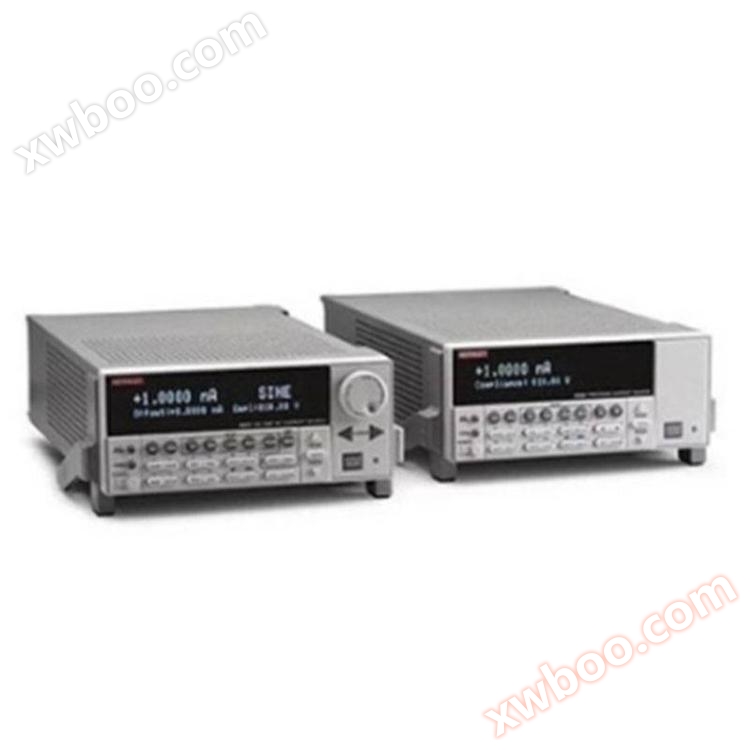


TEKTRONIX 6220 6221 DC current source AC and DC current source
NegotiableUpdate on 04/02
- Model
- Nature of the Manufacturer
- Producers
- Product Category
- Place of Origin
Overview
be careful! The product price is subject to the actual call back quotation! This product is distributed by Pang Yuliang Instrument and Meter (Shanghai) Co., Ltd. If you need to purchase it, you can log in to WWW.HELLOINSTRUMENTS.COM for telephone consultation
Product Details
be careful! The product price is subject to the actual call back quotation! This product isDistributed by Pang Yuliang Instrument (Shanghai) Co., Ltd,If you need to purchase, you can log inWWW.HELLOINSTRUMENTS.COMTelephone consultation.
TEKTRONIX DC current source AC and DC current source
Tektronix
Tektronix DC current source AC and DC current source product introduction:
Product model:
Product brand: Tektronix
Product category: DC current source
Product Remarks: DC Current Source AC and DC Current Source
The 6220 DC current source and 6221 AC/DC current source series are very easy to use and have extremely low noise micro current sources. The generation of microcurrents is a key instrument in many research and product measurement applications, especially in semiconductors, nanotechnology, and superconductivity. The fast and built-in control functions make the 6220/6221 series an ideal choice for applications such as Hall measurement, Delta mode resistance measurement, pulse measurement, and differential conductance measurement.
Tektronix DC current source AC and DC current source product features:
Characteristics of 6220 and 6221:
Source and trap (programmable load) 100fA~100mA
1014 Ω output impedance ensures stable current source for various loads
65000 point source storage capacity allows for direct execution of test current scans from the current source
Built in RS-232, GPIB, trigger link, and digital I/O interface
Reconfigurable tri coaxial output for applications with protective features
The 220 simulation mode does not require reprogramming of existing applications
6221 Features:
4pA-210mA peak to peak AC current source, used for analyzing the AC characteristics of components and materials. The 10MHz output update rate of 6221 can generate a smooth sine wave of 100kHz
Built in standard and arbitrary waveforms within the frequency range of 1mHz to 100kHz. Application areas include complex programmable loads or sensor signals, as well as noise simulation
Programmable pulse widths as short as 5 μ s can limit the power consumption of components. When used in conjunction with a 2182A nanovoltmeter, it can measure pulse I-V with a width of 50 μ s
Built in Ethernet interface, easy to achieve remote control without GPIB control card
nanotechnology
-Differential conductance
-Pulse signal source and resistorOptoelectronics Application
-Pulse I-VReplace the AC resistor bridge (when used in conjunction with 2182A)
-Low power resistance measurementReplace the lock-in amplifier (when used in conjunction with 2182A)
-Low noise resistance measurement
The demand for low current sources. The testing and characteristic analysis of today's small and high power efficiency electronic devices require the output of low-level current, which requires the use of a low current source. A lower excitation current generates a lower (and therefore more difficult to measure) voltage at both ends of the device. Combining the 6220 or 6221 with the 2182A nanovoltmeter can effectively handle these two challenges.
Tektronix DC current source AC and DC current source product applications:
The 6220 DC current source and 6221 AC/DC current source are very easy-to-use ultra-low current noise current sources. The generation of low current is crucial in testing environments ranging from research and development to production, especially in the semiconductor, nanotechnology, and superconducting industries. The high-precision source and built-in control functions make the 6220 and 6221 ideal choices for applications such as Hall measurement, resistance measurement using delta mode, pulse measurement, and differential conductance measurement.
AC current source and current source waveform generator. 6221 is the only low current AC power source on the market. Before the launch of 6221, researchers and engineers had to build their own AC current sources. This economic source is better than the "homemade" solution in terms of accuracy, consistency, reliability, and robustness. 6221 is also a commercially available current source waveform generator that simplifies the creation and output of complex waveforms.
Programming is simple. These two current sources can be fully programmed through RS-232 or GPIB interfaces from the front panel control or external controller; 6221 also has an Ethernet interface, which can be remotely controlled through any Ethernet connection. These two instruments can output a DC current of 100fA-105mA; 6221 can also output AC currents with peak to peak values ranging from 4pA to 210mA. The importance of these two current sources being able to set output voltages ranging from 0.1V to 105V in 10mV steps (the voltage limit that can be reached when the current source outputs current) lies in the potential damage to the device under test (DUT) caused by overvoltage in applications.
Replace the 220 type current source directly. 6220 and 6221 are built on top of the popular 220 type programmable current source from Jishili; In existing applications, replacing the 220 model with 6220/6221 can easily achieve the simulation mode of the 220 model without rewriting the control code.
Easy to set and execute current scanning. Both 6220 and 6221 provide tools for setting current ramp, and output pre-defined sequences of up to 65536 output values in steps using triggers or timers. Both of these current sources support linear, logarithmic, and custom scanning methods.
The 6221 combines a high-resolution current source and a megahertz update rate, making it difficult to distinguish between high fidelity simulated current signals and simulated current ramp waves.
Free instrument control instance startup software
The instrument control instance software for current sources simplifies the use of the Geely 2182A to perform basic current source tasks and adjust complex measurement functions. This software developed in the LabVIEW programming environment includes an advanced measurement guide that helps users set up instruments and connect them correctly, as well as configure basic current source functions. This software package has tools that support delta mode, differential conductance, and pulse mode measurements. With this software package, users can print instrument instructions for any pre programmed function, providing a starting point for including these functions in the application.
differential conductance
Differential conductance measurement is one of the most important and critical measurements for nonlinear tunneling devices and low-temperature devices. The differential conductance in mathematics is the derivative of the I-V curve of a device. The combination of 6220 or 6221 and 2182A nanovoltmeter is the most complete differential conductivity measurement solution in the industry. These instrument combinations are also the fastest solution: 10 times faster than other optional methods and much lower in noise. Data can be obtained in one measurement without the need to average the results through multiple scans, which is time-consuming and prone to errors. Moreover, 622X and 2182A are simple and easy to use, as their combination can be used as a single measuring instrument. Their simple connection eliminates isolation and noise current issues that are difficult to handle with other solutions.
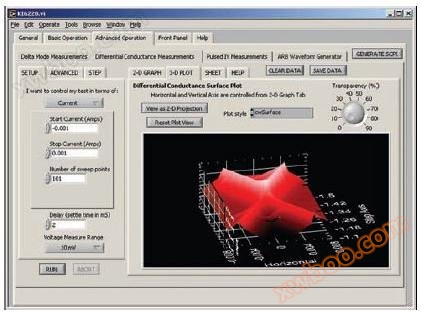
Figure 1. Running, analyzing, and displaying differential conductance measurements.
Delta mode
*At first, the delta mode method developed by Jishili for low-noise measurement of voltage and resistance required the combination of a 2182 nanovoltmeter and a triggered external current source. In fact, delta mode can automatically trigger the current source to alternate the polarity of the signal, and then trigger the reading of the nanovoltmeter on each polarity. This current reversal method eliminates any constant thermoelectric imbalance, ensuring that the measurement results reflect the true voltage value.
Similarly, this basic method has been adopted in the delta mode of 622X and 2182A, but it has been enhanced and simplified in implementation. Now, this method eliminates the thermal electric imbalance that drifts over time, producing results in half the time of the previous method, and allows for current source control and setting of the nanovoltmeter, thus requiring only two buttons to complete measurement settings. Improved thermoelectric imbalance elimination and higher read rate can reduce measurement noise to 1n

Figure 2. Delta mode provides 1000:1 noise attenuation
Delta mode can accurately measure low voltage and small resistance. After correctly connecting 622X and 2182A, the user only needs to press the Delta button of the current source and then press the Trigger button to start the test. 622X and 2182A can work seamlessly together and can be controlled through GPIB interface (GPIB or Ethernet interface of 6221). 622X provides free control software instances, including a guide for "leading" users through the delta mode setting process.
pulse test
Even a small amount of heat introduced during the measurement process can increase the temperature of the DUT, causing test results to deviate or even damage the device. By providing users with great flexibility in setting optimal pulse current amplitude, pulse interval, pulse width, and other pulse parameters during the pulse measurement process, the pulse measurement function of 6221 reduces the power consumption of DUT to a minimum.
6221 enables short pulses (thus reducing heat dissipation) with a full range microsecond rise time. The 6221/2182A combination synchronizes the pulse and measurement - measurement can start immediately 16 μ s after the pulse is applied to 6221. The entire pulse width, including nanovolt level voltage measurement, can be as short as 50 μ s. The power frequency synchronization between 6221 and 2182A eliminates power line related noise.
Standard waveform and arbitrary waveform generator
6221 is the * low current current source waveform generator on the market. It can generate basic waveforms (sine wave, square wave, triangular wave, and oblique wave) and use any waveform generator (ARB) that supports defining waveforms point by point to generate waveforms. It can generate waveforms in the frequency range of 1mHz to 100kHz at an output update rate of 10 megasamples per second.
Better performance than AC impedance bridge and lock-in amplifier
Compared to AC resistor bridges and lock-in amplifiers, the 622X/2182A combination has many advantages, including low noise, smaller output current, smaller measured voltage, lower power consumption to DUT, and lower cost. Moreover, there is no need for a current preamplifier.
6221 can also expand the functionality of lock-in amplifiers in applications that already use lock-in amplifiers. For example, it can clean signals and its output synchronization signal makes it an ideal output source for locked applications such as measuring device and third harmonic response.
Comparison between 6220 and 6221 and self-made current sources
Many researchers and engineers who require current sources try to make do with voltage sources and series resistors. This is a common method when alternating current is required. This is because there were no AC current sources available on the market before the launch of 6220/6221. However, homemade current sources have many drawbacks compared to real current sources:
The homemade current source does not have a high voltage. You may want to ensure that the voltage on your self-made 'current source' terminal never exceeds a certain limit (e.g. 1-2V for many optoelectronic devices). The direct method to achieve this is to lower the voltage source to that voltage limit. This requires reducing the series resistance to obtain the required current. If you want to set different currents, you must change the resistor while keeping the voltage constant! Another possible approach is to parallel a protection circuit to the DUT. These operations do not have voltage control and are always used as parallel devices, thus "stealing" a portion of the set current flowing to the DUT.
The output of homemade current sources is unpredictable. Using a self-made 'current source' made of a voltage source and a series resistor, the impedance of the DUT forms a voltage divider. If the resistance of the DUT is completely predictable, then the current can be known, but if the resistance of the DUT is unknown or varies like most devices, then the current is no longer simply a function of the applied voltage. The best way to make the current source predictable is to use series resistors with extremely high resistance values (and correspondingly use a high voltage source), which contradicts the required high voltage.
Although it is possible to know (if not control) the actual current from this unpredictable current source, there is also a cost to be paid. This can be achieved by supplementing the measurement of current (such as using a voltmeter to measure the voltage drop of a series resistor). This measurement can be used as feedback to change the voltage source or simply recorded. Regardless of the method, it requires additional equipment, which further increases complexity or error. Even worse, if a homemade current source uses a large series resistor for general prediction, then this readback requires the use of an electrostatic meter to ensure accuracy.
2182A nanovoltmeter
The 2182A extends the functionality of the original 2182 nanovolt meter from Jishili. Although 6220 and 6221 are compatible with 2182, using 2182 for delta mode and differential conductance measurements takes twice as much time as using 2182A. Unlike 2182A, 2182 does not support pulse mode measurement.

Figure 3. Measurement of power frequency synchronization reduces 50Hz/60Hz interference to * low.
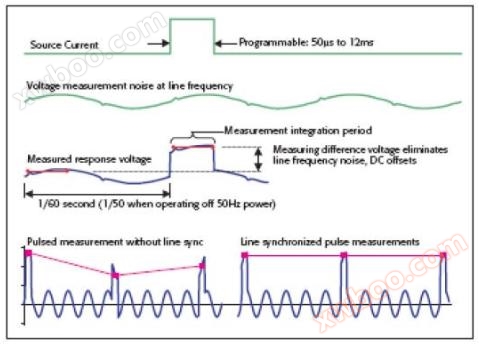
Figure 4. Using 6221 and free startup control software examples, easily create complex waveforms by adding, multiplying, connecting, or applying filters to standard waveforms.
Application of 622X/2182A combination
Easy to coordinate instruments and intuitive software instances simplify the setup and operation of many applications.
• Resistance measurement range from 10n Ω to 100M Ω. A measurement system can be used for wide range devices.
Replace AC resistance bridges and lock-in amplifiers used for measuring resistance with low-noise performance.
Adjust the pulse and measurement with a narrow pulse width of 50 μ s (only 6221).
The speed of measuring differential conductance is 10 times faster than previous methods and has lower noise. Differential conductance is an important parameter used in semiconductor research to describe the density of states of substrate materials.
The Delta mode reduces noise in resistance measurement by 1000 times.
For low impedance Hall measurements, the delta operating mode of the 622X/2182A combination has noise performance and contact potential suppression. For high impedance Hall measurements (greater than 100M Ω), 4200-SCS can replace current sources, switches, and various high impedance voltage measurement channels. This provides a complete solution with pre programmed testing projects.
Similar Product Recommend