-
E-mail
jbsyp@163.com
-
Phone
13584183217,13511659751
-
Address
591 Sheng'an Road, Wuxi City
Product Categories
Weibo Instrument Jiangsu Co., Ltd
Cleanliness automatic cleaning machine
NegotiableUpdate on 07/29
- Model
- Nature of the Manufacturer
- Producers
- Product Category
- Place of Origin
Overview
Introduction to Cleanliness Testing: Since the end of the last century, more and more manufacturers have begun to understand the importance of cleanliness, but how to test and the standards for testing have become thorny issues for quality inspection departments
Product Details
Introduction to Cleanliness Testing:
Since the end of the last century, more and more manufacturers have begun to understand the importance of cleanliness,But how to detect and the standards for detection have become thorny issues for the quality inspection department. At present, most mechanical processing industries in China, including automobile engines and supporting factories, do not have very strict concepts for cleanliness testing. Even when testing, manual methods such as medical needles or elevated fuel tanks are often used, without dedicated testing equipment, resulting in incomplete and incomplete cleaning. It is impossible to completely separate the impurities present, and the results cannot have high repeatability and reproducibility, so it is even more impossible to have accurate results. Some newly added supporting factories in the automotive industry do not even have the concept of cleanliness, let alone do cleanliness testing.
For many industries, cleanliness control is equally important. Like the automotive industry, these industries often suffer from quality issues that reduce product lifespan and reliability, with the main root cause being inadequate cleaning during parts processing and the incorporation of impurities and dust during assembly. Therefore, to ensure the quality and reliability of the product, they must also require strictly clean parts. These industries include engines, aviation, semiconductors, data storage, medical equipment, communications, precision instruments, and wear monitoring of large industrial and mining equipment.
This device uses a precision microporous filter membrane to extract and filter the fluid to be tested through an air diaphragm pump. The particulate pollutants in the fluid are retained on the surface of the filter membrane, and then the filter membrane is analyzed for the size, quantity, and composition of the particulate pollutants contained in the fluid using methods such as color matching, paired weighing, microscopic observation, and instrument analysis. Select filter membranes with different properties and pore sizes based on the properties of the fluid, particle size, and analysis purposes.
The methods used in this device are all in accordance with the American Society for Testing and Materials(ASTM)Standards, while also meeting and complying with the standards of several major Chinese ministries and related industries. And it is precise, accurate, fast, simple, and convenient.
Equipment parameters
|
Equipment model |
HK767 |
HK1077 |
HK151510 |
||
|
unit price(RMB) |
128000.00 |
158000.00 |
208000.00 |
||
|
Specification |
|||||
|
Cleaning room size(mm) |
700*600*700 |
1000*700*700 |
1500*1500*1000 |
||
|
Storage tank capacity(L) |
25 |
30 |
50 |
||
|
Dimensions(mm) |
1200*800*1900 |
1500*900*1900 |
2000*2000*2300 |
||
|
configuration ● Standard ○ Optional |
|||||
|
Full color touch screen |
Full Color7Inch Domestic ●/○ Full color10Inch import |
Full Color10Inch ●/○ None |
Full Color10Inch ●/○ None |
||
|
Third level filtration |
● |
● |
● |
||
|
Third stage filter membrane |
● |
● |
● |
||
|
ultrasonic cleaning |
○ |
○ |
○ |
||
|
Electric lifting door |
○ |
○ |
● |
||
|
Pneumatic diaphragm pump |
Import ●/○ None |
Import ●/○ None |
Import ●/○ None |
||
|
Cleaning room material |
Mirror stainless steel ●/○ None |
Mirror stainless steel ●/○ None |
Mirror stainless steel ●/○ None |
||
|
Programmable controller |
Domestic ●/○ Import |
Domestic ●/○ Import |
Domestic ●/○ Import |
||
|
Water gun |
Import ●/○ None |
Import ●/○ None |
Import ●/○ None |
||
|
Air Filtration |
● |
● |
● |
||
|
mechanical arm |
○ |
○ |
○ |
||
|
Pipe Material |
food gradepvc●/○ Food gradeSUS304 |
food gradepvc●/○ Food gradeSUS304 |
food gradepvc●/○ Food gradeSUS304 |
||
|
function ● Standard ○ Optional |
|||||
|
Automatic cleaning of inner wall |
● |
● |
● |
||
|
Fixed time cleaning mode for workpieces |
● |
● |
● |
||
|
Quantitative cleaning mode for workpieces |
● |
● |
● |
||
|
Manual cleaning mode |
● |
● |
● |
||
|
Water pressure setting |
● |
● |
● |
||
|
Real time display of liquid level |
● |
● |
● |
||
|
Cleaning room lighting |
● |
● |
● |
||
|
Flow calibration |
● |
● |
● |
||
|
Automatic filter membrane holder |
● |
● |
● |
||
|
injecting liquid/Drainage |
● |
● |
● |
||
|
Pipeline self-cleaning |
● |
● |
● |
||
|
General parameters |
|||||
|
Execution standards |
ISO16232/VDA19 |
||||
|
System blank value |
≤0.3mg/150um |
||||
|
Flow range |
1.0L/min-5.0L/min,accuracy2% |
||||
|
Time setting range |
0-9999 S |
||||
|
Special cleaning agent |
According to the definition of customer product type |
||||
|
Filtration accuracy of cleaning solution |
0.2um |
||||
|
Suitable for detecting filter membranes |
Ø47mm(Optional three-stage series filter membrane for sample preparation) |
||||
|
Air filter filtration accuracy |
0.3 μm. |
||||
|
liquid temperature |
5 ℃- 45℃ |
||||
|
ambient temperature |
Max 45℃ |
||||
|
Working pressure |
>5bar |
||||
|
Filter membrane clip |
Three different pore sizes of filter membranes can be placed simultaneously, with one click installation and removal |
||||
|
power supply |
220V/50HZ |
||||
Sampling category
1. engine
2. aviation
3. semiconductor
4. Storage
5. medical equipment
6. communication
7. Precision instrument
8. Large scale industrial and mining equipment
Application Cases
1. Sample type: Micro automotive components
2. Equipment requirement: Cleanliness analysis, cleaning and filtering system
3. Material properties: Metal
4. Execution standards:ISO16232/VDA19
5. Purpose of testing: Cleaning, filtering, and collecting contaminated particles
6. Equipment requirements:Cleanliness cleaning filtration collection system.
Case Study of Cleanliness Laboratory Construction


Equipment Function Introduction
1. The equipment can integrate pressure jet cleaning, ultrasonic small part cleaning, perfusion cleaning, online filtering and recycling of cleaning agents, and circulating fine filtration, achieving synchronous cleaning of parts and filtering and recycling of particulate pollutants. It can collect particulate pollutants on the surface of parts to the surface of the filter membrane in a timely manner, and obtain filter membrane samples after cleaning the parts, reducing the retention time of particulate pollutants in the cleaning agent; Subverting the traditional manual manual cleaning and testing methods, standardizing the cleanliness testing and control process, and improving testing efficiency. The operating space for cleaning parts is relatively independent, with a built-in air laminar flow system to purify the cleaning operating environment. An air curtain isolation system is also installed on the personnel operating surface to effectively isolate the cleaning area from the external environment, providing a clean operating platform for cleaning and testing.
2. The power source for equipment operation is220VAC power supply(The power source is continuously stable, clean and safe, without mechanical rotating wear parts, will not contaminate the cleaning solution, ensuring stable pressure, flow rate, and temperature of the cleaning solution, and can operate continuously without interruption. The material of the container for storing cleaning solution is304Stainless steel (without glass)/High borosilicate and other fragile items are safe, reliable, sturdy and stable, with precision polishing inside and outside, and can be disassembled and cleaned.
3. Real time display of backup work pressure status, continuously adjustable cleaning and detection pressure, combined with different cleaning nozzles, can quickly and conveniently clean the internal channels, blind holes, and overall surfaces of parts. It is widely used for cleanliness testing in various metal manufacturing industries.
4. The provided automatic cleaning and filtering equipment meets the requirementsISO16232-2007,VDA19,GB/T3821-2005Meet international and domestic standards to meet the cleanliness testing standards of major automobile manufacturers such as Volkswagen, General Motors, and Ford.
5. The surrounding area of the workbench is largely enclosed to reduce environmental pollution and prevent splashing of cleaning solution. The workbench is connected to existing exhaust pipes and has air purification function. Cleaning operation room material:304Mirror stainless steel, operation conforms to ergonomics.
6. The equipment can be equipped with an optional ultrasonic cleaning area for small parts, mainly for ultrasonic cleaning of screws, bolts, bearings and other small parts, and collecting cleanliness data.
7. Replacement and filling process of cleaning solution: The replacement of cleaning solution is convenient, with a liquid level device and an alarm device for low or high liquid levels. The liquid accumulation method has been changed from traditional vacuum accumulation to pneumatic collection, avoiding short circuits in the vacuum pump caused by liquid overflow after sensor damage, greatly improving equipment safety and reliability.
8. Automatic and efficient system solution with streamlined processes, simplified steps for cleanliness detection to improve work efficiency. Many components are sourced from internationally renowned brands, and the volume of cleaning solution is visualized for high efficiencyHEPAFilter, compliant14644-123StandardISO 5Grade cleaning room with integrated automatic four wall self-cleaning function, achieving a self-cleaning degree of0.3mgThe three-stage cleaning agent filtration design ensures the cleanliness of the cleaning solution.
9. The filter membrane holder is controlled by a cylinder and can be easily disassembled with just one click, avoiding direct contact with the filter membrane by hand and providing greater convenience.
10. Reference standards
QCn29008·13-91Method for evaluating cleanliness in quality inspection of automotive products
GB/T 3821-2005Method for Measuring Cleanliness of Small and Medium Power Internal Combustion Engines
ISO 16232-2007:Road vehicles—Cleanliness of components of fluid circuits
JB/T 6002-2007Limit Values and Measurement Methods for Cleanliness of Turbochargers
ISO 18413-2002:Hydraulic fluid power—Cleanliness of parts and components—Inspection document and principles related to contaminant collection, analysis and data reporting
ISO 4406-1999:Hydraulic fluid power—Fluids—Method for coding the level of contamination by solid particles
ASTM D2276-00:Standard Test Method for Particulate Contaminant in Aviation Fuel by Line Sampling
CES 16599:Cleanliness,Partical Counting (Fuel System)
QC/T 573-1999:Guidelines for Automotive Cleanliness Work: People, Things, and Environment.
Introduction to Main Functions and Equipment Components
Equipment shooting
Function Introduction
1. Pressure jet cleaning
Use the pressure in the cleaning area to clean the interface, and according to the preset parameters, clean the detection position of the parts. Alternatively, the pressure cleaning spray gun can be used to manually control the spray gun to rinse the surface of the parts according to the cleaning procedure. Cleaning pressure0-1.0MpaAdjustable.
2Ultrasonic cleaning area
According to customer requirements, ultrasonic cleaning tanks can be optionally selected. Using ultrasonic cleaning tanks, according to preset parameters,Mainly perform ultrasonic cleaning on small parts such as screws, bolts, bearings, etc., and collect cleanliness data.
3Online filtering and sample preparation
After cleaning the parts, the cleaning agent can be used through an online filter to achieve synchronous automatic cleaning, filtering, and sample preparation. The surface particles and pollutants of the parts in the cleaning solution can be collected on the surface of the detection filter membrane in a timely manner. The particle filtration collection device can simultaneously select and place different pore size filter membranes according to needs, and can be configured according to customer requirements. The equipment comes standard with three-stage filtration. To facilitate the classification and collection of particles based on their size range, so that the particles are more evenly distributed on each filter membrane, and more accurate image scanning and analysis can be carried out.
4Equipment self-cleaning
Before testing the cleanliness of the parts, the equipment needs to conduct a self cleanliness test. Only after the self cleanliness is qualified can it be used to test the surface cleanliness index of the parts. The self-cleaning index of the device is less than or equal to03mg.
5Circulating fine filter cleaning agent
The equipment uses a specialized cleaning solution for cleanliness. The cleaning solution is a carrier used to extract particulate pollutants from the equipment. The cleaning solution itself cannot contain pollutants that affect the detection result data. The equipment integrates automatic precision filtration of the cleaning solution to ensure that the cleaning solution is clean before cleaning the parts. Its own cleanliness can be verified through a terminal filtration device.
6Add cleaning agent/Replace the cleaning agent
The maximum loading capacity inside the device at once50LThe matching cleaning solution is automatically added to the interior of the equipment through the filling port. Users can choose the amount to be added according to their cleaning and testing needs. When the cleaning solution needs to be replaced, select the corresponding control button, open the cleaning solution discharge port, and the equipment will automatically discharge the used cleaning solution.
7Cleaning parameter adjustment
The cleaning pressure and working mode can be adjusted according to different cleanliness testing standards.
8Auxiliary lighting
Industrial grade explosion-proofLEDAuxiliary lighting, energy-saving, environmentally friendly, safe and reliable, with protection levelIP67.
Liquid circulation filtration zone
●Built in precision filter element, the liquid is filtered through the membrane and then re processed3Grade filtration has achieved the purpose of repeated use of cleaning solution


Impurity collection area
● Three layer filtration device,Easy to distinguish between particles of different sizes


Software operation interface:
1Main startup interface:

2Software operation function interface

3Cleaning mode selection

4Cleaning mode settings


5Cleaning parameters and flow rate settings


Real time shooting of cleaning the interior of the room
Internal mirror polishing


Cleanliness testing supporting equipment
1High precision filtration membrane


2Desktop electric oven

3High precision analytical balance

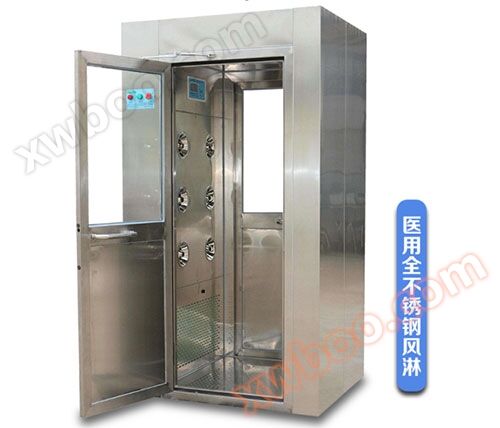
4Air shower room

5Layout of Cleanliness Testing Room

6Laboratory physical and chemical cabinet

after-sale service:
1Delivery method, instrument installation and training:
1Delivery time: After both parties sign the contract and receive the deposit,35Complete production within one working day.
2Delivery location: The user specifies the installation location.
3Training method: Party B shall send technical personnel to Party A's factory for installation, debugging of instruments, and operation training, and Party B shall bear all costs.
4Training content: Instrument principles, structure, operation, maintenance, simple repairs, software usage, sample testing, etc;
2Instrument acceptance
The acceptance criteria shall be based on the configuration requirements and performance indicators specified in this contract, and shall be accepted in accordance with the technical agreement.
3After sales technical service
1The second party promises to provide one complete set of equipment sold by the second partytwelveThe warranty service for non-human damage with a period of one month starts from the completion of equipment installation and commissioning.
2Lifetime after-sales service, service mode, agreed upon by both parties.
Similar Product Recommend