-
E-mail
jbsyp@163.com
-
Phone
13584183217,13511659751
-
Address
591 Sheng'an Road, Wuxi City
Product Categories
Weibo Instrument Jiangsu Co., Ltd

Vacuum aluminum liquid hydrogen analyzer
NegotiableUpdate on 07/29
- Model
- Nature of the Manufacturer
- Producers
- Product Category
- Place of Origin
Overview
Vacuum Aluminum Liquid Hydrogen Tester I. Introduction to Vacuum Aluminum Liquid Hydrogen Tester: Principle: Designed based on the Vacuum Solidification Testing Method
Product Details
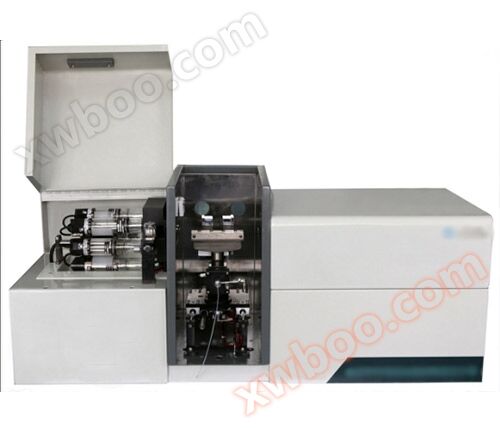
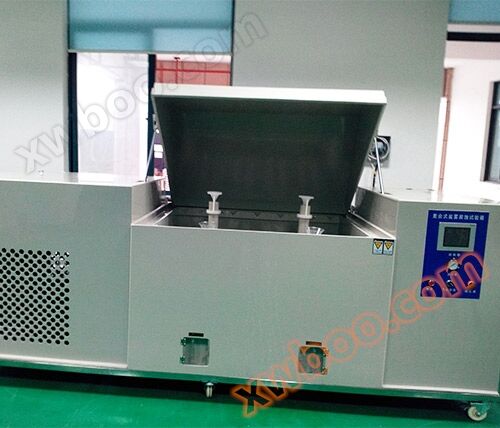
Vacuum aluminum liquid hydrogen analyzer

1、 Introduction to vacuum aluminum liquid hydrogen analyzer:
Principle: Designed based on the vacuum solidification inspection method. Using vacuum pumping technology to rapidly precipitate hydrogen in liquid samples, after the sample solidifies, the hydrogen content of the aluminum liquid can be determined by comparing the surface quality of the sample with the standard sample to determine whether it meets the requirements. The actual specific gravity of the test block can also be calculated and compared with the standard specific gravity to determine whether the aluminum liquid meets the requirements.
Due to the fact that aluminum liquid solidifies in vacuum, the entire solidification process is not affected by external air, and the hydrogen content measured in the sample is the hydrogen content at the time of crucible sampling. The equipment has the advantages of accurate detection, reliable operation, easy operation, and simple maintenance, making it an ideal device for detecting hydrogen content in aluminum parts factories.
2、 Application range of aluminum liquid hydrogen analyzer
Conduct qualitative analysis on the quality of aluminum liquid and preliminarily determine the quality of aluminum liquid.
Reduced pressure solidification is the process of observing the precipitation of bubbles during the cooling and solidification of aluminum liquid samples under reduced pressure (a certain degree of vacuum) conditions (or comparing the cross-sectional shape and porosity of the sample with a standard sample; or determining the hydrogen content in the aluminum liquid based on the ratio of the density of the sample to the true density of the alloy). This method is simple, fast, and suitable for most aluminum casting manufacturers to apply.
During the experiment, carefully take a small amount of molten aluminum from the center of the prepared die casting(100gTest the sample on both sides, pour the sample into a preheated crucible (steel crucible must be sprayed with release agent), and immediately (less than)30After being placed in the vacuum chamber and connected to the vacuum pump, the chamber is quickly evacuated to a certain degree of vacuum. At a certain degree of vacuum, gas dissolved in the aluminum liquid begins to precipitate, escaping from the surface of the melt and forming bubbles inside the sample. And protrusions can be seen on the surface of the sample.
3、 The harm of hydrogen content in aluminum liquid to castings
Hydrogen is a gas that dissolves in liquid form in large quantities. Due to the presence of hydrogen, aluminum castings are prone to defects such as pinholes and pores, which greatly reduce the mechanical properties and internal quality of the castings; For this reason, various methods are used in the production process of aluminum castings to refine and remove gas from the aluminum liquid, in order to reduce the hydrogen content in the aluminum liquid and prevent the occurrence of casting defects. Therefore, how to qualitatively or quantitatively determine the hydrogen content in the aluminum liquid before pouring in a simple, direct, and rapid manner to ensure the production of qualified castings has always been a research hotspot for scholars at home and abroad.
4、 The effect of using aluminum liquid hydrogen analyzer in combination with aluminum liquid degassing machine
The function of the aluminum liquid degassing machine is to stir the aluminum liquid through a controlled rotating graphite shaft and rotor, while injecting the measured inert gas into the aluminum liquid through the rotor and dispersing it into small bubbles, so that they are evenly dispersed in the molten metal, and the gas partial pressure of the bubbles is zero. Due to the high hydrogen partial pressure in the aluminum liquid, the hydrogen gas in the aluminum liquid continuously diffuses into the bubbles. At the same time, some non-metallic inclusions in the aluminum liquid are adsorbed on the surface of the bubbles, and useless hydrogen gas and some non-metallic inclusions adhere to the inert gas bubbles that float to the liquid surface. Then, the purpose of removing hydrogen and oxide inclusions is achieved by skimming.
The use of an aluminum liquid hydrogen analyzer can easily and quickly determine the degassing effect of aluminum liquid, meeting the requirements of simple, convenient, and fast detection in the casting process.
5、 Aluminum liquid hydrogen analyzer parameters
|
project |
unit |
parameter |
|
External dimensions |
mm |
1200X880X820 |
|
Vacuum pump power |
W |
370 |
|
pumping speed |
L/S |
2 |
|
limiting pressure |
Pa |
0.97 |
|
Working power supply |
V |
220 |
|
Oil consumption |
L |
4 |
|
Whole machine weight |
KG |
70 |
6、 Usage of Aluminum Liquid Hydrogen Analyzer
Operating Interface Description
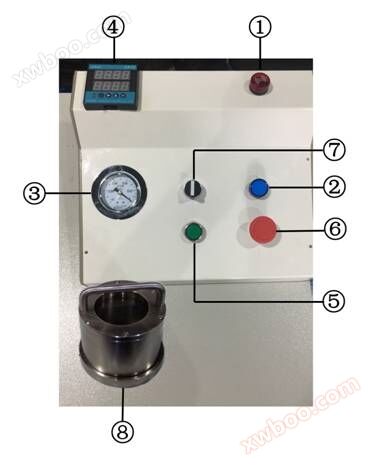
① Beehive light ⑥ Stop button
② Power indicator light ⑦ Power switch
③ Pressure gauge ⑧ Pressure vessel
④ Relay timer
⑤ start button
1Pre set the vacuum pressure and holding time (the vacuum pressure at the factory is negative)0.085mpaThe holding time is3min).
2Open the cover of the hydrogen measuring seat and clamp the crucible containing the aluminum liquid inside the hydrogen measuring seat (time should be controlled as much as possible)20Within seconds.
3Turn on the power, the power indicator light is on, press the start button, the vacuum pump starts, and the time relay starts timing.
4When the set time is reached, the vacuum pump will automatically relieve pressure, and according to actual needs, the stop button can also be pressed for real-time pressure relief.
5Open the hydrogen testing seat cover: clamp out the aluminum cup and pour out the sample.
6According to the surface quality of the sample, the hydrogen content in the aluminum liquid can be determined. In the production site, the following methods can generally be used to qualitatively measure the hydrogen content in the aluminum liquid.
7After pressing the stop button, you need to wait5It takes seconds to reset the button and restart.
Solidification state method:
Observe the gas evolution during the solidification process of aluminum liquid and the surface state of the solidified sample through a vacuum hood, and compare this situation with the standard sample (divided into multiple grades) that has been made to evaluate the hydrogen content in the aluminum liquid;There are two methods:
AWhen the set vacuum degree is reached from inside the vacuum hood, start the timer and stop until the first bubble appears on the liquid surface. The degree of gas content is evaluated based on the length of time it takes for bubbles to escape. When the gas content is high, the time for bubbles to escape is short; When the hydrogen content is low, the time for bubbles to escape is long; Suitable for use when there is a high gas content in aluminum liquid.
BJudging the surface roughness of the solidified sample, the more protrusions there are, the more gas content there is, and vice versa.
Measurement of Aluminum Density Method:
After cooling the aluminum liquid at a certain temperature under a certain degree of vacuum, the mass of the sample is weighed in air using an electronic balancew1Then suspend the sample in water with known density and weigh its mass in the waterw2There are two methods to analyze the gas content in aluminum liquid:,ARelative density methoda=w2/w1After calculationaThe larger the value, the smaller the real-time gas content,aThe smaller the value, the higher the gas contentBAbsolute density methodw=w1.pwater/(w1-w2);wFor the density of aluminum samples, the higher the density, the denser the sample, the fewer pores, and the lower the gas content. Conversely, the higher the gas content.
Profile state observation method:
After the sample is completely solidified and cooled, cut the sample along the vertical plane, grind and polish it; The gas in the sample is presented on the polished surface in the form of smooth holes around the periphery. The larger the gas content in the sample, the larger the hole size, and the higher the hole distribution density. The minimum and maximum limits of the hole distribution density are determined according to the actual production requirements for the gas content of the casting, and they are made into several standard grade samples as the standards for inspection and judgment.
7、 Usage of Density Scale
1. First, fill the sink with appropriate water until the water level exceeds the measured object.

2. Turn on the power of the density scale and wait for it to return0
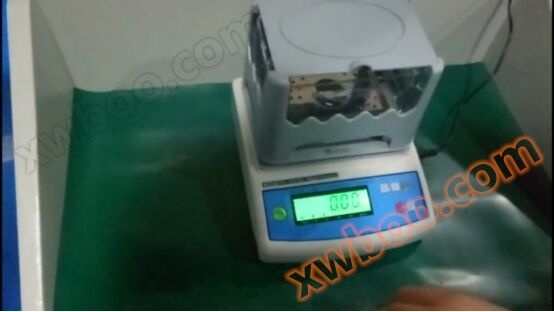
3. Weigh the object being measured first, and after the displayed weight number stabilizes, press the red buttonMemorykey
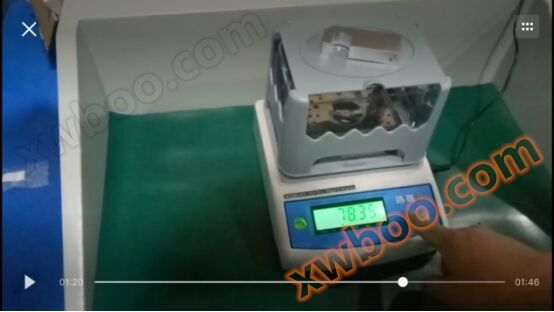
4. After opening the lid and putting the object into the water, weigh it and wait for the displayed weight number to stabilize before pressing the red buttonMemoryWait for the calculation result to determine the density of the object.
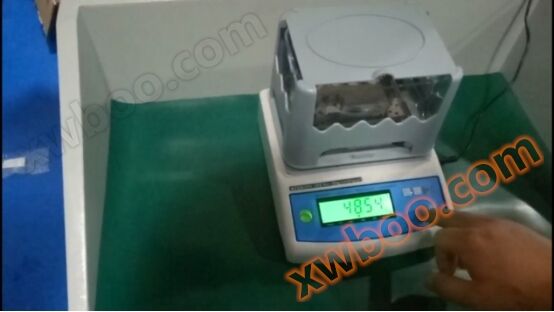
7、 Precautions for use and maintenance of aluminum liquid hydrogen analyzer
1The temperature of the aluminum liquid is very high, so be sure to pay attention to safety when taking and viewing samples, to prevent the aluminum liquid from spilling or overturning, and to prevent burns
2The working chamber must ensure that the surface is clean and free of foreign objects, otherwise it will not work properly
3Protect the filter inside the working chamber and replace it immediately if it is damaged, otherwise it may affect the service life of the vacuum pump
4Regularly check the sealoThe integrity of the ring should be ensured, and if there is any damage, it should be replaced promptly
5Before use, a predictive test should be conducted to ensure the vacuum effect, followed by a sampling test
6Pre adjustment work in time180second-300Seconds, the time should not be too long to avoid excessive load on the vacuum pump, which may cause damage.
7InDo not place corrosive objects on the working platform of the aluminum liquid hydrogen analyzer to avoid corrosion of accessories.
New fixed and mobile degassing machines
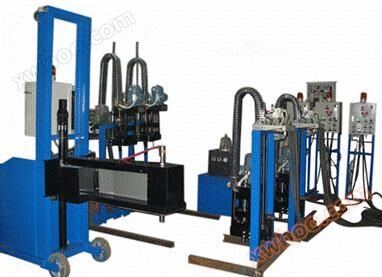
Fixed deaerator

Deaerator is a hand cart type rotating rotor degassing equipment equipped with an imported hydraulic lift (or mechanical lifting system) with online measurement of aluminum liquid temperature. The degassing medium adopts99.996%The principle of argon or nitrogen gas is to install a graphite rotor on the degassing machine and place it in the aluminum liquid. Through controlled rotation of the graphite shaft and rotor, the measured inert gas is pressed into the aluminum liquid and dispersed into small bubbles, making them evenly dispersed in the molten metal. The gas partial pressure of the bubbles is zero. Due to the high hydrogen partial pressure in the aluminum liquid, the hydrogen in the aluminum liquid continuously diffuses into the bubbles. At the same time, non-metallic inclusions in the aluminum liquid are adsorbed on the surface of the bubbles. Inert gas bubbles adhered to useless hydrogen gas and non-metallic inclusions float to the liquid surface. After processing, the graphite rotating rod automatically rises to skim the slag, achieving the purpose of removing hydrogen and oxidizing inclusions. An online aluminum liquid temperature measurement device is installed on the degassing arm, which can understand the temperature changes of the aluminum liquid during degassing, making it easy for operators to determine whether the aluminum liquid meets the casting temperature requirements. The equipment can move flexibly and be conveniently placed anywhere in the workshop. Inert gas can be provided by the gas supply center or can be stored in steel cylinders next to the trolley and moved randomly.
[Purpose]
Used for degassing of crucibles, crucible boilers, material extraction wells, aluminum water lifting bags, etc.
[Advantages]
>>The mobile unit is easy to locate and can be used in multiple furnaces and locations;
>>Hydraulic (or mechanical) lifting, convenient rotor positioning and replacement;
>>The control panel is easy to use and can be controlled automatically/manually; When the set degassing time is completed, the rotor stops rotating, the gas supply automatically shuts off, the cantilever automatically lifts, and the indicator light flashes to automatically stop the machine and remind the operator;
>>Nitrogen or argon can be used, greatly reducing degassing time, lowering refining costs, and causing no pollution to the environment, greatly improving the working environment;
>>The flow rate of inert gas is controllable and can be set, greatly improving product quality; The rotor speed can be adjusted, and the speed can be configured with variable frequency speed regulation electronic digital display, which brings convenience to the operator's operation;
>>High degassing efficiency can greatly reduce the waste generated by bubbles and inclusions, and significantly improve the yield of finished products;
>>The equipment is equipped with an aluminum liquid online temperature measurement device, which can monitor the temperature rise and fall of the aluminum liquid at any time during degassing, facilitating casting.
>>There is no corrosion on the lining of the ladle or crucible boiler;
>>Due to the function of the baffle, the surface of the aluminum liquid is stabilized, reducing secondary pollution during the treatment process;
>>Humanized design, sturdy structure, and easy maintenance. Subcontracting of degassing in crucible furnace and degassing of molten pool
[Scope of Application]
1Suitable for refining and degassing aluminum liquid in fixed crucible furnaces, melt pools, and intermediate stages.
2Applicable furnace diameter Φ500-1500mmFurnace depth500-1500mmIt can also be designed according to user requirements.
Principle of degassing
Hydrogen has a high solubility in aluminum liquid, which can reduce the physical and mechanical properties of castings. To cast high-quality castings, the hydrogen content in the aluminum liquid must be controlled at a low level.
The small rotor of the degassing refining equipment can effectively disperse the inert gas into small bubbles, which are evenly dispersed and floated in the aluminum liquid. The hydrogen partial pressure in the aluminum liquid is higher than that in the bubbles, and the hydrogen gas will diffuse into the inert gas and float up to the liquid surface with the bubbles, effectively reducing the hydrogen content in the aluminum liquid. At the same time, the rising bubbles will bring small inclusions in the aluminum liquid to the surface of the aluminum liquid, which will be captured and removed by the covering agent.
Similar Product Recommend