-
E-mail
hblhg @163.com
-
Phone
+86-13392495516
-
Address
101, Block A, Building 4, Huachuang Industrial Park Phase II, Panyu District, Guangzhou City
Product Categories
Guangzhou Kaimo Filtration Equipment Co., Ltd

The traditional extraction process of mannitol
NegotiableUpdate on 03/25
- Model
- Nature of the Manufacturer
- Producers
- Product Category
- Place of Origin
Overview
Traditional Extraction Process of Mannitol 1. Traditional Process Water Recrystallization Method The traditional process for extracting mannitol from kelp is water recrystallization method, as shown in the following figure. This process has the following drawbacks: 1. The content of mannitol in kelp is usually around 1% (according to the water release ratio of 10-12%), while its crystallization concentration is around 20%. A large amount of water must be evaporated from the kelp soaking water to excite the crystallization of mannitol
Product Details
The traditional extraction process of mannitol

1Traditional craft water recrystallization method
The traditional process for extracting mannitol from kelp is water recrystallization, as shown in the following figure. This process has the following drawbacks:

1. The content of mannitol in kelp is usually around 1% (according to the water release ratio of 10-12%), while its crystallization concentration is around 20%. A large amount of water must be evaporated from the kelp soaking water to excite the crystallization of mannitol. And the head liquid needs to go through two evaporation concentration and crystallization processes, that is, there are two phase transformation processes. Therefore, the energy consumption is high, and about 60 tons of steam are required to produce 1 ton of mannitol.
2. The crude product obtained from the first concentrated crystallization needs to be dissolved in water again, and then removed of organic impurities such as sugar gum and inorganic salts by centrifugal washing and other methods. However, at the same time, mannitol is also dissolved and lost, resulting in a loss of about 10% in yield.
3. In addition to about 1% mannitol, kelp soaking solution also contains 3% inorganic salts, mainly NaCl (salt salt neutralization method) or Na2SO4 (sulfuric acid neutralization method) and certain hardness ions. If it is NaCl, Cl - will cause severe corrosion to stainless steel evaporators, and if Na2SO4 is used, it will cause scaling of evaporators. All of them will shorten the service life of the evaporator, increase the maintenance and replacement costs of the equipment, and also bring unsafe factors to production.
4. Low degree of automation, high labor intensity for workers, and harsh production environment.
IIMembrane integration process
The membrane integration technology extraction mannitol process system consists of five parts: feed liquid pretreatment, UF purification, ED primary desalination, RO concentration, and ED secondary desalination. The process flow is shown in the figure on the right.

1. Liquid pre-treatment system
After iodine extraction, the soaking water of kelp is first subjected to flocculation and dynamic membrane formation in an automatic constant pressure diatomaceous earth filter for solid-liquid separation. The SDI of the permeate is controlled between 4-6.
2. Electrodialysis primary desalination system
The concentration of inorganic salts in the kelp soaking solution filtered by the diatomaceous earth filter ranges from 18000-22000mg/L. These inorganic salts are also concentrated during the RO concentration of mannitol. At the same time, the high osmotic pressure during the concentration of high salinity soaking solution limits the concentration ratio of mannitol. Therefore, EDI pre desalination is required. After electrodialysis EDI pre desalination, the conductivity of the soaking solution is below 2500-3000 us/cm (25 ℃).
3. Ultrafiltration system
Ultrafiltration UF, as a pretreatment system for RO, removes impurities such as suspended solids, large organic molecules, and soluble particles from the soaking solution. The relative molecular weight of mannitol is 182, and other soluble impurities are mainly fucoidan and polymers, with a relative molecular weight greater than 50000. Therefore, the system selects ultrafiltration membranes with a molecular weight cutoff of 10000-30000 and hollow fiber membranes made of polysulfone material with a negative surface charge. Due to the high content of colloids, proteins, polysaccharides, organic compounds, and inorganic salts in the soaking solution, it is easy to cause UF membrane blockage. Therefore, the system is equipped with a dedicated CIP online cleaning system.

4. Reverse osmosis RO concentration system
UF permeate SDI is controlled between 2-4 to meet the water quality requirements of reverse osmosis RO membrane components. The concentration of mannitol in the soaking solution filtered by UF is between 1.3-1.5%, and the RO concentration dehydration is 3-5 times higher. The RO concentration system adopts an imported ring type anti pollution reverse osmosis composite membrane, matched with a pressure system, instrument control and monitoring. The design process refers to the following figure:
5. Electrodialysis secondary desalination system
After being concentrated by a reverse osmosis device, the concentration of mannitol in the feed solution is tripled, and the inorganic salts in the feed solution are also concentrated threefold. In the subsequent refining process, the direct use of ion exchange for desalination is too burdensome and requires frequent regeneration. For this purpose, ion exchange membrane ED is used for the second desalination of the concentrated solution. The desalinated feed solution undergoes secondary desalination through ion exchange. After the second desalination and refining process, the effluent content is about 140mg/L and enters the next finished product process.
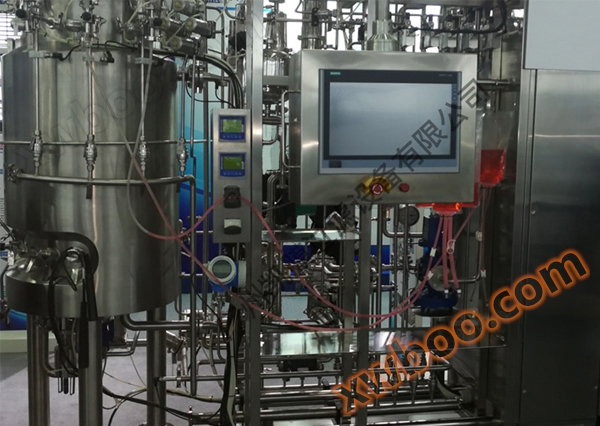
The core parts of the above process flow, UF and RO systems, are monitored by computers, making operation and management very simple.

Similar Product Recommend