-
Phone
17719888549
-
Address
200 meters south of the intersection of Feilong North Road and Science Avenue in Xingyang, Zhengzhou, China
Product Categories
Zhengzhou Boiler Co., Ltd

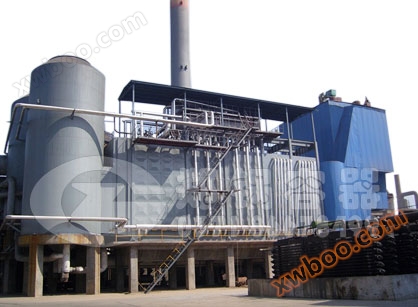
Flue type waste heat boiler
NegotiableUpdate on 08/18
- Model
- Nature of the Manufacturer
- Producers
- Product Category
- Place of Origin
Overview
The utilization efficiency of industrial fuel, gas, and coal-fired boilers is about 70%. Among the wasted heat, flue gas heat accounts for the vast majority. Under normal circumstances, the flue gas temperature of hot water and steam boilers is above 200 degrees, and the flue gas temperature of thermal oil boilers is 270-350 degrees. Such high temperatures not only pollute the environment, but also waste a large amount of fuel and increase production costs for enterprises. The flue type waste heat boiler utilizes superconducting heat pipes to recover this heat. To increase the inlet water and blast temperature of the boiler, or directly generate steam to flush the heat absorbing end of the heat pipe, causing the working fluid in the heat pipe to evaporate into gas and flow towards the cooling end, where it condenses and releases heat, heating water or air to produce hot water, hot air, and steam.
Product Details
Working principle
The tube bundle of the flue type waste heat boiler is installed in a water tube type waste heat boiler made of refractory materials in the furnace. The structure is very similar to that of a general combustion boiler. High temperature gas passes through the furnace (or flue) and indirectly exchanges heat with water inside the tube bundle to produce steam. The steam water mixture rises along the tube bundle and enters the upper and lower steam drums. After steam separation, the water re enters the lower steam drum through the unheated downcomer, forming a natural circulation. Can be matched with small steam turbines for power generation.
The hot flue gas enters the front smoke box through the inlet flue pipe, passes through the slag condenser pipe, high and low temperature superheater, convection tube bundle, and intermediate flue pipe, and then enters the finned economizer. Finally, it is discharged through the outlet flue pipe. After softening and deoxygenation, the boiler feedwater first enters the finned tube economizer under the pressure of the feedwater pump. After heating in the finned tube economizer, it enters the upper drum and undergoes natural circulation evaporation in the convection tube bundle, downcomer, and slag condenser tube. Then, through the steam water separation effect of the internal device of the drum, the steam is separated. The saturated steam drawn out from the drum is connected to the inlet header of the low-temperature superheater, heated by the low-temperature superheater and then enters the desuperheater, and then heated by the high-temperature superheater. The superheated steam is sent to various steam consumption areas through the outlet header of the heater. Users can also directly extract saturated steam from the auxiliary steam valve of the upper drum as needed.
Performance characteristics
1. The flue type waste heat boiler has high heat transfer efficiency, with a volume that is half of the same level of heat exchanger, and low ventilation resistance, thus saving the electricity consumption of the blower and induced draft fan.
2. Heat transfer in a heat pipe relies on the phase change of the working fluid inside the pipe. The two ends of the heat pipe are sealed by end caps. When one side of the pipe wall of a heat pipe has a perforation, only a small amount of working fluid inside the pipe leaks out, but the hot fluid does not collude, thus greatly reducing the possibility of air leakage.
3. The isothermal heat transfer characteristics of the heat pipe can ensure that the wall temperature of the heat pipe is maintained above the dew point temperature of the flue gas, thus ensuring that the wall temperature of the heat pipe can always be maintained above the dew point temperature of the flue gas. The ash accumulated on the wall of the heat pipe is basically dry ash, which is carried away by the wind when the flue gas flow rate fluctuates, forming a self blowing process. At the same time, the heat pipe generates self vibration during operation, shaking off the ash and carrying it away with the wind, making the entire heat exchanger less prone to ash blockage.
4. By controlling the wall temperature of the flue gas end of the heat pipe heat exchanger, every point of each heat pipe in the heat exchanger can be above the dew point, effectively avoiding sulfuric acid dew point corrosion during coal combustion.
5. A heat pipe heat exchanger is a stationary device without moving parts, so there is no possibility of mechanical failure. Each heat pipe is relatively independent and can be repaired individually. Even if a small number of heat pipes are damaged, it will not cause air leakage or a significant reduction in heat load, making the entire equipment highly reliable.
6. Easy installation: The installation of flue type waste heat boilers does not require any modifications to the original boiler or industrial kiln.
7. Safe and reliable: Superconducting heat pipes have good isothermal performance, generate natural vibration during heat conduction without scaling or ventilation resistance, always maintain good heat transfer efficiency, and do not affect the operation of boilers or kilns.
8. Long service life: The flue type waste heat boiler has a service life of more than 10 years, and a single heat pipe can be disassembled and replaced, with simple maintenance and low cost.
9. Good energy-saving benefits: The efficiency of large industrial kilns can be increased by more than 10%, and the efficiency of small and medium-sized fuel, gas, and coal-fired boilers can be improved by 5% -10%.
10. Short investment payback period: Generally, the entire investment can be recovered within 3 to 8 months.
Type
| Model/Project | unit | 10t/h series | 12t/h series | 15t/h series | 20t/h series | 25t/h series | 30t/h series | |||||||||
| rated evaporation | t/h | 10 | 12 | 15 | 20 | 25 | 30 | |||||||||
| Rated steam pressure | Mpa | 1.25 | 1.6 | 2.45 | 1.25 | 1.6 | 1.25 | 2.45 | 3.82 | 1.25 | 2.45 | 3.82 | 2.45 | 3.82 | 2.45 | 3.82 |
| Steam temperature | ℃ | 310 | 280 | 350 | 280 | 300 | 310 | 310 | 400 | 310 | 310 | 400 | 310 | 400 | 310 | 400 |
| feed water temperature | ℃ | ≥60 | 80 | 105 | 80 | 80 | ≥60 | 105 | 120 | ≥60 | 105 | 120 | 105 | 120 | 105 | 120 |
| Volume of flue gas entering the furnace | Nm³/h | -32000 | -40000 | -49000 | -55000 | -64000 | -72000 | |||||||||
| Temperature of flue gas entering the furnace | ℃ | -850 | -850 | -850 | -850 | -850 | -850 | |||||||||
| Temperature of flue gas discharged from the furnace | ℃ | 275 | 285 | 305 | 275 | 280 | 275 | 300 | 320 | 275 | 300 | 3200 | 300 | 320 | 300 | 320 |
| External dimensions | M | 6.28*5*12 | 8.6*7.4*7 | 7.3*7.4*10.4 | 11.2*8.7*11.8 | 8.45*6.5*13 | 8.6*8.7*13.1 | |||||||||