-
Phone
17719888549
-
Address
200 meters south of the intersection of Feilong North Road and Science Avenue in Xingyang, Zhengzhou, China
Product Categories
Zhengzhou Boiler Co., Ltd

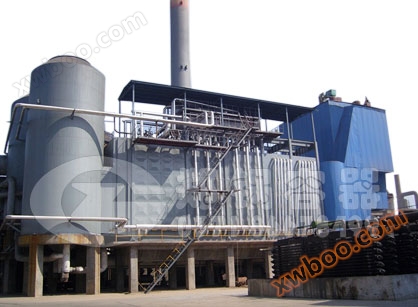
Zinc smelting waste heat boiler
NegotiableUpdate on 08/18
- Model
- Nature of the Manufacturer
- Producers
- Product Category
- Place of Origin
Overview
In the zinc smelting industry system, various types of metallurgical waste heat boilers are used, such as boiling furnaces, reverberatory furnaces, converters, flash furnaces, fuming furnaces, etc. Energy consumption is an important technical and economic indicator for zinc smelting. Reducing energy consumption is of great significance in lowering product costs and improving enterprise efficiency. Zinc smelting waste heat boiler is an effective way to reduce energy consumption in zinc smelting. The design and auxiliary equipment of the zinc smelting waste heat boiler are similar to conventional industrial boilers, but the energy used is not fuel, but the heat released by various forms of heat carriers emitted to the surrounding environment or entering the next production process during the zinc smelting production process. Therefore, the design of the zinc smelting waste heat boiler room has its own particularities, which need to consider the state, quantity, temperature, composition, dust content, smoke and dust composition of the heat carrier, as well as the working system, layout plan, overall layout and heat requirements of the metallurgical furnace, and the design of conventional industrial boiler rooms.
Product Details
Working principle
The waste heat from the zinc smelting system flows through the flue to the inlet of the zinc smelting waste heat boiler. The flue gas flows from bottom to top, passing through the superheater, two sets of evaporators, and economizer, and finally discharged into the chimney. The exhaust temperature is about 100-220 ℃. When the exhaust temperature drops from 380/330 ℃ to the exhaust temperature, the heat released is used to turn water into steam. The feedwater entering the waste heat boiler has a temperature of about 42-126 ℃. It first enters the upper economizer, where it absorbs heat and raises the water temperature. When the water temperature reaches a saturation temperature slightly below the pressure of the steam drum, it leaves the economizer and enters the steam drum. After the water entering the steam drum mixes with the saturated water inside, it enters two sets of evaporators along the downcomers below the steam drum. The water in the evaporators absorbs heat and begins to produce steam. Usually, only a part of the water becomes steam, so the steam water mixture flows inside the evaporator tubes. The steam water mixture leaves the evaporator and enters the upper part of the steam drum. There is a steam water separation device installed inside the steam drum, which can separate steam and water. The water falls into the water space inside the steam drum, while the steam comes out from the top of the steam drum to the superheater. Absorb heat inside the superheater to convert saturated steam into superheated steam.
Performance characteristics
1. The system is simple, easy to manage, and has fewer operators;
2. It does not increase the emissions of atmospheric pollutants, but effectively reduces the emissions of carbon dioxide and other pollutants;
3. No fuel consumption, economic benefits are not affected by fluctuations in fuel prices;
4. Fully consider utilizing waste heat steam to maximize the conversion and utilization of waste heat;
5. It not only saves energy, but also meets some of the electricity needs of the enterprise, reduces energy consumption, and improves the economic benefits of the enterprise, promoting energy conservation and emission reduction.
6. The convective heating surface adopts a parallel tube bundle membrane heating surface, and the flue gas flow velocity is set at a lower value, which is very beneficial for reducing wear, reducing and clearing dust accumulation.
7. For zinc smelting superheaters with high residual heat, effective measures should be taken to reduce ash accumulation, slagging, wear, corrosion, and clean ash residue.
Type
| model | QC6.0/350-0.4-0.8 | QC8.5/350-0.6-0.8 |
QC8.5/350-0.8-0.8 |
QC14/350-1.0-0.8 |
| Equipment specifications | 2200*1250*2680 | 2680*1610*3550 | 2600*1610*3650 | 3100*1820*4200 |
| Bracket size | 1363*976 | 1480*1030 | 1480*1030 | 1480*1030 |
| operating weight |
3200kg |
4800kg | 5600kg | 7800kg |
| power | 0.21MW | 0.35MW | 0.42MW | 0.7MW |
| Inlet connection | DN25 | DN25 | DN25 | DN40 |
| Main steam takeover | DN40 | DN50 | DN50 | DN65 |
| Water pump model | CDL1-19 | CDL2-13 | CDL2-13 | CDL2-13 |
| Rated gas production rate | 0.4t/h | 0.6t/h | 0.8t/h | 1t/h |
| Steam pressure |
0.8Mpa |
0.8Mpa | 0.8Mpa | 0.8Mpa |
| application type | Boiler below 3 million kcal | 3-4 million kcal boiler | 4-5 million kcal boiler | Boiler with a capacity of over 6 million kcal |